
What Each Accommodation Type Actually Offers
Before comparing numbers, it helps to understand what each option is structurally built for - because the cheapest option isn't always the most economical once you factor in what you lose.
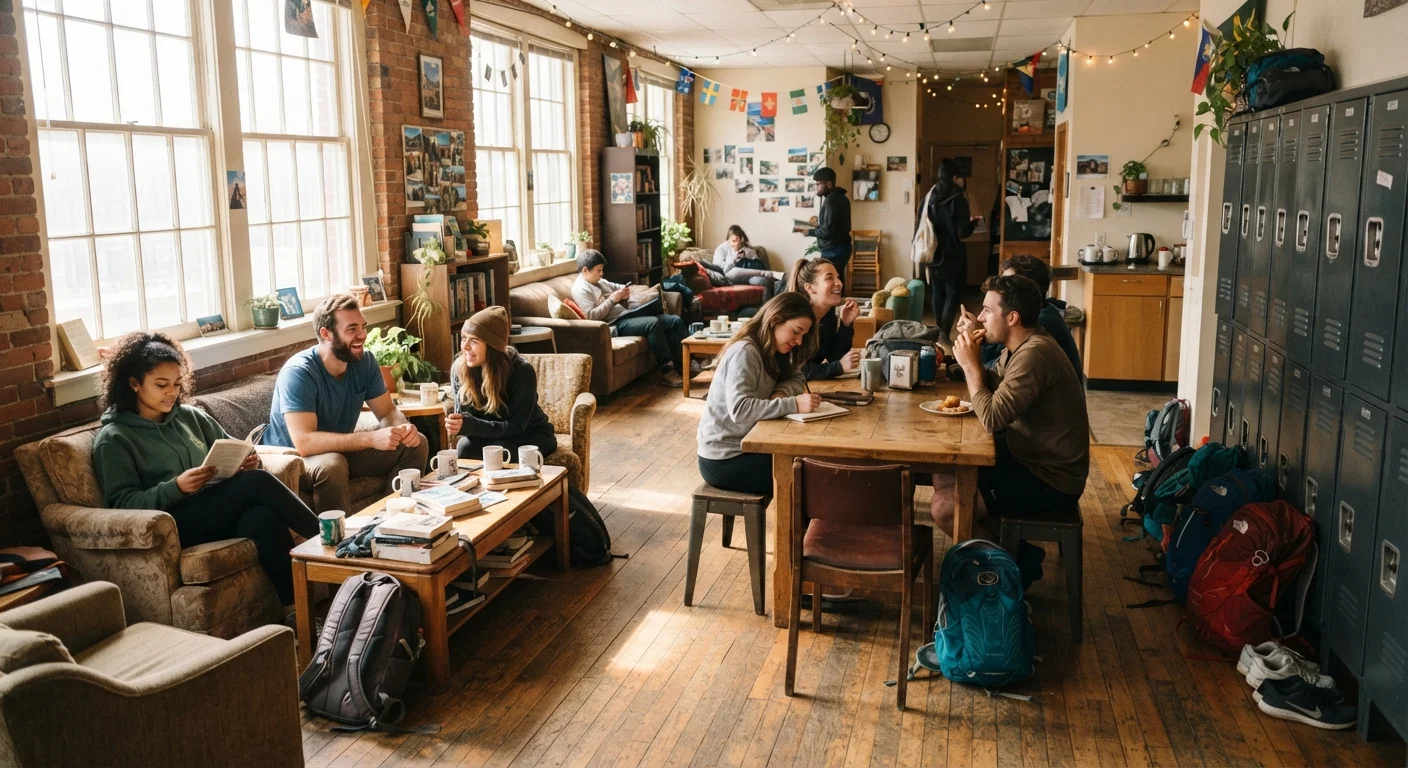
Dormitory hostels are purpose-built for budget travel. You rent a bed in a shared room - typically 4 to 12 people - and share bathrooms and communal spaces. The trade-off is clear: low cost, low privacy. Most reputable hostels provide individual lockers, reading lights, and charging points. Social programming (walking tours, communal dinners) is common and often free or low-cost.
Guesthouses are small, independently run properties - often family homes with a handful of guest rooms. They're common across Asia, Latin America, Eastern Europe, and parts of Africa. You typically get a private room at a price well below a standard hotel. Breakfast is sometimes included. The atmosphere tends to be personal, and owners frequently offer honest local advice. For more on what distinguishes these options structurally, see what each type of budget lodging actually offers.
Solo-friendly hotels refers to budget-to-mid-range hotels that charge per room rather than applying a punishing single-supplement fee. These properties offer private rooms with en-suite bathrooms, front-desk staffing, and generally more predictable safety standards. They cost more per night than the other two categories but require no adaptation to shared living.
| Dormitory Hostel | Guesthouse | Solo-Friendly Hotel | |
|---|---|---|---|
| Typical nightly cost (budget destinations) | $8-$20 per bed | $20-$50 per room | $40-$80 per room |
| Privacy level | Low - shared room | High - private room | High - private room |
| Social opportunity | Very high | Moderate (owner-guest) | Low |
| Safety infrastructure | Variable; check lockers and entry | Variable; owner-managed | Generally standardized |
| Breakfast included | Rarely | Often | Rarely at budget tier |
| Best trip phase | Multi-day stays, social trips | City bases, rural stops | Transit nights, rest stays |
| Local cultural immersion | Moderate | High | Low |
Breaking Down the Cost Reality
Nightly rate is only one part of the cost equation. Factor in what's included and what you'll spend as a result of staying there.
~40%
Average solo traveler accommodation budget share
Industry surveys consistently find accommodation consumes roughly a third to half of a solo traveler's total trip budget, making it the single largest controllable expense.
3-4×
Hotel cost multiple vs. hostel dorm
In most budget travel destinations, a private hotel room costs three to four times the price of a hostel dorm bed in the same neighborhood.
A hostel dorm bed in Southeast Asia or Eastern Europe can run $8-$18 per night, while private rooms at the same hostel often land at $25-$45. Guesthouses in similar regions typically charge $20-$50 for a private room, often including a basic breakfast that eliminates one meal cost. Budget hotels start around $40-$70 in most affordable destinations, with nothing typically included beyond the room.
On a 10-night trip, the math compounds fast. Choosing a dorm over a private hotel room could free up $200-$400 - money that funds experiences rather than walls. But if a poor night's sleep in a noisy dorm means you're skipping activities or eating out more to recover, the savings erode. Be honest about your sleep sensitivity before defaulting to the cheapest option.
For a direct cost-versus-comfort breakdown, hostel vs. budget hotel digs into exactly this calculation.
Safety Considerations You Can't Ignore
Safety in accommodation isn't just about neighborhood - it's about the physical property and how it's managed. Each accommodation type carries distinct risk profiles for solo travelers.
In hostels, the key safety markers are: individual lockable storage (a locker that fits your pack), key-card or coded entry to sleeping areas, and active front-desk hours. Dormitories with 12+ beds, no lockers, and unmonitored entry deserve extra scrutiny regardless of price. Reviews mentioning theft are a hard stop.
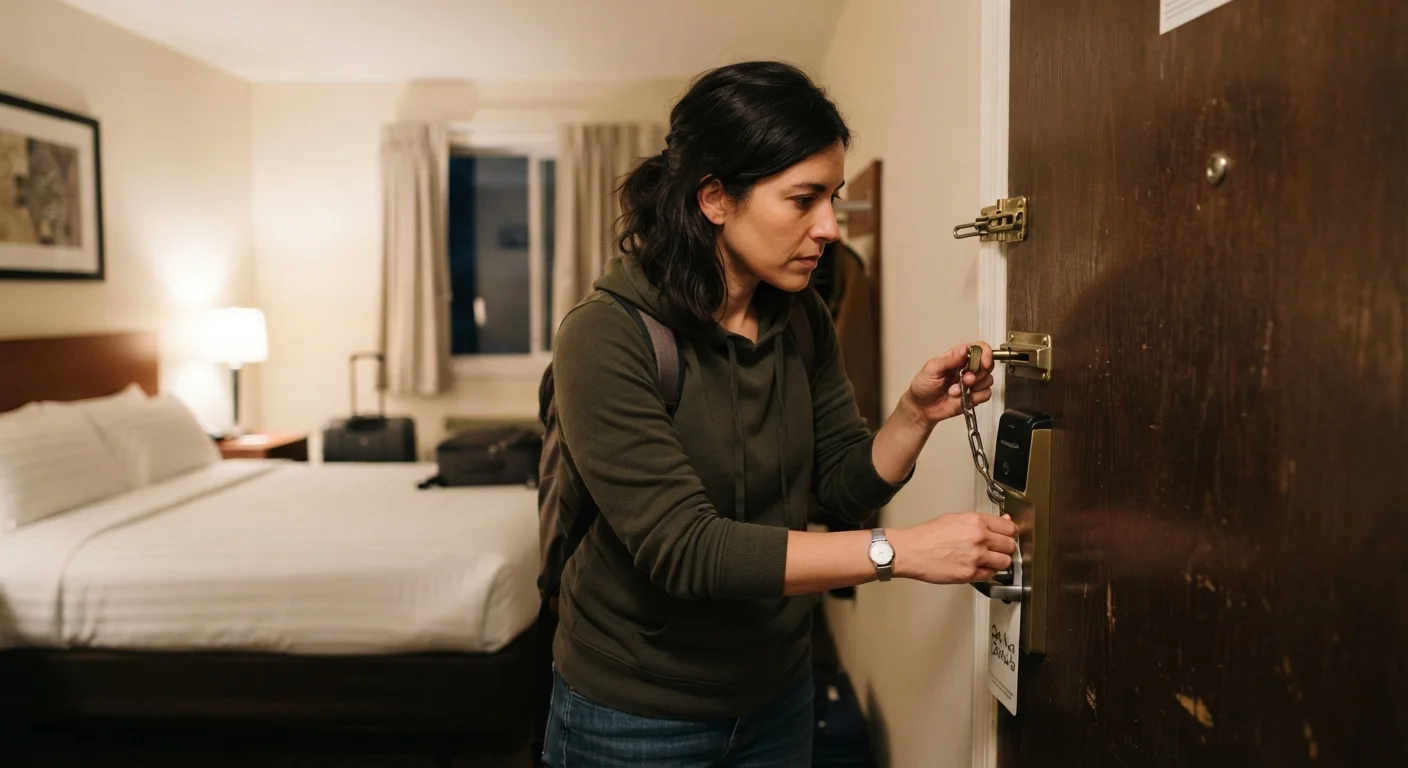
Guesthouses managed by resident owners tend to feel safer than their amenities suggest - someone is always on-site and personally invested in their reputation. The main risk is inconsistency: a guesthouse that looked perfect in photos may have poor locks or unlighted corridors. Ask specifically about room locks and whether the main entrance is secured at night before booking.
Hotels offer the most institutionalized safety - key-card rooms, security cameras, 24-hour reception - but these features vary widely at the budget end. Don't assume a hotel is safe simply because it's a hotel. Evaluating your lodging as a solo traveler gives you a room-by-room checklist to run through before you commit.
Don't Rely on Star Ratings Alone
Accommodation ratings are inconsistent across platforms and regions. A three-star guesthouse in one country may outperform a four-star hotel in another on basic safety measures. Always read recent solo-traveler reviews specifically - look for comments on locks, lighting, staff responsiveness at night, and neighborhood safety at the hours you'll be arriving or leaving.
For a focused look at the privacy-versus-community safety trade-off, see hostels vs. private rooms: safety trade-offs.
Social Value and When It Matters
Solo travel is inherently social - most people doing it want connection, not just cheap beds. Accommodation type heavily determines how easy connection is.
Hostels are the clear leader here. Common rooms, shared kitchens, organized events, and the simple act of sharing a dorm create natural conversation starters. If meeting other travelers is a priority - especially on longer trips - a well-run hostel delivers that infrastructure at no extra cost. Free and low-cost ways to meet people when traveling solo explores how to supplement this wherever you're staying.
Guesthouses offer a different kind of social value: connection with locals. An owner who knows the neighborhood can point you to a market, warn you off a tourist trap, or explain a festival happening that weekend. That intelligence is worth real money if you use it.
Hotels are the least socially generative option by design - they optimize for privacy and turnover. If you're on a transit night, that's fine. If you're spending a week in one city and hoping to meet people, a hotel without a communal space will make that harder.
Use Accommodation as a Social Tool
If meeting people matters on a particular leg of your trip, prioritize hostels with dedicated common rooms and communal kitchens over those that are dorm-only. A hostel that organizes a free weekly dinner or hosts a notice board for meetups is worth a slightly higher dorm rate - it does social work you'd otherwise have to spend money on elsewhere.
How to Match Accommodation to Your Trip Phase
The smartest solo travel budgeters don't pick one accommodation type and stick with it - they match the lodging to the leg of the journey.
- Transit nights (arriving late, leaving early): a capsule hotel or no-frills budget hotel near the transport hub makes sense. You need sleep, not community. See lodging options every budget traveler should know for niche formats like capsule hotels worth considering.
- Multi-day city base: a hostel with a good common room or a centrally located guesthouse gives you social options and saves money across several nights.
- Recovery or reset nights: after a stretch of dorms, a private guesthouse room or budget hotel room can restore sleep and mental clarity without blowing your overall budget.
- Rural or small-town stays: guesthouses often dominate here; hostels may not exist. Family-run guesthouses in these settings frequently offer the best value-per-dollar of any accommodation type.
For first-time solo travelers still finding their footing, budget lodging on your first solo trip walks through how to sequence these choices without overcomplicating it. And if you're still weighing the dorm-versus-private-room question specifically, hostels vs. private rooms breaks down that single decision in depth.