
Hostels: The Floor-Level Economics of Budget Travel
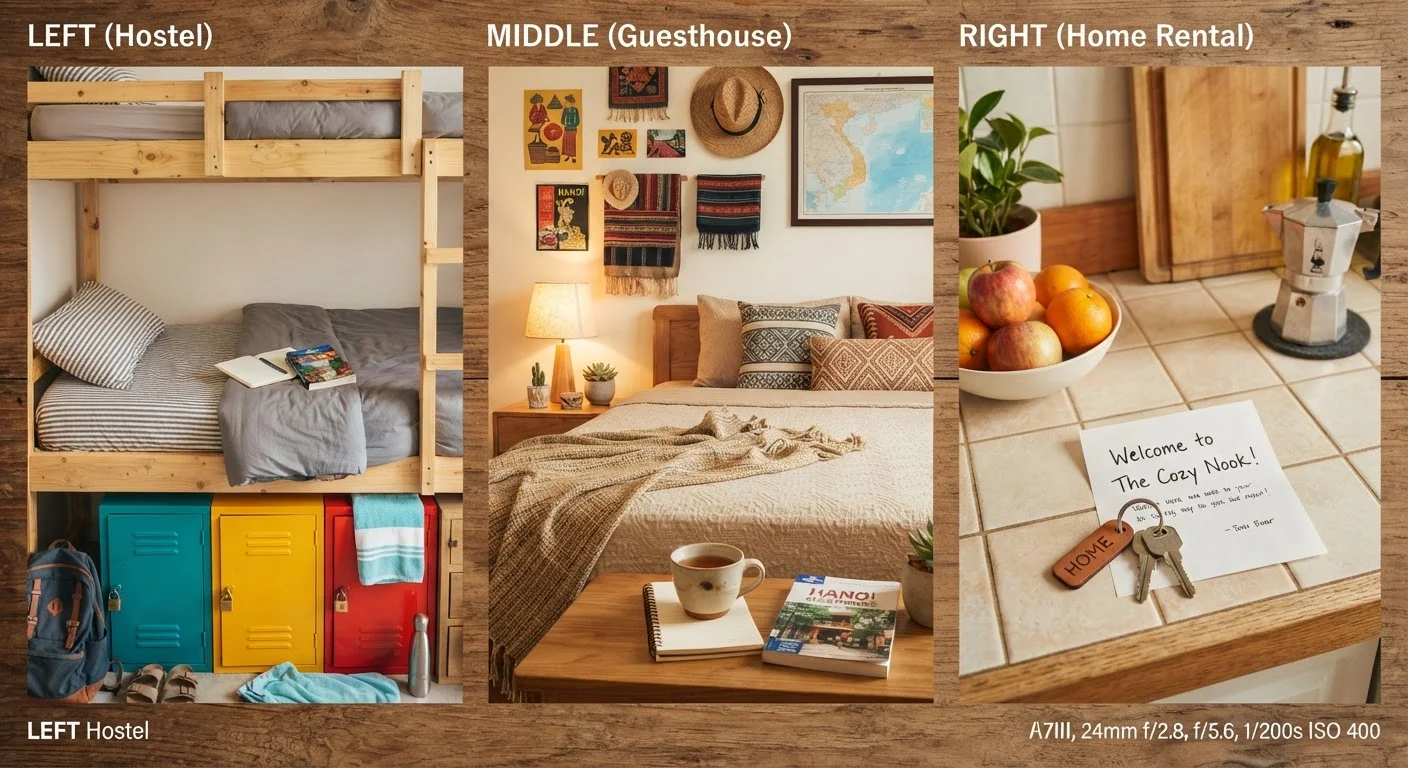
A hostel's core value proposition is simple: you pay for a bed in a shared room rather than a private room, which dramatically lowers the nightly rate. Dormitory beds in popular destinations across Europe, Southeast Asia, and Latin America typically run significantly below what a private hotel room costs in the same area - though exact pricing varies widely by location and season.
What you trade for that savings is privacy. Shared dorm rooms range from 4 to 20+ beds, shared bathrooms are standard, and communal kitchens (when available) help offset food costs. Most hostels charge separately for lockers, linen, and breakfast, so the final daily spend can be higher than the headline price suggests.
Hostels work best for solo travelers or pairs on tight budgets who are comfortable in social environments and flexible about sleep schedules. They're less practical for light sleepers, travelers with early flights, or anyone carrying significant valuables. For a direct comparison of what hostels offer versus private-room options, see our hostels vs. private rooms guide.
Check What's Actually Included Before Booking
Hostel listings vary significantly in what's bundled into the nightly rate. Linen, locker use, and Wi-Fi are often charged separately. Filter your search to show total price including fees and always read the fine print on included amenities before confirming a booking.
Guesthouses: Local Ownership, Private Space, Moderate Price
A guesthouse occupies the middle ground between a hostel and a budget hotel. You typically get a private room - sometimes with an en suite bathroom - in a property run by a local family or small operator. This structure keeps overhead lower than chain hotels, which often translates to lower nightly rates without sacrificing the basics of a good night's sleep.
Quality and what's included varies considerably. Some guesthouses provide meals, local travel tips from the owner, and a genuine connection to the destination. Others are bare-bones rooms with shared bathrooms and no additional services. Reading property-specific reviews rather than relying on star ratings is essential here.
~40%
Typical guesthouse discount vs. budget hotels
Industry travel research suggests locally operated guesthouses in popular travel regions frequently price 30-45% below comparable budget hotel chains in the same area, though this varies significantly by destination.
25-40%
Fee markup above listed rental nightly rate
Platform service charges, cleaning fees, and local taxes routinely add 25-40% to the base price shown for short-term home rentals at checkout, according to consumer comparison analyses.
Guesthouses are particularly strong value in regions where they're culturally embedded - parts of Southeast Asia, the Balkans, Morocco, and rural areas throughout Europe. In these destinations, a guesthouse often undercuts a budget hotel while offering more character and sometimes better location. For a broader look at where these fits into the full lodging spectrum, the full guide to budget lodging types is a useful reference.
Home Rentals: When Renting an Apartment or House Makes Financial Sense
Short-term home rentals - apartments, houses, or individual rooms within someone's home - shift the cost calculation significantly when you're traveling with others or staying more than a few nights. Kitchen access alone can reduce daily food spend by a meaningful amount when you're cooking even a few meals rather than eating every meal out.
The catch is fee stacking. Platform service fees, cleaning charges, and local occupancy taxes routinely add 25-40% above the listed nightly rate. A rental that appears cost-competitive at first glance can end up more expensive than a guesthouse once all fees are tallied at checkout. Always use the total-cost view, not the nightly display price, when comparing options.
Home rentals also typically require more self-sufficiency - no front desk, check-in via lockbox or key exchange, and no daily housekeeping. For groups of three or more, or for stays of a week or longer where the per-night cleaning fee gets amortized, this model frequently delivers genuine savings. Families in particular tend to benefit from the extra space and kitchen access; our rental vs. hotel cost breakdown for families explores this in detail.
Choosing the Right Type for Your Trip
The three lodging types don't compete equally across all scenarios - each fits a specific traveler profile and trip structure.
- Solo, short trip, tight budget: Hostels generally offer the lowest absolute nightly cost and built-in social opportunities.
- Couple or solo traveler wanting privacy without hotel prices: Guesthouses are often the strongest value, especially outside major tourist corridors.
- Group of three or more, or stays of 5+ nights: Home rentals typically win on per-person cost and convenience once fees are divided across the group.
- Families: Home rentals or larger guesthouses that allow family rooms provide the most practical and usually the most economical option.
Beyond cost, factor in what you'll actually use. Kitchen access matters most if you plan to cook regularly - which can have a meaningful effect on daily travel costs. Location relative to public transit matters more than the room type if you're paying for taxis or rideshares to compensate for a peripheral location.
Location Can Offset Lodging Savings
A cheaper room on the outskirts of a city can easily cost more in total than a pricier room in the center once you factor in daily transportation. Before choosing a lodging option based on rate alone, map the distance to your planned activities and estimate transport costs. For destinations across multiple price points, the budget destinations hub includes destination-level context to help with planning.
If you're planning a solo trip and want a structured framework for making this decision across each leg of your journey, the solo accommodation decision guide walks through cost, safety, and social trade-offs side by side.