
Why Social Connection Is a Budget Issue Too
Loneliness is one of the most underreported costs of solo travel - not in dollars, but in decisions. When travelers feel isolated, they often default to paid social shortcuts: organized pub crawls, expensive group tours, or back-to-back restaurant meals just to be around other people. None of those are bad choices, but they add up fast.
The good news is that some of the most reliable ways to meet other travelers and locals cost nothing at all. They just require knowing where to look and being willing to show up. The strategies below work across destinations, budget levels, and traveler personalities - whether you're spending a weekend close to home or several weeks abroad. For broader planning context, the Solo Trip Planning hub has step-by-step guidance worth bookmarking.
Join a free walking tour
Free walking tours operate in hundreds of cities worldwide and run on a tip-at-the-end model. They attract exactly the kind of traveler you want to meet: curious, budget-aware, and open to conversation. The tour itself breaks the ice for you - by the end of two hours walking together, you've already got shared context for a conversation over coffee.
After the tour, pay attention to who gravitates toward the guide with follow-up questions - those tend to be the most engaged travelers in the group. A simple "where are you heading next?" is all it takes.
Two hours walking together creates more genuine connection than any paid mixer.
Use language exchange meetups
Language exchange events - where locals practice English with you while you pick up their language - are free, welcoming, and deeply local. Search platforms like Meetup or Tandem for scheduled exchanges in your destination city. Many happen weekly in cafés and are designed specifically for strangers to talk to each other.
You don't need to be studying the local language seriously. Even basic phrase-swapping creates immediate goodwill and natural conversation. These events tend to draw a mix of travelers and locals, making them one of the most efficient places to meet both simultaneously.
Language exchanges draw locals and travelers together - no prior language study needed.
Find community through volunteer and work-stay programs
Programs that exchange a few hours of daily work for free or heavily reduced accommodation - such as farm stays, hostel front-desk shifts, or community project placements - offer something money can't easily buy: sustained, repeated contact with the same people. Friendships form differently when you're working and eating alongside someone for a week versus passing them in a corridor.
Research programs carefully before committing: read independent reviews, understand what "work" entails, and confirm the hours-to-benefits ratio is fair. This approach pairs naturally with the broader money-saving strategies covered in underrated ways solo travelers save money.
Working alongside people for a week builds friendships that a hostel night rarely matches.
Search local Facebook groups and Meetup before you arrive
Most cities have active Facebook groups for expats, travelers, or specific interest communities - hiking clubs, board game nights, photography walks, running groups. These events are almost always free or low-cost and are run by people who genuinely want attendees to show up.
Search the destination city name alongside terms like "expat", "traveler", "hiking", or "language exchange" a week before arrival. RSVP to two or three options so you have built-in social anchors from day one. This removes the pressure of improvising connection on the fly.
RSVPing to a local meetup before you land gives you a social anchor from day one.
Sit at communal tables and hostel common areas intentionally
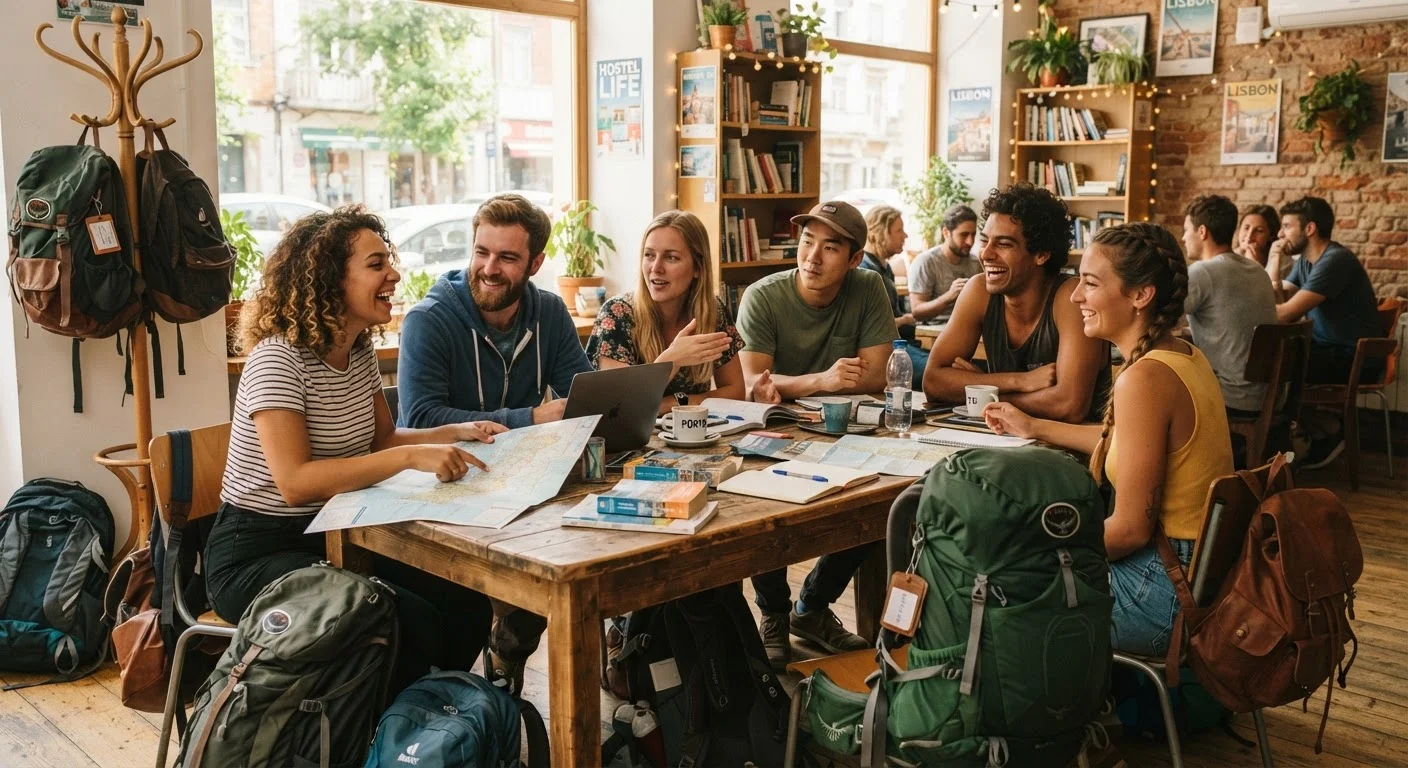
This sounds almost too simple, but physical positioning is one of the most reliable social tools available. Travelers who eat at communal tables, linger in hostel kitchens, or sit in lounge areas with a book rather than retreating to their bunk consistently report more spontaneous connection. People in those spaces are usually open to conversation - that's partly why they chose that accommodation type.
Make it easier by doing something shareable: cooking a meal others can comment on, playing a card game, or pulling out a map. Activity creates a low-stakes entry point for anyone nearby to engage.
Where you sit shapes who you meet - communal spaces are free social infrastructure.
Join organized free community events
City libraries, cultural centers, museums, and parks regularly host free public events - film screenings, open mic nights, markets, skill workshops, and community runs. These draw a local crowd rather than a traveler crowd, which is often exactly what solo travelers say they want but rarely pursue.
Check local event listings through municipal websites or neighborhood apps a few days before arrival. Showing up to a neighborhood event as a curious outsider is almost always welcomed, and it puts you in genuinely local social settings that paid tours rarely reach.
Community events draw locals - and a curious outsider is almost always welcome.
Use traveler-specific platforms and apps wisely
A handful of platforms are designed specifically to connect travelers with each other or with locals - some for shared activities, others for cultural exchanges or casual meetups. These range from hospitality networks to city-specific boards where travelers post plans and invite others to join.
Use them as a discovery tool rather than a replacement for real-world interaction. The goal is to surface a plan - a shared hike, a museum visit, a group dinner - that you then actually show up for. Keeping your communication strategy solid while using these platforms is important: always tell someone where you're going when meeting strangers for the first time.
Traveler platforms work best as a plan-finder, not a substitute for real-world showing up.
Make Connection Part of Your Trip Strategy
The tactics above work best when they're built into your itinerary from the start rather than treated as a last resort. Before you arrive anywhere, spend thirty minutes searching for local meetup groups, free tour schedules, and language exchange events. Stack a few options across your first two days so you're not relying on a single opportunity.
Build social time into your daily schedule
Treat connection like any other itinerary item. Block one or two windows per day - a shared meal, a common-area hour, a local event - rather than hoping it happens organically. Solo travelers who plan for social interaction report feeling less isolated and less tempted by expensive paid alternatives.
Your accommodation choice matters too. Solo-friendly hostels and guesthouses are social infrastructure in their own right - see our guide on choosing accommodation that won't drain your budget to weigh your options. And if you're wondering how social connection fits into the broader cost picture of traveling alone, why solo travel is cheaper than you think separates myth from reality.
All travel involves inherent risks. Always verify local safety conditions and entry requirements through official government sources before you travel. The platforms and approaches described here are general strategies - individual experiences will vary.