
The Real Cost Difference: Nightly Rate vs. Total Spend
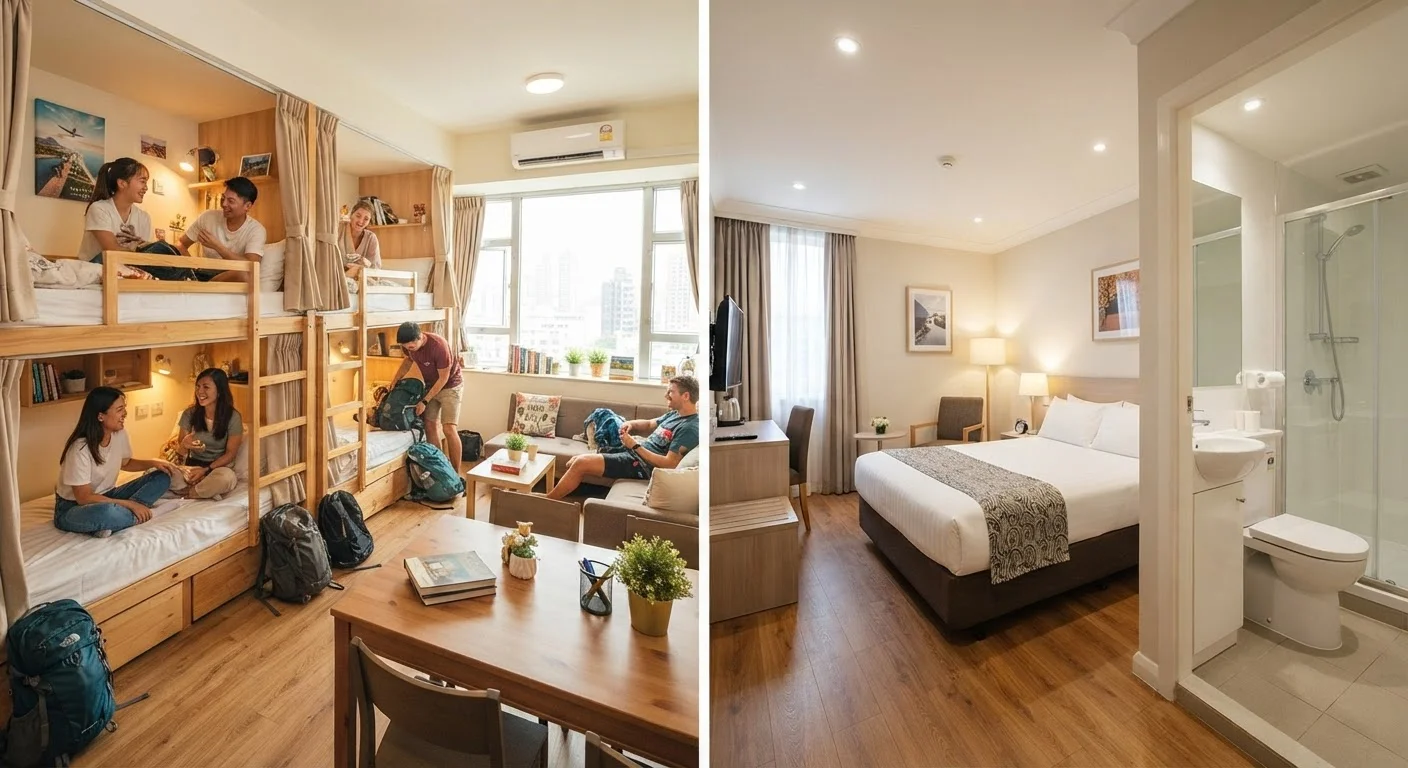
The sticker price of a hostel dorm bed is usually the lowest accommodation number you'll find in any major travel destination. In many European or Southeast Asian cities, a dorm bed can run $15-$35 per night, while a budget hotel private room in the same neighborhood typically starts around $55-$90. That gap looks decisive on paper - but total spend tells a more nuanced story.
Budget hotels almost always include a private bathroom, eliminating the time and mild inconvenience of shared facilities. Many hostel stays, however, counter with free perks: communal kitchens (which can save $10-$20 per day on meals), included breakfast, and free luggage storage. When you factor in those offsets, a week in a hostel can realistically save $100-$200 over a comparable budget hotel stay.
Location is another variable that shifts the math. A cheaper hostel on the city outskirts may add daily transit costs that erode your savings. See our guide on balancing location and price to understand how proximity to transit affects real total cost.
| Criterion | Hostel | Budget Hotel |
|---|---|---|
| Typical nightly cost (dorm vs. private room) | $15-$40 per bed | $55-$90 per room |
| Privacy | Shared dorm, no lock | Private room, lockable door |
| Bathroom | Usually shared | Usually en-suite |
| Kitchen access | Communal kitchen common | Rarely available |
| Social atmosphere | High - common areas, events | Low - self-contained rooms |
| Sleep disruption risk | Higher in large dorms | Lower, room-dependent |
| Security | Lockers provided; varies by property | In-room safe or locked door |
| Best traveler fit | Solo backpackers, budget-first travelers | Couples, light packers, business travelers |
Comfort, Privacy, and Sleep Quality
Privacy is the clearest structural advantage a budget hotel holds over a hostel dorm. A lockable door, your own bathroom, and control over the room's light and temperature are baseline features in even modest hotels. In a dorm of six to ten beds, you share all of those with strangers - some of whom may keep different hours, snore, or pack loudly at 4 a.m.
That said, hostel quality varies considerably. Well-reviewed properties invest in pod-style beds with curtains, individual reading lights, and personal power outlets. Dorm sizes matter too: a four-bed room is a fundamentally different experience from a fourteen-bed mixed dorm. Knowing what signals to look for before booking can help you avoid the worst-case dorm scenarios.
Budget hotels, on the other hand, are not automatically comfortable. Thin walls, street noise, worn mattresses, and inconsistent cleanliness are common at the lower end of the hotel market. Reading recent guest reviews specifically for noise and mattress quality - not just overall star ratings - is essential for both accommodation types.
~50%
Average hostel dorm savings vs. budget hotel
Industry accommodation surveys consistently show hostel dorm beds pricing at roughly half the nightly rate of entry-level private hotel rooms in the same urban area.
4-6 beds
Dorm size linked to better sleep ratings
Traveler review data across major booking platforms suggests smaller dorm rooms (four to six beds) receive notably higher sleep-quality ratings than larger shared dorms.
$10-$20
Daily meal savings from hostel kitchen access
Travelers who self-cater using hostel communal kitchens report estimated daily food savings of $10-$20 compared to eating out for every meal.
Who Each Option Actually Suits
The hostel vs. budget hotel decision is rarely just about money - it's also about how you travel. Solo backpackers who move frequently and want to connect with other travelers consistently get more value from hostels, both financially and socially. The common areas, hostel-organized walking tours, and kitchen table conversations are genuinely useful for building informal trip-planning intel.
Couples traveling together change the calculus sharply. A budget hotel room divided between two people often lands at a per-person cost close to a dorm bed, while delivering a private space that most pairs strongly prefer. For families, budget hotels are nearly always the practical choice - hostel dorms are rarely configured for groups traveling with children.
For solo travelers specifically, the comparison between dorm and private room accommodation is worth examining more closely. Our in-depth look at hostels vs. private rooms for solo travelers breaks down the social and financial trade-offs in detail. And if you're building a broader budget for a solo trip, the Budget Solo Travel hub covers money-saving tactics across every spending category.
For a wider comparison that includes guesthouses and home rentals alongside these two options, this breakdown of budget lodging types is a useful next step.
Private Hostel Rooms: A Middle Ground
Many hostels now offer private rooms - a single room with a lockable door rented within the hostel property. These typically cost less than a budget hotel while still providing access to hostel amenities like the communal kitchen and social spaces. If you want privacy but can't stretch to a full hotel rate, a private hostel room is worth filtering for when searching. See our guide on private rooms vs. dormitories for a detailed comparison.