
What Is a Shore Excursion?
A shore excursion is any organized activity or tour you join during a port day - the hours your ship is docked (or anchored) at a destination. These range from a two-hour city walking tour to a full-day adventure itinerary. They are always optional and always cost extra.
Shore days are built into your cruise itinerary by the cruise line, but what you do with that time is entirely your decision. You can book an excursion through the cruise line, arrange something independently, or simply walk off the ship and explore on your own. For a broader picture of how itineraries are structured, see our first-cruise introduction.
Shore excursion
An optional paid activity or tour organized for a cruise port day. It is not included in your cruise fare and must be booked and paid for separately.
All-aboard time
The deadline by which all passengers must return to the ship before it departs a port. Missing this time means the ship leaves without you.
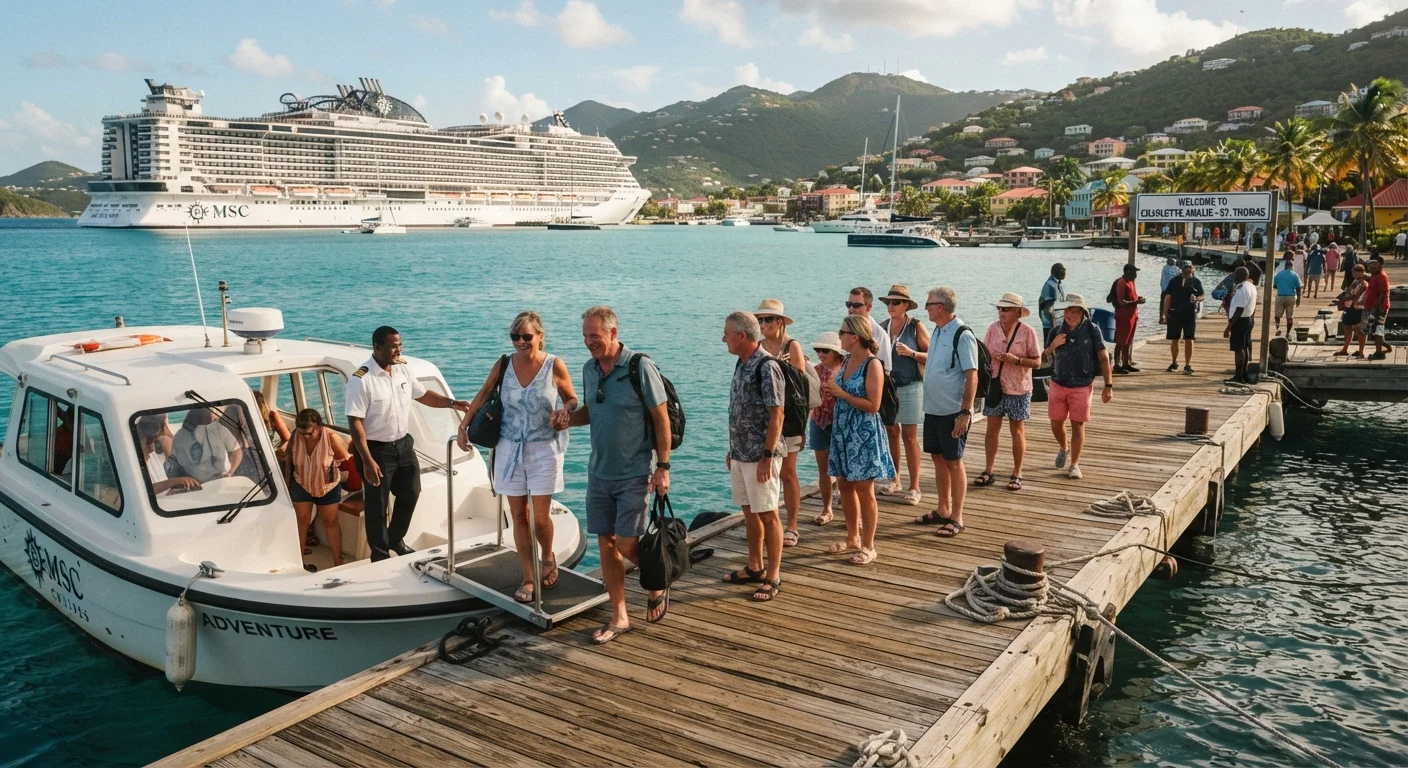
Tender port
A port where the ship anchors offshore instead of docking. Passengers travel to land by small boat (tender), which adds time to the port-day schedule.
Ship-wait guarantee
A policy offered by cruise lines that guarantees the ship will wait if an excursion booked directly through the cruise line runs late. It does not apply to independently booked tours.
Independent operator
A local tour company or guide not affiliated with your cruise line. Independent operators often charge less than cruise-line excursions but do not come with the ship-wait guarantee.
Types of Excursions Available
Excursions broadly fall into a handful of categories. Understanding the landscape helps you match the activity to your interests - and your budget.
- Cultural and historical tours: Guided visits to ruins, museums, old towns, or religious sites. Often half-day, moderate cost, and accessible to most fitness levels.
- Adventure and active tours: Ziplining, snorkeling, kayaking, hiking, and similar activities. Prices vary widely; check age, health, and fitness requirements carefully.
- Beach and water access: Some ports require a paid transfer to reach usable beaches. Others have public beaches within walking distance - worth researching before booking.
- Food and beverage experiences: Market tours, cooking classes, wine or spirit tastings. These tend to attract smaller group sizes and higher per-person costs.
- City and scenic overviews: Bus or van tours covering multiple landmarks. Lower cost, efficient for unfamiliar cities, but less immersive than walking tours.
For a port-by-port breakdown of what categories are typically available where, the shore excursion research guide by port type is a useful planning companion.
Cruise-Line Excursions vs. Independent Options
This is the core trade-off every first-timer faces. Cruise lines sell their own curated excursions directly - convenient, pre-vetted, and covered by the ship-wait guarantee. Independent operators (local tour companies, private guides) often offer the same or similar experiences at a lower price point, sometimes with smaller groups and more flexibility.
The Ship Will Not Wait for Independent Tours
If you book an excursion outside the cruise line and it runs over time, the ship will depart without you. You would then be responsible for traveling to the next port at your own expense. Always leave a significant time buffer - experienced cruisers commonly aim to be back at the ship at least 60-90 minutes before the all-aboard time when on independent tours.
The ship-wait guarantee is the strongest argument for booking through your cruise line: if a ship-sponsored tour runs long, the ship waits. With an independent booking, the ship will depart on schedule regardless of your whereabouts. This risk is manageable with careful planning - build in a realistic buffer before the all-aboard time - but it is a genuine consideration, especially at unfamiliar or logistically complex ports.
For a detailed look at how cruise-line excursions are priced and packaged, Shore Excursions Decoded walks through the commercial mechanics behind what you're actually buying.
How to Decide What's Worth Booking
Not every port justifies a paid excursion. A useful decision framework:
- Assess walkability. If the port drops you in a walkable town center with clear signage and accessible attractions, a paid tour may add little value.
- Evaluate access barriers. Some of the most compelling sites - certain archaeological zones, remote beaches, protected natural areas - are genuinely difficult to reach without an organized tour. Here, a booking often makes sense.
- Compare prices honestly. Look up what independent operators charge for the same basic activity. A premium for the ship-wait guarantee may be reasonable; a 60-80% markup for equivalent access generally is not.
- Consider group size and experience quality. Cruise-line excursions often move large groups on tight schedules. Smaller independent tours can allow more time on site and a more personal experience.
The comprehensive shore excursion guide covers planning, cost benchmarks, and value assessment in much greater depth if you want to go further.
Use Port Days Strategically
Assign your excursion budget to ports where access genuinely requires a guide or transport - remote ruins, offshore islands, or protected natural areas. Reserve your free-exploration time for walkable city stops where local wandering costs nothing. This approach typically delivers better experiences at lower overall spend.
Practical Tips Before You Book
A few fundamentals that prevent avoidable surprises:
- Read cancellation policies carefully. Cruise-line excursions often allow cancellation up to 48 hours before port arrival; independent operators vary widely. Confirm before paying.
- Check physical requirements. Many adventure activities list minimum age, weight limits, or fitness requirements. These exist for safety - review them honestly.
- Note the all-aboard time, not the docking time. The ship departs at the all-aboard time. Build your day around that deadline, not the time you arrive in port.
- Account for tender delays at anchor ports. At tender ports, getting ashore takes additional time. Factor this into your excursion start time and overall schedule.
- Budget as a share of total cruise cost. Excursion spending can easily double a port day's cost. Decide in advance how much of your overall cruise budget you're allocating to shore activities.
For a pre-departure checklist that covers excursion prep alongside other planning essentials, see Before You Book: A Pre-Cruise Planning Checklist. And if you're approaching this as part of a full cruise plan, The Complete Guide to Planning a Cruise provides the wider budget and logistics context.
This article provides general travel information for educational purposes. Prices, policies, and excursion availability change frequently - verify all details directly with your cruise line or tour operator before booking.