
Why First-Timers Need a Pre-Cruise Checklist
Booking a cruise feels straightforward until you realize how many moving parts sit behind that single confirmation email. Unlike a hotel stay, a cruise involves a floating itinerary, multiple port logistics, an onboard financial account, and document requirements that vary by destination. Missing one element can mean a denied boarding or an unexpectedly expensive voyage.
This checklist is designed for first-time cruisers who already understand basic trip planning but want a structured way to verify every critical step. For a broader overview of how cruise planning fits together, see our complete cruise planning guide. If you're traveling with family, the pre-departure family travel checklist covers additional considerations worth layering in.
Documents & Identity
Budget & Fare Transparency
Travel Insurance
Embarkation Logistics
Health & Safety
Tools You'll Need to Work Through This Checklist
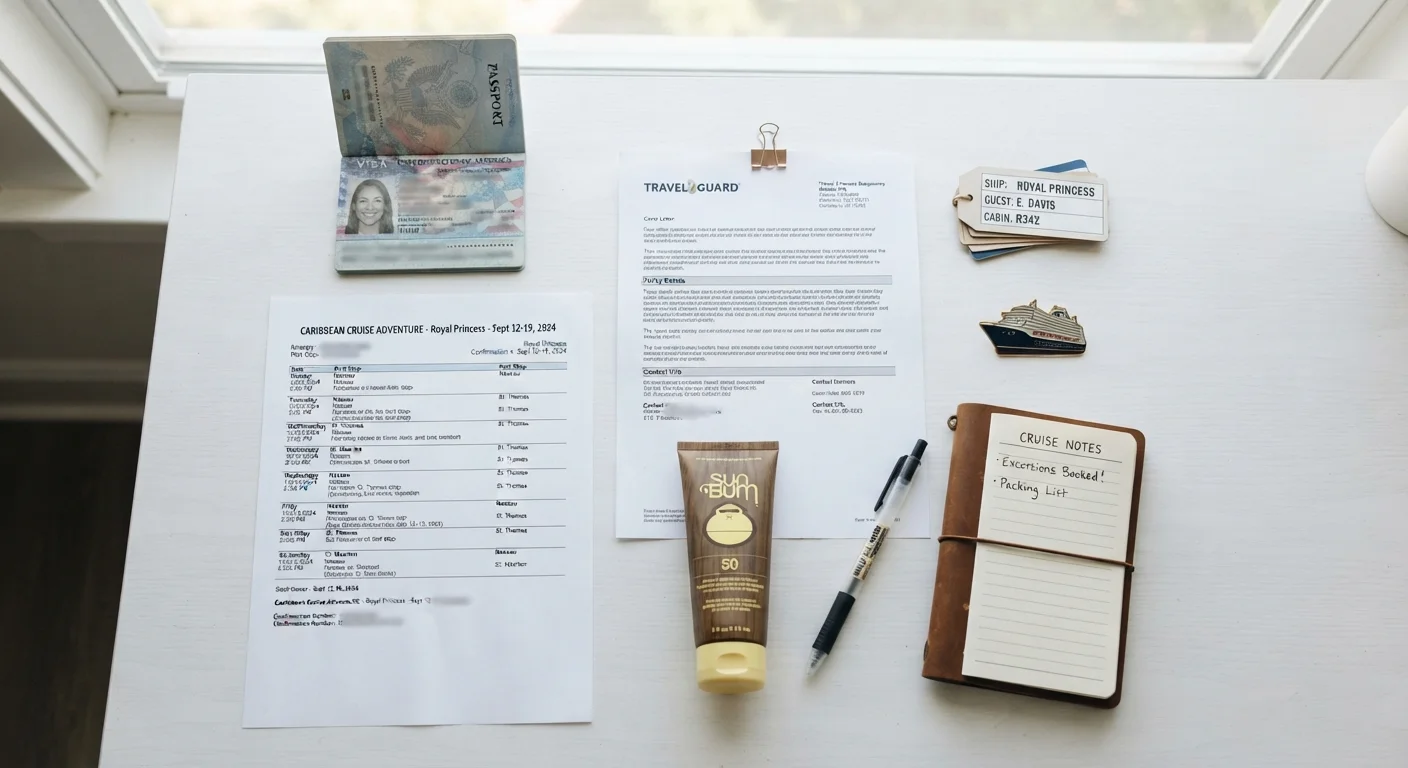
Before running through the checklist items, gather the tools below. Having these on hand lets you verify, compare, and confirm in a single focused session rather than chasing information across multiple sittings.
Valid Passport
Required for identity verification at embarkation and entry into international ports of call.
Travel Insurance Policy Documents
Needed to confirm coverage scope, emergency contact numbers, and claim procedures before you depart.
Cruise Booking Confirmation
Contains your reservation number, cabin category, included amenities, and cancellation terms.
Official Government Travel Advisory Site (e.g., travel.state.gov)
Used to verify visa requirements, entry rules, and current safety advisories for each port of call.
Cruise Line Mobile App
Allows you to pre-register, select boarding times, manage onboard account settings, and review daily itineraries.
Spreadsheet or Budgeting Tool
Helps track the full cost of your cruise including add-ons, excursions, and daily spending allowances.
What to Verify After Booking
Completing this checklist before your deposit clears is ideal, but many travelers find gaps only after they've booked. It's never too late to audit your reservation. Pay particular attention to what is and isn't included in your fare - gratuities (sometimes called a "service charge" or "hotel charge") are automatically billed on most major lines and can run $15-$20 per person per day or more. Specialty dining, drink packages, and Wi-Fi are almost always extra.
Gratuities Are Almost Never Optional
Most cruise lines automatically add a daily service charge - often called a "gratuity" or "hotel charge" - to your onboard account. These fees are charged per person, per day, and can total hundreds of dollars for a week-long voyage. Treat this as a fixed cost when evaluating the true price of your cruise, not an afterthought.
Once you're confident on the core logistics, turn your attention to ports. Shore excursions and add-ons deserve their own careful review before you spend. Our pre-purchase checklist for cruise extras walks through cancellation terms, value assessment, and common upsell tactics. For a broader introduction to how excursions work, the first-timer's guide to cruise excursions is a useful starting point.
Don't Rely on the Ship's Return Window
Cruise ships depart on schedule regardless of whether all passengers have returned from port. If you book independent activities ashore and encounter a delay - traffic, a late tour, a mechanical breakdown - the ship will not wait. Always build a meaningful time buffer between your last shoreside activity and the all-aboard deadline stated in your daily schedule.
Solo cruisers face an additional layer of planning. Most cruise lines apply a single supplement - a surcharge for occupying a double cabin alone - that can effectively double your per-person fare. Review our solo trip planning hub for strategies on minimizing this cost, including studio cabin options and sailings that waive the supplement. For port-day activity decisions, explore the excursions and add-ons hub to weigh ship-organized tours against independent exploration.