
How the Shore Excursion Business Actually Works
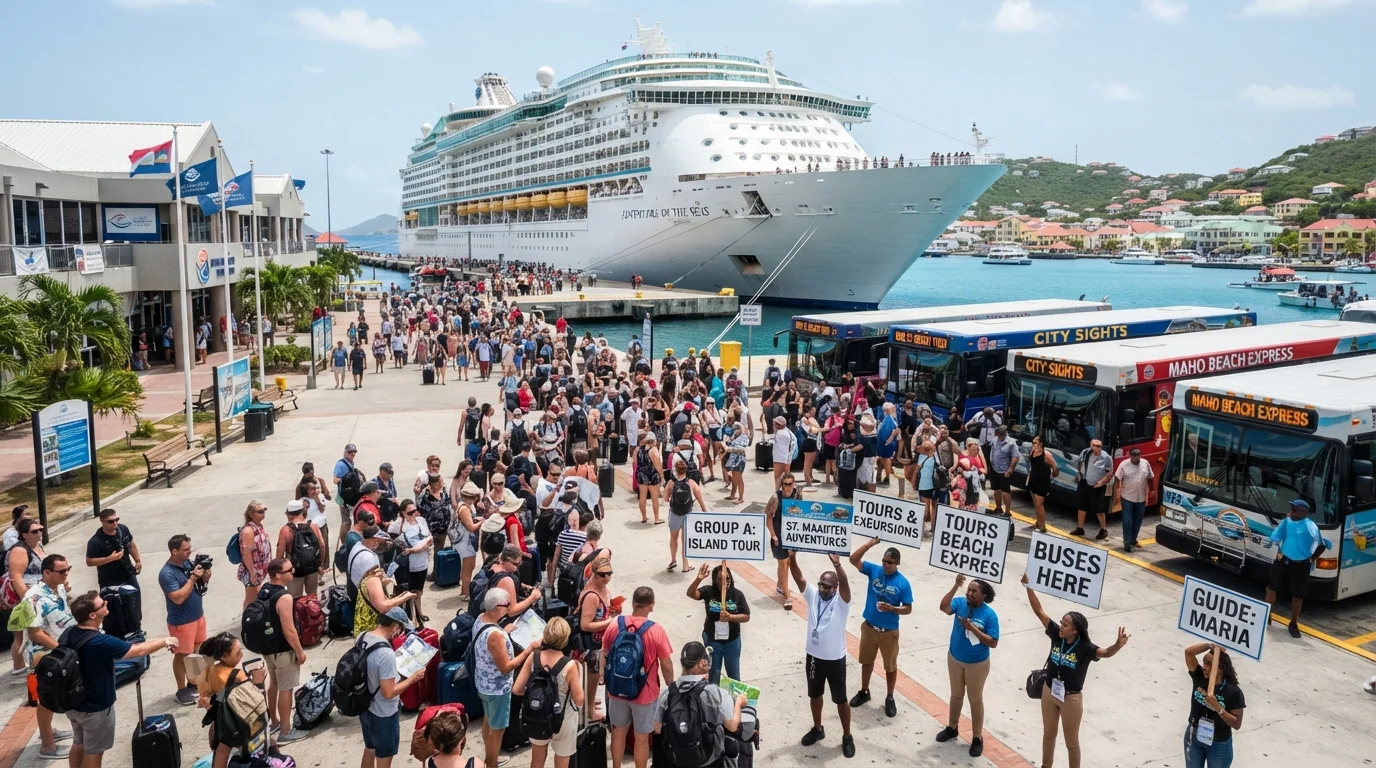
When a cruise line lists a shore excursion in its onboard app or pre-cruise catalog, it is selling you access to a tour that a local operator - a regional company licensed in that port - actually runs. The cruise line's role is marketing, booking logistics, and passenger coordination. The local company handles guides, vehicles, entry tickets, and the experience itself.
Between those two parties sits a commission arrangement. The cruise line collects a percentage of every ticket sold before paying the operator. This structure means the price you see in the ship's catalog reflects not just the cost of the activity, but also the line's margin. That context is essential when evaluating whether any given excursion is priced fairly.
For a broader orientation to how excursions fit into cruise travel overall, see our first-timer's introduction to cruise excursions.
30-50%
Typical cruise line commission on shore excursions
Industry analysts and travel trade publications have broadly estimated cruise line commission rates in this range, though exact figures vary by line and operator agreement.
~$100
Average per-person spend on ship excursions per port
Cruise industry financial disclosures have cited per-passenger onshore spending figures that suggest excursion costs in this range are common across major itineraries.
What You're Paying For - and What You're Not
Shore excursion prices bundle several things together: the operator's actual tour cost, the cruise line's commission, basic liability coverage, and the ship's guaranteed-return policy. That last element - the promise that the vessel won't depart without you if a ship-sold tour runs late - is tangible and worth something, particularly in complex or distant ports.
What you are generally not paying for: superior guides, exclusive access, or inherently better equipment. In many cases, the exact same local operator runs both the cruise-line version and a direct-to-consumer version of the same tour. The itinerary, the guide, and the vehicle may be identical. The price, however, is not.
This doesn't mean ship-booked excursions are always poor value. In ports where logistics are genuinely difficult, where language barriers are significant, or where the activity requires specialized safety oversight, the cruise line's vetting and coordination add real utility. The problem is applying that logic indiscriminately to every port on an itinerary.
Research Local Operators Before You Sail
For each port on your itinerary, search for the activity you want alongside the port name before you board. Many local operators that contract with cruise lines also sell directly and are findable through travel forums and their own websites. Doing this research at home - before the ship's excursion desk opens - gives you time to compare options without pressure.
Reading the Excursion Catalog Without the Marketing Filter
Cruise-line excursion descriptions are written to sell. A few patterns are worth recognizing. Activity-level ratings ("easy," "moderate," "strenuous") are self-reported and inconsistent across lines - they are not standardized. Duration estimates often exclude transit time to and from the ship, compressing what looks like a half-day tour into a fraction of usable time at the destination. Group size caps listed as "small group" can mean anywhere from 12 to 40 passengers depending on the operator.
Pricing structures also reward early attention. Bundled excursion packages - where you prepay for multiple tours across an itinerary - are presented as discounts. Whether they are depends entirely on whether you would have purchased each tour individually at the à-la-carte price, and whether those prices are competitive with independent options.
Our framework for evaluating any shore excursion walks through the specific questions to ask before committing to any booking.
Where Independent Booking Changes the Calculus
For many ports, particularly those with established tourism infrastructure, independent excursion booking is straightforward. Local operators are accessible online before departure, reviews are verifiable, and pricing is transparent. The core trade-off is always the guaranteed-return protection versus the potential cost saving - a trade-off that deserves individual analysis per port, not a blanket policy.
Ports where independent booking tends to work well include those with reliable local transport, walkable town centers, and well-reviewed independent operators. Ports where the ship's excursion may be harder to replicate include remote natural sites with limited direct-access options, or destinations where the cruise line has negotiated exclusive entry windows.
For a structured comparison of both approaches, see ship-booked vs. independent shore tours. And for a port-by-port research approach, our shore excursion research guide by port type covers what to investigate before you arrive.