
The Four Core Cabin Categories
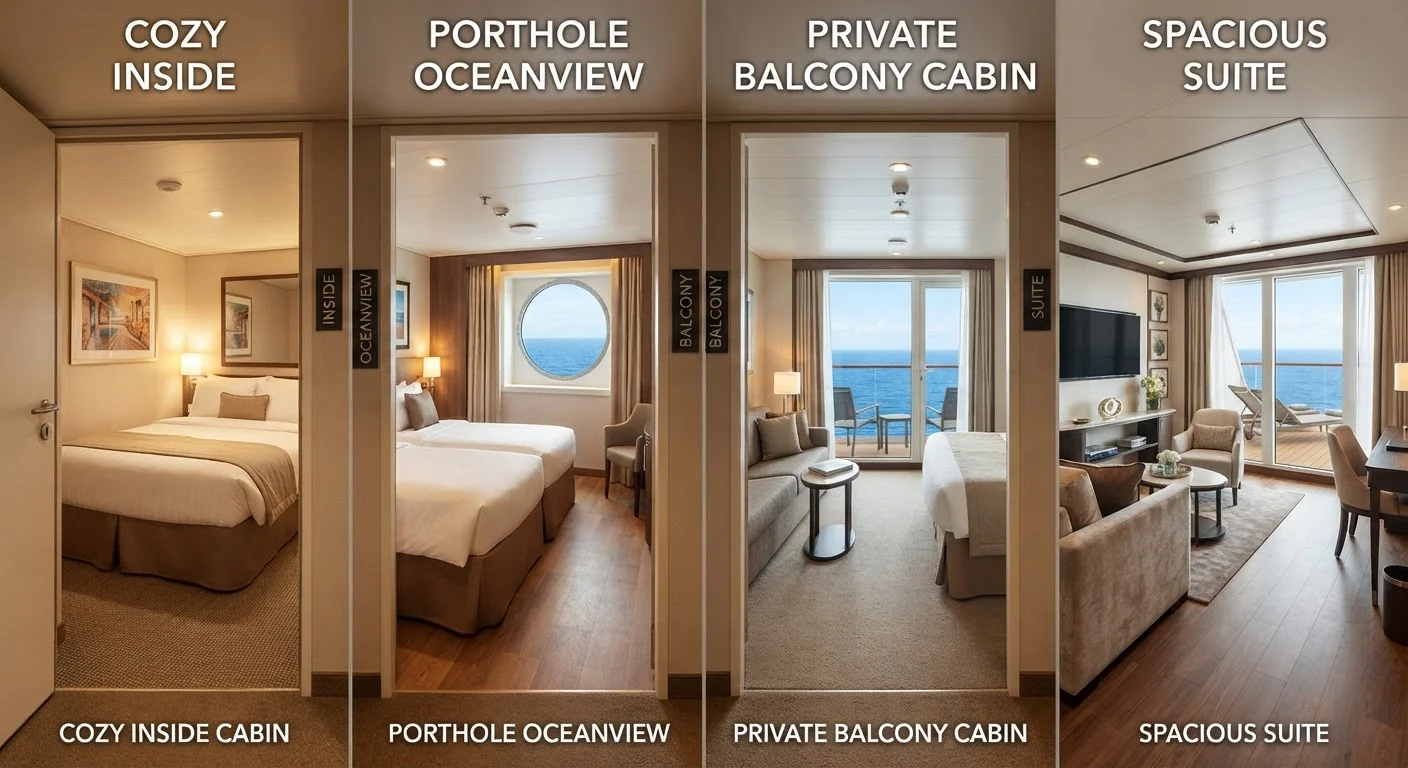
Cruise staterooms fall into four broadly recognized categories: inside (also called interior), oceanview, balcony (or verandah), and suite. Each tier adds amenities - and cost - over the one below it. Understanding what each actually delivers, versus how it's marketed, is the foundation of booking a cabin that genuinely fits your trip.
Cabin size, layout, and exact inclusions vary considerably between cruise lines and ship classes. The descriptions below reflect general industry norms; always review the specific deck plans and cabin specifications for any sailing you're considering. For context on how fares fluctuate across categories and sailing dates, see our guide to cruise pricing.
| Inside | Oceanview | Balcony | Suite | |
|---|---|---|---|---|
| Typical size (sq ft) | 150-185 | 160-200 | 175-225 + balcony | 300-1,500+ |
| Natural light | None | Window or porthole | Full window + door | Full window + door |
| Private outdoor space | No | No | Yes - balcony | Yes - large balcony or terrace |
| Relative fare vs. inside | Baseline | ~10-25% more | ~30-60% more | ~100-300% more |
| Typical included perks | Standard | Standard | Standard | Concierge, dining, drinks (varies) |
| Best itinerary fit | Port-heavy, short sailings | Any sailing | Scenic, longer voyages | Any - value tied to perk use |
Inside Cabins: Maximum Savings, Minimum Natural Light
Inside cabins have no exterior window or porthole - walls on all four sides. They are typically the smallest staterooms on the ship, commonly ranging from roughly 150 to 185 square feet, though newer ships sometimes offer slightly larger interiors. What they lack in light they compensate for in price: inside cabins are consistently the lowest-fare option on almost every sailing.
The practical impact of no natural light is often overstated for active travelers. If you plan to be off the ship at every port, spend evenings at onboard dining and entertainment, and treat the cabin as a place to sleep and store luggage, the absence of a window rarely registers as a hardship. Blackout conditions can even help shift-workers or light-sensitive sleepers.
Where inside cabins genuinely struggle: long sea days on itineraries with few port stops, or any voyage where rough conditions keep passengers inside for extended periods. On a seven-night Caribbean sailing with six port days, an inside cabin is a rational choice. On a transatlantic crossing with multiple consecutive sea days, the calculus changes.
Cabin Location Matters Too
Within any category, cabin placement on the ship affects your experience significantly. Midship cabins on lower-to-middle decks tend to feel the least motion in rough seas - a practical consideration for travelers prone to seasickness. Forward and aft cabins at higher decks may offer dramatic views but more noticeable movement. Always check the deck plan, not just the category, before confirming a booking.
Oceanview Cabins: Natural Light Without the Outdoor Access
Oceanview cabins add a window or porthole - fixed, not openable - bringing in daylight and a visual connection to the sea. They typically run 10-25% more than comparable inside cabins on the same sailing, though the gap varies widely by cruise line and demand.
The value proposition here is narrower than it might appear. You gain natural light, but no fresh air and no ability to step outside. On itineraries where you'll primarily be in port or on deck, that distinction matters less. On scenic routes - Alaska, Norway, the Antarctic - watching the landscape from your own window carries real appeal, though a balcony delivers it more fully.
One practical note: on older ships, some oceanview cabins have obstructed views due to lifeboats or structural columns. Deck plans will indicate this, and obstructed-view cabins are priced lower - sometimes comparable to inside rates - which can represent good value if you simply want ambient light rather than a clear sightline.
Balcony Cabins: The Comfort Sweet Spot for Many Travelers
Balcony cabins - also marketed as verandah or terrace staterooms - include a private outdoor space, typically furnished with two chairs and a small table. Square footage inside is generally similar to oceanview cabins, but the balcony itself adds functional living space and, critically, fresh air and unobstructed views.
The premium over an inside cabin varies but commonly falls in the range of 30-60% for the same sailing. On a seven-night voyage, that gap translates to a meaningful dollar figure per person. Whether it's worth it depends on how you use the space: morning coffee watching the ship arrive in port, sea-day relaxation, or stargazing at night are experiences that cabin-level outdoor access enables in ways the ship's public decks cannot fully replicate.
On itineraries through scenic destinations - Alaska's Inside Passage, the Norwegian fjords, or the Greek islands - a balcony materially enhances the experience. On a short Bahamas weekend sailing where you're in port most of the time, the premium is harder to justify. Itinerary length and destination scenery are the two most reliable tests. For broader itinerary considerations, see our guide to cruise itineraries by region.
Suites: When the Extras Justify the Premium
Suite categories range from junior suites - often only modestly larger than a balcony cabin - to multi-room, multi-bathroom flagship suites occupying prime forward or aft deck real estate. The common thread is additional space and, on most cruise lines, a package of perks that can include priority embarkation, dedicated concierge or butler service, access to exclusive lounges, complimentary specialty dining, and enhanced beverage packages.
Fares for suite-category cabins can run two to four times the cost of an inside cabin on the same sailing. The financial question worth asking honestly: what is the per-night cost of those bundled perks versus purchasing them à la carte? On cruise lines where suite guests receive a premium drinks package, specialty dining access, and gratuities included, the effective premium over a balcony cabin may be smaller than the sticker price suggests. On lines where suite perks are thinner, the price gap is harder to bridge.
Suites make the most sense for travelers who genuinely value the space - families needing a separate sleeping area, or travelers with mobility needs who benefit from larger bathrooms - or those who would otherwise purchase most of the included perks individually. For a full breakdown of what cruise fares typically include across all cabin types, see what's actually included in a cruise fare.
This article is part of our complete cruise planning guide.
Cabin sizes, pricing relationships, and included amenities vary between cruise lines, ship classes, and sailing dates. Always review current specifications directly with the cruise line or a licensed travel agent before booking.