
Why Different Search Engines Show Different Prices
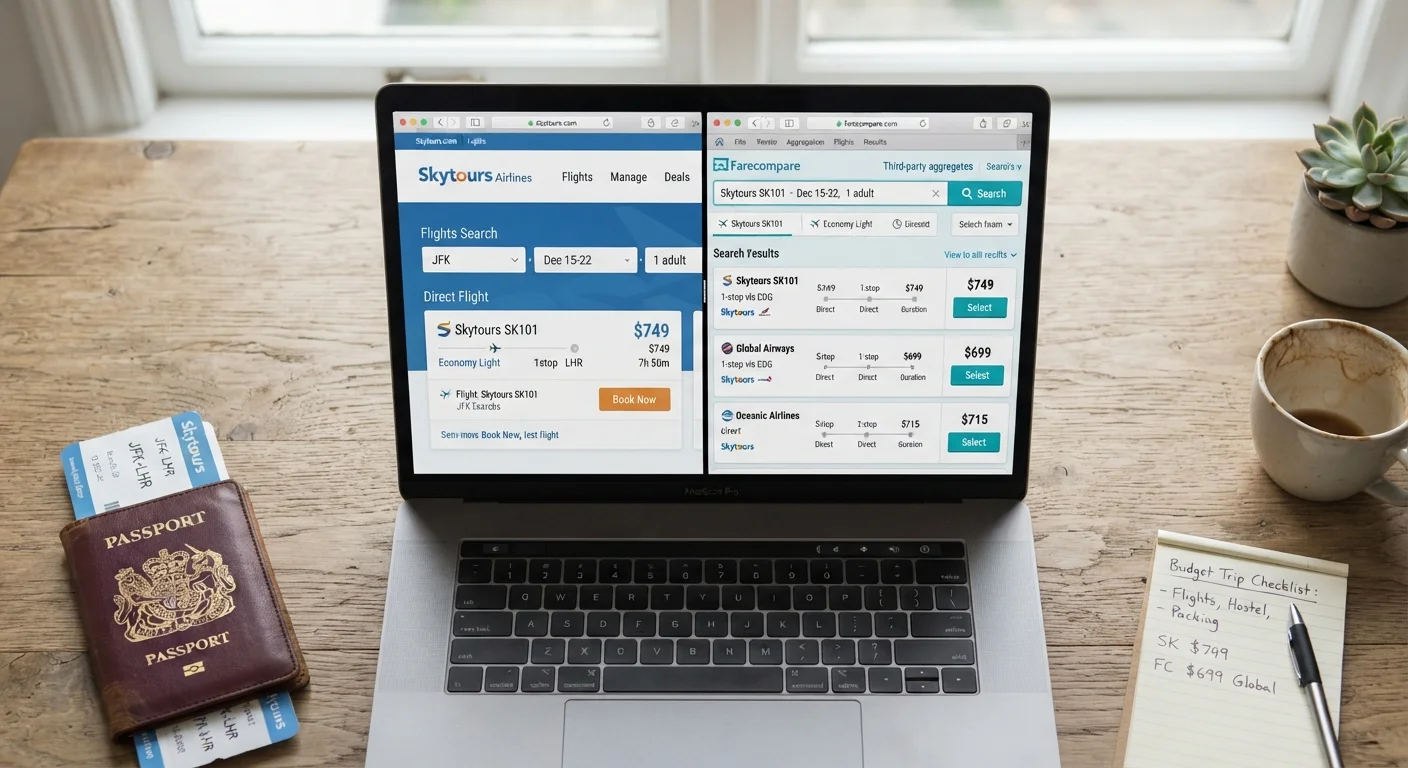
If you've searched the same route on two different platforms and seen prices diverge by $80 or more, you weren't imagining it. Flight search engines do not all draw from the same pool of fares. The core reason is how each tool connects to airline inventory.
Most major search engines use a GDS - a centralized reservation network - to pull published fares from airlines. But GDS coverage varies: some airlines distribute fares through multiple GDS providers, while others, particularly low-cost carriers, bypass GDS entirely and only sell through their own websites. That means a tool heavily reliant on one GDS may structurally miss fares that another platform surfaces.
Beyond GDS connections, some engines negotiate direct data feeds with airlines, giving them access to fares or seat inventory that isn't available through the standard GDS channel. Others aggregate results from multiple sources and deduplicate, which sounds comprehensive but can introduce lag or inconsistencies.
For a deeper look at how pricing changes between the moment you search and when you click through to book, see how airline pricing algorithms work.
How the Major Tool Types Actually Differ
Flight search tools generally fall into a few distinct categories, each with meaningful differences in what they show you.
| Meta-Search Engines | Online Travel Agencies | Airline Direct Sites | |
|---|---|---|---|
| Fare source | GDS + direct feeds | Own inventory + GDS | Airline-controlled only |
| Low-cost carrier coverage | Partial - varies by tool | Partial - varies by OTA | Full for that carrier |
| Fee transparency | Inconsistent | Moderate | Most accurate |
| Flexible date search | Often available | Limited | Carrier-dependent |
| Who processes the booking | Third party (redirect) | OTA directly | Airline directly |
| Change/cancel flexibility | Depends on redirected site | OTA policy applies | Airline policy applies |
| Unpublished/consolidator fares | Rarely | Sometimes | No |
Meta-search engines aggregate results from OTAs (online travel agencies) and sometimes direct airline feeds. They're useful for broad comparisons but often redirect you to a third party to complete the booking - introducing a second price-check opportunity before you pay.
Online travel agencies (OTAs) hold their own inventory and process the booking directly. This can unlock package-rate fares or negotiated pricing, but it also means you're buying from an intermediary rather than the airline, which matters if you need to change or cancel.
Direct airline websites sometimes offer fares that never enter the GDS at all - particularly during sales or for basic economy seats on carriers that restrict their cheapest inventory to direct channels. Checking the airline's own site for a route you've already identified elsewhere is a low-effort step that occasionally pays off.
If you're still building your search strategy from scratch, what to know before your first fare search covers the foundational concepts worth understanding first.
Fee Transparency: Where Search Engines Diverge Most
One of the starkest differences between platforms isn't the base fare - it's what they show you before you click through. Some engines display a headline price that excludes checked baggage fees, seat selection charges, and booking fees. Others attempt to show an all-in estimate, though this requires the airline to supply that data, which not all do consistently.
Headline Fares Often Exclude Key Fees
Base fare comparisons are unreliable without accounting for checked baggage, seat selection, and payment surcharges. These fees vary significantly by carrier and fare class and are rarely reflected accurately in the initial search result. Always price your full itinerary - including all the extras you'll actually need - at the checkout stage before finalizing a choice.
A fare that looks $40 cheaper on one platform may actually cost more once you factor in a checked bag on a carrier that doesn't include it. This is particularly common when comparing legacy carriers - where bag fees are added at checkout - against airlines that bundle fees differently.
The practical workaround: once you've identified a promising fare on any search engine, open the airline or OTA checkout flow and price the exact combination you need (bags, seat, payment method) before declaring it the winner. This takes an extra few minutes but prevents the common mistake of optimizing for the headline number.
Understanding what's buried in the results page is also covered in detail in decoding flight search results and hidden costs.
Filters and Search Features That Actually Matter
Beyond the base fare, how a search engine lets you filter and sort results significantly affects what you end up comparing. Key differences include:
- Flexible date grids: Some platforms offer a calendar or grid view showing how fares shift day by day across a month. This is one of the most practically useful features for travelers with any schedule flexibility. Not all engines offer it, and those that do vary in how current their data is.
- Layover and connection control: Filtering by maximum layover time, preferred airports, or number of stops is standard, but the granularity differs. Some platforms let you exclude specific airports; others don't.
- Alliance and frequent flyer filters: Travelers who accrue miles with a specific program may want to filter for partner airlines. This feature exists on some platforms but is absent or limited on others.
- Nearby airport search: A few engines automatically include alternate origin or destination airports in results; others require you to search each separately.
For a practical comparison of fare-tracking tools that complement your search - including price alert services - see how fare alert tools actually perform. And if you've heard that using incognito mode changes the prices you see, the evidence on private browsing and flight prices is worth a read before you change your browsing habits.
Run at Least Two Searches Before Booking
Pick one broad meta-search engine and then check the airline's own website directly for the same itinerary. These two data points together will catch most fare discrepancies. If the route involves a low-cost carrier, go to that carrier's site directly - they frequently keep their cheapest fares off third-party platforms entirely.