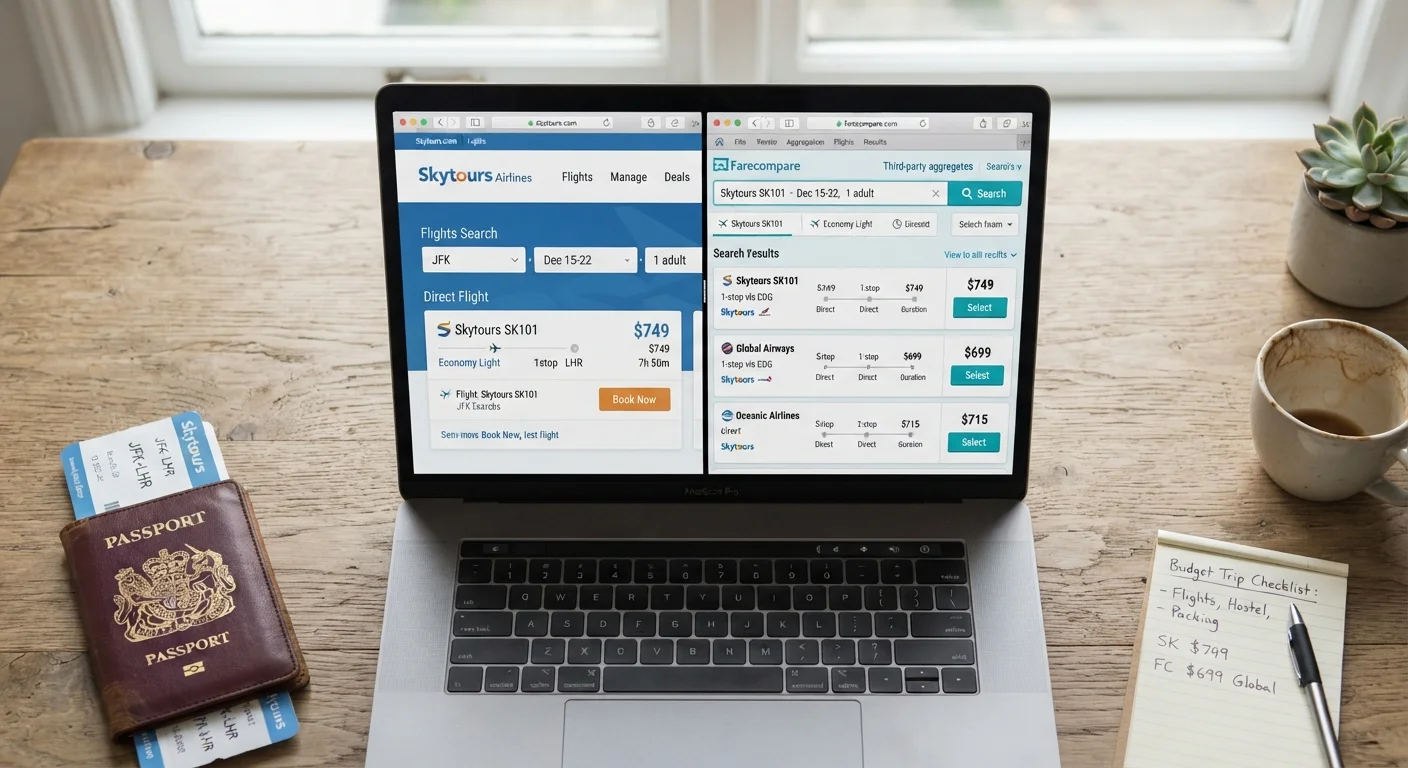


Why Preparation Before the Search Pays Off
Most travelers open a flight search engine, type in their destination, and start comparing prices - without first establishing the parameters that actually determine whether a fare is good for them. The result: hours spent evaluating options that don't fit their schedule, documents, or budget, and a booking that looks cheap until the fees stack up.
This checklist is designed to run in the opposite direction. Work through it before you open any search tool, and you'll enter the process with a clear picture of your constraints and opportunities. That clarity translates directly into better decisions and, in most cases, lower total costs.
If you're brand new to hunting for affordable airfare, our beginner's guide to finding cheap flights is a useful complement - it covers search tools, fare alerts, and budget carrier tradeoffs in detail. This checklist assumes you already have the basics down and focuses on the preparation step that most travelers skip entirely.
Date & Schedule Flexibility
Airport & Route Options
Documents & Entry Requirements
Budget & Hidden Cost Awareness
Search Strategy Setup
Tools You'll Need to Work Through This Checklist
None of these tools require a paid subscription. The goal is to gather information, not to book anything yet.
Calendar (digital or paper)
Map your firm and flexible travel dates, note public holidays, and identify mid-week windows before you start searching.
Government passport & visa portal
Verify your passport expiry date and look up official entry requirements for your destination.
Mapping or transit app
Estimate drive times and ground transport costs for alternate airports near your origin and destination.
Spreadsheet or notes app
Record your budget breakdown, airport options, and checklist findings so you can reference them during your search session.
Fare alert tool
Set route-specific alerts to establish a baseline price range before you commit to searching and booking.
Once you've assembled this information, you'll be in a much stronger position when you move into active fare comparison. For a deeper look at timing your search for maximum savings, see the Booking & Timing Tips hub, which covers when to search based on route type and season.
Don't Let a Low Base Fare Set Your Budget
A headline fare that excludes bags, seat selection, and airport transfer costs can end up more expensive than a higher-priced ticket that includes them. Always calculate the total door-to-door cost before deciding a fare is genuinely cheaper. Build that habit into your search session from the start, not as an afterthought at checkout.
Passport Validity Is Non-Negotiable
Airlines can deny boarding if your passport doesn't meet the destination country's validity requirements - typically six months beyond your return date, though rules vary. Renewing a passport takes time and can be costly if expedited processing is needed. Check your expiry date before you spend time comparing fares for a trip you may not be able to take.
How to Use Your Results
After completing this checklist, you should have a written or noted record of: your firm and flexible travel dates, every airport within reasonable range of your origin and destination, your passport expiry date and any visa requirements, your total trip budget broken into components, and your actual baggage needs for this trip.
Take that record into your search session. Filter results against it rather than letting attractive fares redefine your constraints on the fly - that's the moment when impulse bookings happen and costs creep up. The Finding Cheap Flights hub has strategies for applying these parameters effectively once you're inside a search tool.
If you're planning a shorter domestic trip alongside or instead of flying, the same preparation discipline applies - our weekend getaway planning checklist walks through the equivalent audit for road trips and quick domestic breaks.
Finally, once you've booked, shift your attention to the airport experience itself. The pre-flight airport checklist covers documents, gate timing, and bag compliance so nothing falls through the cracks on travel day.
This article provides general travel planning information only. Prices, visa rules, passport requirements, and airline policies change frequently - always verify current requirements with official government sources and your airline before booking or travelling.