

Why Airfare Prices Vary So Much
Flight pricing is driven by algorithms that adjust fares in real time based on remaining seat inventory, competing airlines, travel demand on a given route, and how far in advance people are booking. A seat on the same flight can sell for dramatically different prices depending on when you look.
Airlines divide aircraft cabins into fare classes - each a separate pricing bucket with its own rules about changes and cancellations. When the cheaper buckets sell out, the algorithm promotes the next tier. This is why a fare you saw on Monday may be gone by Wednesday.
Fare class
A pricing category within a cabin (like economy) that determines the ticket price and the rules attached to it, such as whether changes or cancellations are allowed.
Global Distribution System (GDS)
A network that connects airlines with travel agencies and search engines, allowing fares and availability to be shared and booked centrally.
Base fare
The ticket price before taxes, fees, and any add-on charges like baggage are included. Comparing base fares without accounting for these extras can be misleading.
Fare alert
An automatic notification sent to you when the price on a route you're monitoring rises or falls, so you don't have to check manually.
Ultra-low-cost carrier (ULCC)
An airline that offers very low base fares but charges separately for nearly every service, including carry-on bags, seat selection, and sometimes printed boarding passes.
Seat inventory
The number of seats available at a given price point on a flight. When cheaper seats sell out, the airline releases higher-priced buckets to fill the remaining seats.
Before opening any search tool, it helps to know your rough parameters - origin airport, destination, approximate dates, and how many bags you'll need. That groundwork prevents you from comparing apples to oranges across search results. Our pre-booking checklist walks through the details worth confirming before you start.
How Flight Search Tools Actually Work
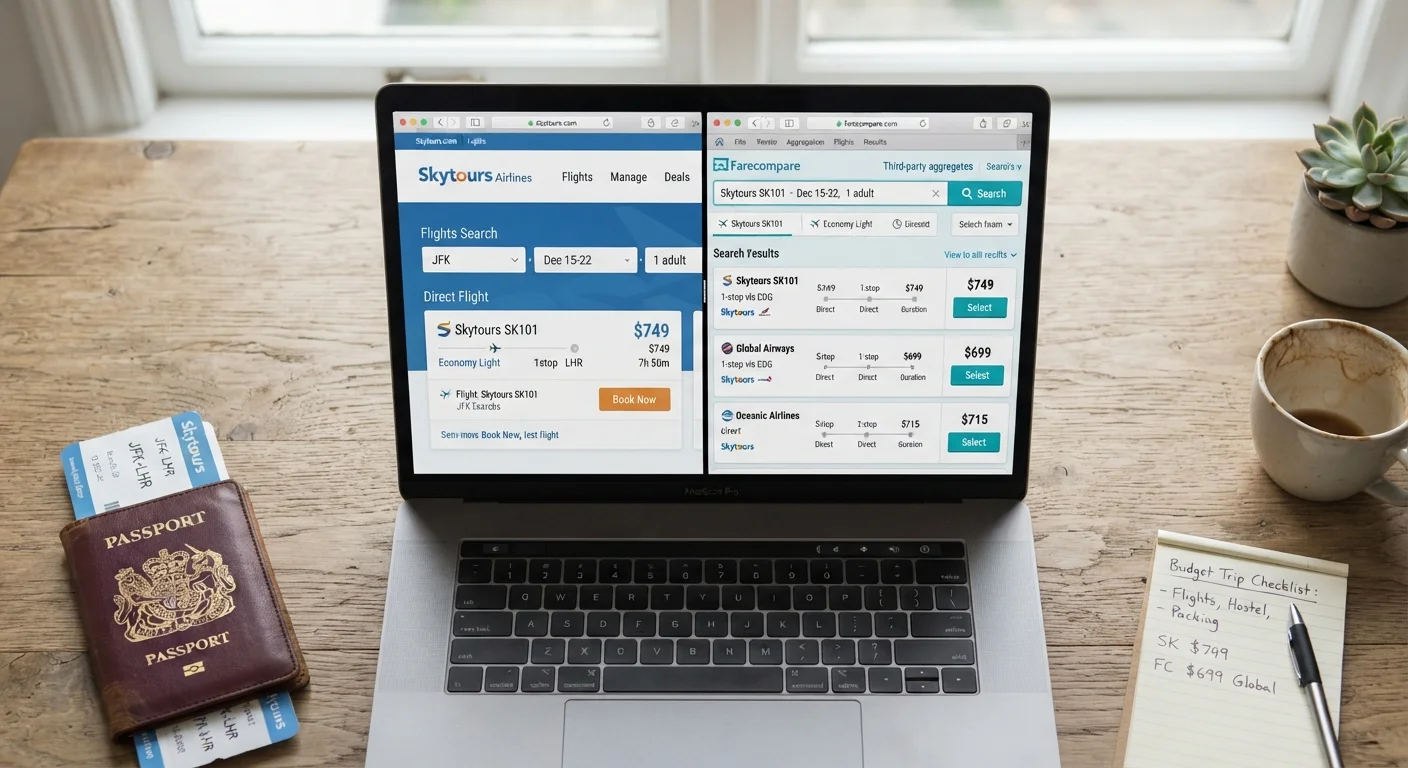
Flight search engines aggregate fare data from airline reservation systems, global distribution systems (GDSs), and sometimes direct airline feeds. Critically, no single tool indexes every available fare. Some airlines withhold certain prices from aggregators and only publish them on their own sites.
This means searching on one platform and calling it done can leave cheaper fares undiscovered. Using two or three different tools for the same route - and checking the airline's own site when a carrier stands out - gives a more complete picture. For a detailed breakdown of how specific search tools differ in what they surface, see how major flight search engines compare.
Check the Airline's Own Site Too
After identifying a promising fare on an aggregator, visit the airline's website directly to confirm the price. Some carriers offer fares exclusively on their own platforms that don't appear in third-party search results. It takes an extra two minutes and can occasionally surface a lower price.
Pay close attention to filters. Many tools default to showing total price including taxes, but some display the base fare only. Always verify what's included before assuming one result is cheaper than another.
Flexible Dates: The Single Biggest Lever
If your travel dates are negotiable, you have one of the most powerful cost levers available. Airlines price the same route differently across days of the week and weeks of the year based on anticipated demand. Shifting a departure by two or three days can sometimes mean a meaningful fare difference on popular routes.
Most search platforms include a calendar or grid view that displays prices across a range of dates simultaneously. This makes it straightforward to spot cheaper travel windows without running individual searches. If your destination is more flexible than your dates, flexible destination search tools can surface routes you might not have considered.
For a deeper look at when fixed versus flexible dates each make sense, the article on flexible vs. fixed date searching covers the practical tradeoffs.
Setting Fare Alerts Without the Noise
Fare alerts notify you when the price on a specific route changes - up or down. Setting one means you don't need to check prices manually every day, which reduces the temptation to book impulsively at a non-optimal moment.
Most search platforms let you save a route and choose how frequently to receive notifications. Set alerts for your primary route but also consider nearby alternate airports if driving an extra hour could save a significant amount. The finding cheap flights hub covers additional monitoring strategies worth layering in.
A Price Drop Isn't Always a Good Price
Fare alerts report price changes, not necessarily good prices. A drop from an unusually high starting point may still be above average for that route. Spend a few days simply observing prices before setting an alert, so you have a baseline for what a genuinely low fare looks like.
Fare alerts report price changes, not necessarily good prices. A drop from an unusually high starting point may still be above average. Spend a few days simply observing prices on your route before setting an alert, so you have a baseline for what a genuinely low fare looks like.
Budget Carriers: What You Gain and What You Give Up
Budget or ultra-low-cost carriers often advertise fares well below those of full-service airlines. The base ticket price can be genuinely lower, which matters for short trips where you travel light and don't need extras.
The tradeoff is that nearly everything beyond a seat is an add-on: carry-on bags, checked luggage, seat selection, and sometimes even printing a boarding pass at the airport. On longer or more complex itineraries, these fees can erode the initial savings significantly. Always calculate the total cost - ticket plus every fee for services you actually need - before deciding a budget fare is the right call.
Operational factors matter too. Budget carriers may use secondary airports farther from city centers, which adds transportation cost and time. They may also have stricter rebooking policies if your plans change. For a full walkthrough of evaluating these tradeoffs from the very first search through to booking, see our complete beginner's walkthrough.
This article provides general travel information for educational purposes. Prices, policies, and availability change frequently. Always verify current fares and airline terms directly before booking.