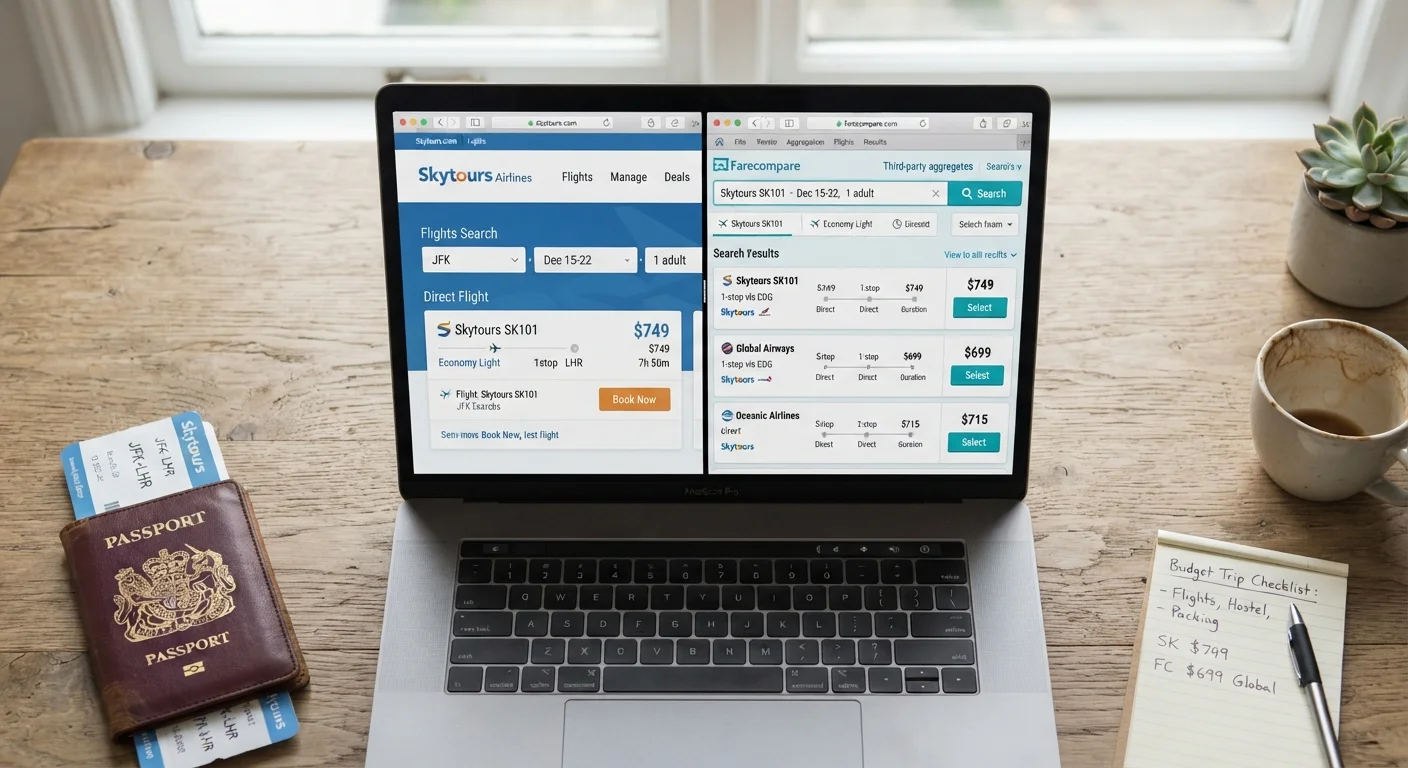

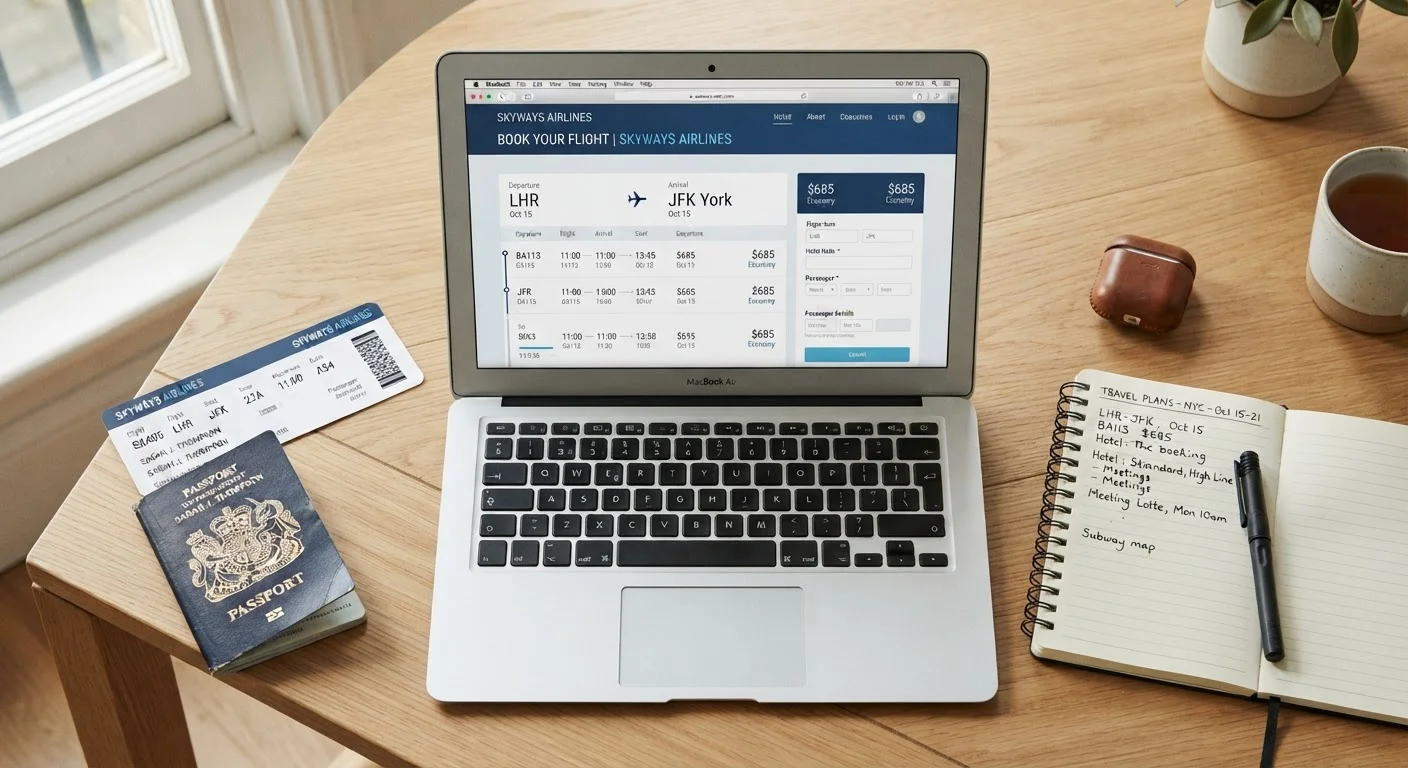
Why Airfare Jargon Affects Your Bottom Line
Airlines price seats using a layered system of codes, classes, and surcharges that most travelers never see. That gap in knowledge has a direct cost: booking the wrong fare class can mean losing hundreds of dollars in change fees, or missing a cheaper itinerary structure entirely. This glossary covers the terms that matter most when you're comparing fares, reading search results, or trying to understand why two seats on the same flight carry very different prices.
For a deeper look at how these terms interact with actual search results, see our guide on decoding flight search results.
Base Fare
The portion of an airfare set by the airline for the seat itself, before taxes, airport fees, and surcharges are applied. Comparing base fares across carriers without accounting for total cost can be misleading.
Fare Class / RBD
A single-letter code (Reservation Booking Designator) that defines the rules attached to a ticket, including refundability, change fees, and mileage earn rate. Multiple fare classes can exist in economy on the same flight.
Fare Bucket
A limited pool of seats sold at a specific fare class and price. When one bucket sells out, the airline opens the next class at a higher price, even if many seats remain unsold.
Open-Jaw Ticket
A ticket where the origin or destination of the outbound and return legs differ - for example, flying into one city and departing from another. This structure can reduce costs and eliminate backtracking.
YQ / YR Surcharge
A carrier-imposed surcharge filed under IATA codes YQ or YR, historically described as a fuel surcharge but now a general revenue element. It can add substantial cost to both paid and award tickets.
Codeshare
A flight operated by one airline but sold under the flight number of a partner carrier. Baggage rules, onboard service, and upgrade eligibility follow the operating carrier's policies, not the marketing carrier's.
GDS
Global Distribution System - the technology infrastructure used by travel agents and many booking platforms to access and display airline inventory. Fares may vary between GDS channels and airline direct sales.
Interline Agreement
A commercial arrangement between two or more airlines to handle passengers and baggage across each other's networks. Without one, connecting flights on separate tickets may not allow through-checked baggage.
Stopover vs. Layover
A layover is a connection of less than 24 hours; a stopover is a deliberate break of 24 hours or more at an intermediate city. Some airlines allow free or low-cost stopovers on international itineraries.
Positioning Flight
A flight taken to reach a departure airport that offers cheaper or better-routed fares than your home airport. The cost of the positioning flight must be weighed against total savings.
Core Pricing Structures and Ticket Types
Most confusion around airfare stems from how tickets are structured and what the base price actually includes. The terms below cover the foundational concepts.
| Fare Classes in Economy | Typically 8-15 distinct booking codes (Varies by carrier and route) |
| YQ Surcharge Range | Can reach $200-$700+ on long-haul routes (Dependent on carrier policy and route) |
| Open-Jaw Potential Saving | Often comparable to or less than a round trip (General industry practice) |
| GDS Platforms in Common Use | Amadeus, Sabre, Travelport (Galileo/Worldspan) (Major global platforms as of recent years) |
| Layover Threshold | Under 24 hours (stopover = 24 hours or more) (IATA standard definition) |
| Mileage Accrual by Fare Class | 25%-150% of miles flown, depending on booking code (Varies significantly by airline loyalty program) |
Base fare vs. total fare: The base fare is the carrier's charge for the seat before government taxes, airport fees, and fuel surcharges are added. The total fare - sometimes called the all-in price - is what you actually pay. Search engines in many jurisdictions are required to display the total fare upfront, but always verify the breakdown before checkout.
Open-jaw tickets let you fly into one city and out of another, or depart from a different city than your arrival point. This structure often costs the same as or less than a round trip, and can eliminate expensive backtracking. For example, flying into Rome and out of Barcelona on a single ticket may be more economical than two separate one-way fares.
Codeshare flights are operated by one airline but sold under the flight number of a partner carrier. The aircraft, crew, and service belong to the operating airline - which matters for baggage policies and upgrade eligibility. Always check which carrier actually operates your flight before assuming perks apply.
Budget carriers use a distinct pricing structure. Understanding how budget carriers structure their pricing helps you compare honestly against full-service options where ancillary fees are bundled differently.
Fare Classes, Buckets, and Surcharges
Fare classes are single-letter codes airlines use internally to segment inventory and set rules. They determine refundability, change fees, mileage accrual, and upgrade eligibility - not just price.
Fare bucket: Each fare class corresponds to a limited pool of seats at a specific price point. Once a bucket is sold out, the next available class is offered at a higher price - even if the flight is far from full. This is why the same seat can cost more if you check prices an hour later.
Booking class / RBD (Reservation Booking Designator): The letter code (Y, B, M, Q, etc.) stored in your reservation. Y typically denotes full-price economy; deeply discounted economy seats are often filed under letters like N, G, or V. These codes affect how many frequent-flyer miles you earn per dollar spent.
YQ surcharge (fuel surcharge): Airlines file a surcharge - historically linked to fuel costs but now essentially a revenue line - under the IATA code YQ or YR. It can represent a significant portion of international ticket prices and is separate from base fare. Award tickets redeemed with miles sometimes still carry these surcharges in cash, which is worth checking before redeeming points.
GDS (Global Distribution System): The technology platforms - such as those used by travel agents and many online booking tools - that aggregate and display airline inventory. Fares filed through a GDS may differ slightly from those on an airline's own website due to how each channel accesses inventory.
Many of these concepts are also covered in our reference guide to common flight pricing terms, which provides additional context on how these fees are calculated.