

Why the Listed Fare Is Just the Starting Point
Flight search results are designed to surface the lowest number first. That number is typically the base fare - stripped of checked bag fees, seat selection charges, change and cancellation penalties, and sometimes even carry-on allowances. Before you compare two itineraries, you need to understand what each fare class actually delivers.
Airlines use lettered fare classes (called booking codes) internally - Y, B, M, Q, and so on - which map to the named tiers passengers see: Basic Economy, Main Cabin, Comfort+, Business, and their equivalents across carriers. The key differences between tiers aren't just price; they're the rules attached. A Basic Economy fare typically locks you out of advance seat selection, restricts or eliminates free carry-on bags on budget carriers, and often prohibits changes or refunds entirely. Buying that fare to save $30 and then paying $35 for a seat assignment negates the saving entirely.
For a deeper look at how airline pricing logic works before you even reach the search results page, see how prices shift between searches.
One Metric to Rule Them All
Ignore the headline fare when comparing itineraries. Build a 'total cost' figure for each option by adding base fare, expected bag fees, and seat selection costs. Only that number gives you an accurate comparison. Budget carriers frequently win on base fare and lose on total cost - or vice versa.
Tools, Filters, and What They Actually Do
Most flight search interfaces give you filters for stops, departure time, duration, and airline. Used correctly, they sharpen results. Used carelessly, they hide genuinely good itineraries.
Flight search aggregator
Pulls results from multiple airlines and booking channels into one interface so you can compare fares across carriers simultaneously.
Airline's own website
Used to verify current baggage fee schedules and fare rules, which aggregators often display incompletely or with a delay.
Fare calendar tool
Displays price variation across a date grid to help identify cheaper departure windows on the same route.
Spreadsheet or notes app
Useful for tracking total-cost calculations across multiple itineraries so comparisons are based on the same inputs.
The stops filter is the most consequential. Nonstop fares are frequently 30-60% higher than one-stop options on the same route. Before reflexively filtering to nonstop, check whether the layover is long enough to be comfortable - and whether the connecting airport is one you're prepared to transit. A 45-minute connection in a busy hub is risky; 90 minutes is generally safer for domestic connections, and longer for international ones with customs.
The duration filter can inadvertently surface itineraries with very tight layovers if your total time window is narrow. Always click through to see the individual flight legs, not just the total trip time shown in the results row.
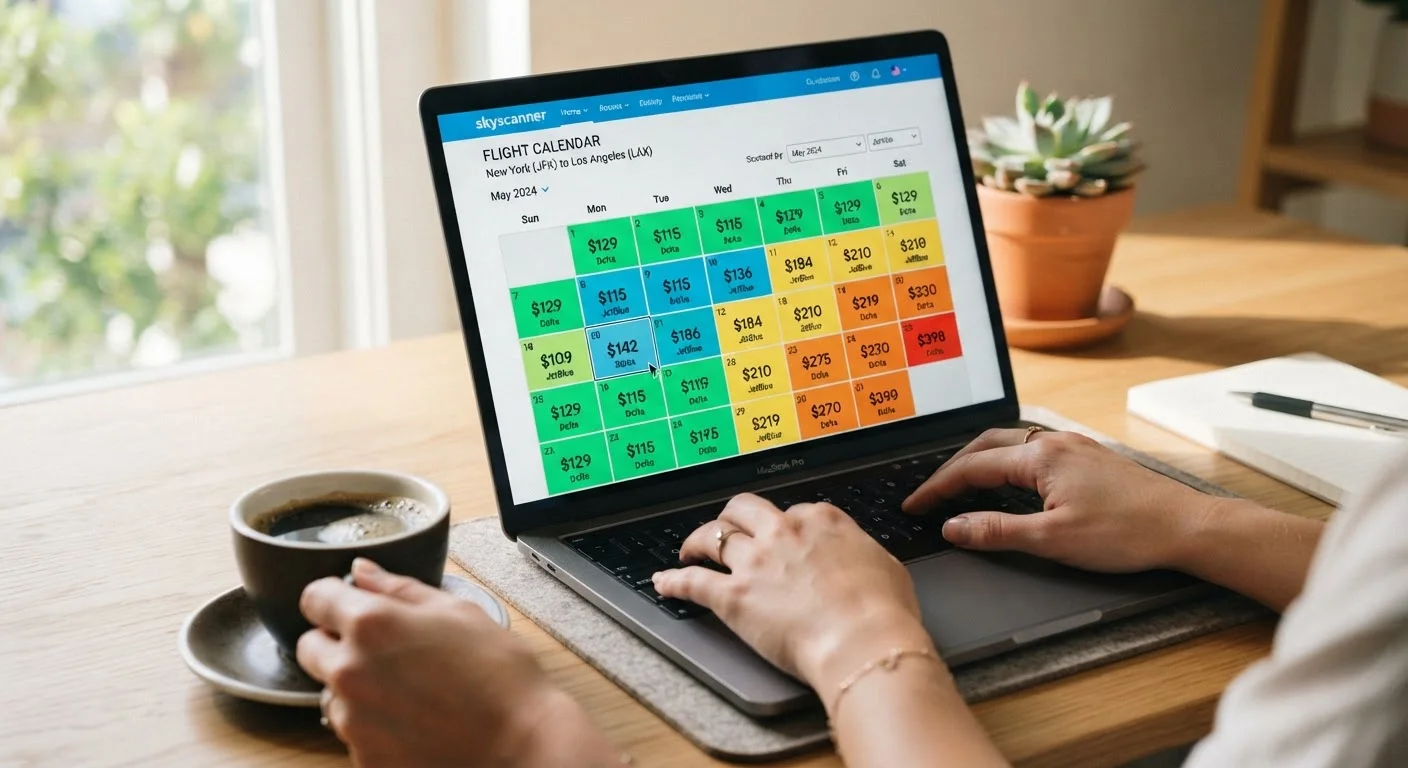
Fare calendar views show price grids across a range of dates. They're useful for spotting cheaper windows, but the displayed figures may not include taxes and fees. Reading fare calendars accurately requires knowing what each number does and doesn't include.
What you will need
Decoding Hidden Costs Before You Commit
Three cost categories consistently catch travelers off guard:
- Baggage fees. Many budget carriers charge for carry-ons in addition to checked bags. The fee schedule is almost never shown in search results - you have to click into the fare details or check the carrier's own site. A $79 base fare with a $45 carry-on fee and a $35 seat assignment fee is a $159 itinerary.
- Seat selection fees. On Basic Economy fares, you're often assigned a seat at check-in. If you're traveling with others, you may not sit together without paying. Factor this in before assuming Basic Economy is cheaper for groups.
- Change and cancellation rules. Most Basic Economy fares are non-refundable and non-changeable. If your plans carry any uncertainty, the fare difference between Basic Economy and a flexible Main Cabin fare can be worth paying. Check the specific fare rules - they're accessible in the booking flow before purchase, usually under a 'fare details' or 'rules' link.
The cumulative effect of these fees is well documented. Seat fees, bag charges, and surcharges are among the most common reasons a budget itinerary ends up costing more than a legacy carrier fare would have.
Basic Economy Is Not Just a Cheaper Seat
Basic Economy fares on most major US carriers are fundamentally different products - not simply cheaper versions of standard economy. Restrictions on seat selection, boarding priority, upgrades, and itinerary changes are embedded in the fare rules. Review those rules in full before purchasing, especially if you're traveling with others or have any schedule uncertainty.
If you're comparing a legacy carrier with a budget carrier, the math changes further. Budget carrier fare structures are built differently - understanding them is essential to making an honest comparison.
Step-by-Step: How to Evaluate a Search Results Page
Set your filters conservatively, then widen them
Start with your required constraints only - destination, travel dates, and passenger count. Don't pre-filter by airline or nonstop unless those are genuinely non-negotiable. Review the full results first to establish a price range, then apply filters one at a time to see what each one eliminates.
Click into fare details for every itinerary you're considering
Never evaluate a flight based on the results-page summary alone. Click through to the fare details view, which will display the fare class, what's included (or excluded), and any change or cancellation rules. This is usually accessible via a 'fare details,' 'what's included,' or similar link on each result card.
Calculate total cost including bags and seat selection
Add the base fare to the expected bag fee (check the airline's current published fee schedule) and any seat assignment cost if you require a specific seat. Write down the total for each itinerary you're comparing. This is your actual comparison number.
Check layover times and airports on connecting itineraries
For any one-stop itinerary, verify the layover duration and the connecting airport. Confirm that both segments are on the same ticket - a single booking reference means the airline is responsible for rebooking you if the first flight delays you. Two separate tickets means you absorb that cost yourself.
Compare flexibility against price difference
If the difference between a Basic Economy fare and a standard economy fare is $40, and there's any realistic chance your plans might change, price the cost of flexibility. Many standard fares now allow free changes (though not necessarily refunds). Weigh the probability of needing to change against the dollar difference before defaulting to the cheapest option.
Once you've worked through these steps, you'll have a total-cost figure for each itinerary rather than a base-fare impression. That's the number that matters. For a complete walkthrough of the booking process that follows - from selecting the right result to confirming the purchase - see our practical booking walkthrough.
Prices, fees, and fare rules vary by carrier, route, and date. Always verify current fee schedules and fare conditions directly with the airline before purchasing. This article provides general guidance and is not a substitute for checking the specific terms of any fare you are considering.