
Why Food Costs Spiral - and How to Stop It
Food is the daily travel expense most likely to run over budget, precisely because it feels small in the moment. A coffee here, a tourist-area sandwich there, a sit-down dinner because you're tired - these individual choices rarely feel like decisions, but they compound quickly. For travelers already working within a structured daily budget (see our guide to building a daily travel budget that holds for the foundational framework), food is usually the category with the most recoverable slack.
The fix isn't to eat less or eat worse. It's to understand where the money actually goes and use a few deliberate habits to redirect it. The strategies below apply across destinations - whether you're navigating Southeast Asia or Western Europe.
Beverages Are a Hidden Budget Drain
Alcohol, specialty coffee, and bottled water are frequently the categories that push food budgets over limit without travelers noticing. Carrying a refillable water bottle where tap water is safe, and treating specialty beverages as occasional splurges rather than daily habits, is often enough to recover several dollars per day.
What You'll Need Before You Start
Getting control of food costs requires minimal preparation, but a few things in place make execution significantly easier.
What you will need
Once you have these basics, the step-by-step approach below will let you set a realistic daily food number and consistently hit it - without defaulting to instant noodles or skipping meals.
Step-by-Step: Controlling Food Costs on the Road
Follow these steps in order at the start of any new destination. The approach is modular - adapt it to whether you're staying three nights or three weeks.
Establish a per-meal allowance, not just a daily total
Divide your daily food budget into three slots: a small breakfast allowance, a larger lunch allocation, and a dinner figure. Lunch is typically your highest-value slot in most countries - many local restaurants offer a fixed-price midday meal (often called a menu del día, prix fixe, or daily special) that includes multiple courses at a fraction of dinner prices. Shifting your main meal to midday is one of the highest-leverage habits available to budget travelers.
Locate the nearest market or grocery store on day one
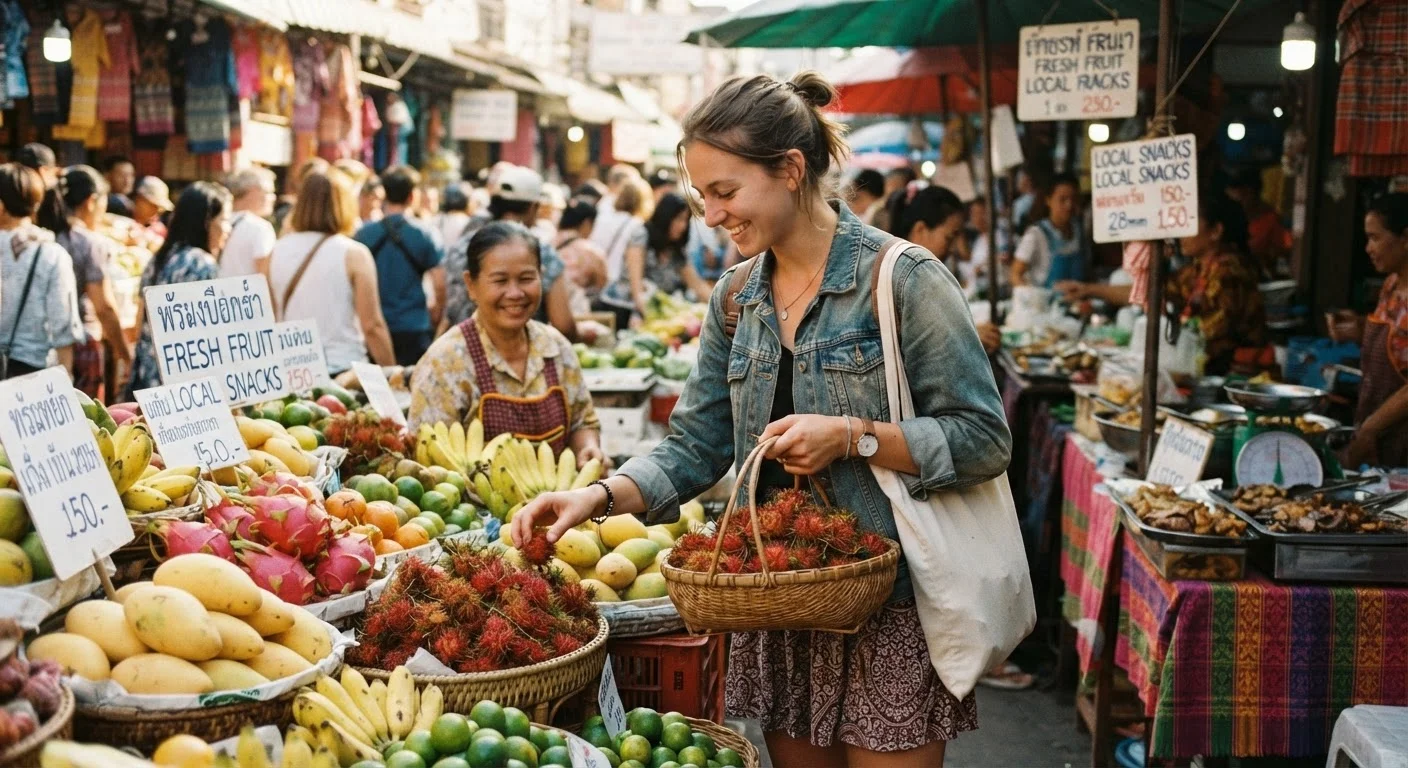
Before choosing a restaurant for your first meal, walk or map the nearest local market or supermarket. Markets offer fresh produce, bread, cheese, prepared foods, and local snacks at prices that consistently undercut tourist-area restaurants. A market breakfast or assembled lunch - bread, fruit, local cheese or deli items - costs a fraction of the sit-down equivalent and often tastes better. Grocery stores fill the same role for shelf-stable snacks, drinks, and simple self-catered meals.
Eat where locals eat - use distance as a price filter
Restaurant pricing is strongly correlated with proximity to tourist landmarks. Walking two to four blocks away from a major attraction typically drops menu prices noticeably. Look for restaurants with handwritten or locally-language menus, tables filled with residents, and no laminated photo menus outside. These are reliable proxies for non-inflated pricing. For regional-specific habits, the practical habits for keeping costs low in Latin America illustrates how this plays out across a specific region.
Log every food purchase the same day
Record each food expense - including coffee, water, and snacks - in your tracking tool at the end of each day, or ideally in real time. Compare your running total against your daily allowance. This single habit surfaces patterns that are otherwise invisible: it's common to discover that beverages (alcohol, specialty coffee, bottled water) account for 20-30% of daily food spend with no corresponding satisfaction benefit.
Use accommodation with kitchen access strategically
If your stay is five nights or longer, prioritize accommodations with at least a kettle and mini-fridge, or ideally a shared or private kitchen. Even preparing two or three breakfasts and one dinner per week from market ingredients meaningfully reduces average daily food spend. Over a two-week trip, this difference can fund an additional night's accommodation or a day trip. Factor kitchen access into accommodation comparisons - a slightly higher nightly rate with a kitchen often costs less overall than cheaper lodging that forces three restaurant meals per day.
For solo travelers, the practical breakdown on eating affordably as a solo traveler covers additional nuances like portion sizing and avoiding waste when shopping for one. Traveling as a family introduces different dynamics - the strategies family travelers use to keep food costs down addresses those specifically.
When to Splurge - and When It's a Trap
Eating on a budget doesn't mean refusing every sit-down meal. The question is whether a restaurant choice is intentional or reactive. Tourist-zone restaurants near major landmarks typically charge two to three times what equivalent food costs four streets away. That premium buys you convenience, not quality.
A useful rule: allow one deliberate, higher-cost meal per destination - something locally significant or genuinely recommended by residents. Budget for it explicitly rather than treating it as an exception. This approach preserves the experience without treating every dinner as an opportunity to overspend.
For a detailed look at how dining format affects your daily spend, the real cost difference between street food and sit-down restaurants breaks down exactly when each format is worth it financially.
Tourist-Zone Pricing Is Not Exceptional - It's the Rule
Restaurants immediately adjacent to major tourist sites, transportation hubs, or waterfront areas in popular destinations routinely charge two to three times local rates for equivalent food. This isn't a matter of quality - it's location rent passed to customers. Building a mental habit of checking one block further before committing to a restaurant consistently pays off.
These food strategies fit within the broader framework covered in managing daily travel costs from planning to the road. Pair them with smart accommodation choices - lodging on a budget covers how kitchen access can make a meaningful difference to total trip spend.