
The Numbers: What Each Meal Actually Costs
Food is the one travel expense you incur multiple times a day - which means even small per-meal differences create meaningful budget gaps over a week or two. Understanding the actual cost structure of each dining style is the first step to controlling your daily spend.
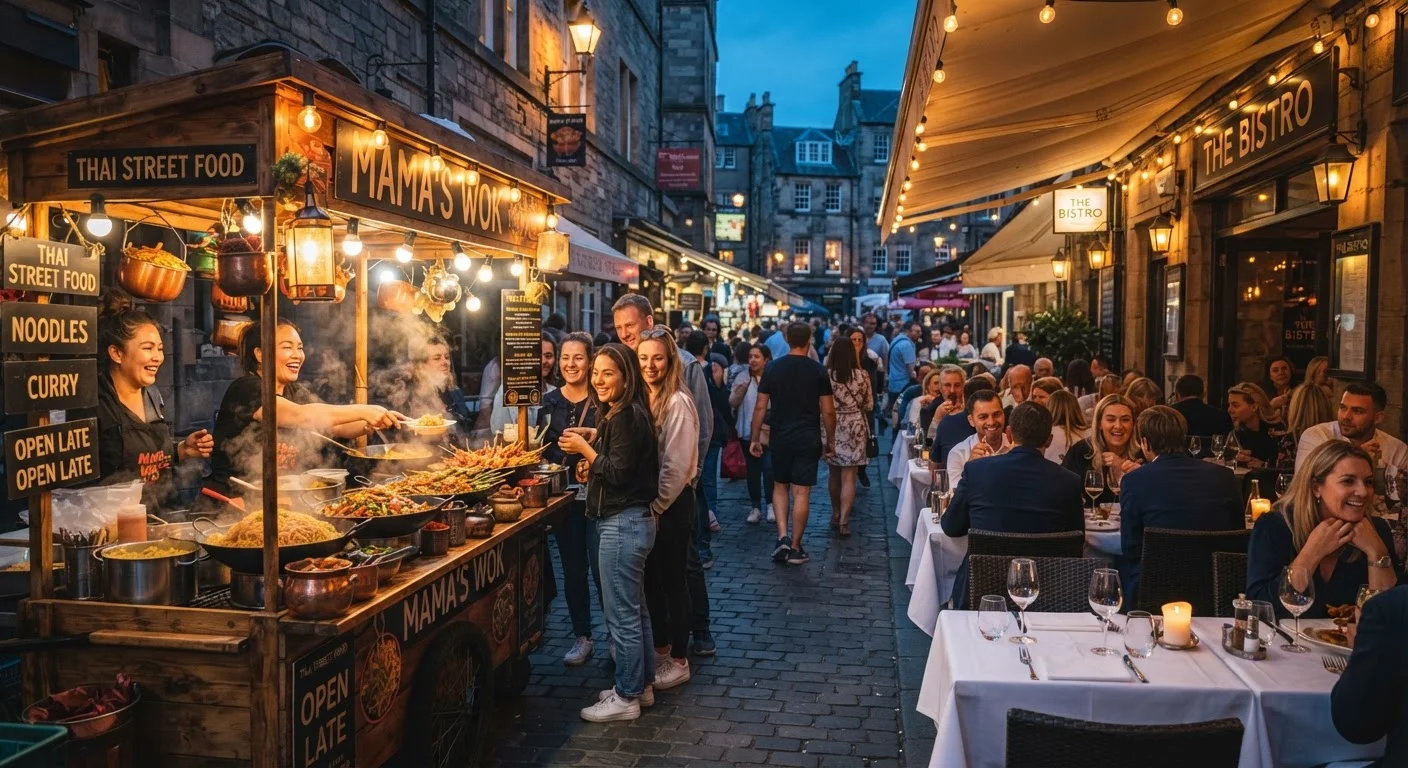
In budget-friendly destinations - Southeast Asia, Mexico, parts of Eastern Europe - a street food meal typically runs $1-$5 USD. A comparable sit-down restaurant in the same city often lands between $8-$20 USD, and tourist-area restaurants regularly exceed that. Multiply a $10 daily gap across three meals and 14 days: that's roughly $420 in avoidable spending.
In higher-cost destinations - Western Europe, Japan, major US cities - the gap narrows slightly in absolute dollars, but the percentage difference holds. A market lunch in Paris might cost €8-10, while a sit-down brasserie typically starts around €18-25 per person before service.
| Criterion | Street Food | Sit-Down Restaurant |
|---|---|---|
| Average meal cost (budget destination) | $1-$5 USD | $8-$20 USD |
| Average meal cost (mid-range destination) | $4-$10 USD | $15-$35 USD |
| Hidden add-ons | Rare | Common (service, cover, drinks) |
| Seating & comfort | Minimal to none | Full seating, table service |
| Dietary transparency | Variable, ask vendor | Menu listed, staff can advise |
| Speed of service | Fast - often under 5 minutes | Slower - 30-60 minutes typical |
| Cultural authenticity | Often high | Variable; tourist menus common |
| Suitable for groups/families | Manageable with older kids | More practical for families |
The numbers are only part of the picture. Sit-down restaurants in tourist zones frequently add service charges (10-15%), cover charges for bread or water, and currency conversion markups if you're not paying in local currency. These are explored further in our guide to hidden costs that catch travelers off guard.
Food Safety: Separating Perception From Reality
Many travelers default to sit-down restaurants assuming they're safer than street stalls - a perception that isn't always supported in practice. Street food safety is largely about observable indicators, not the dining format itself.
High-volume stalls with rapid turnover mean food doesn't sit. Visible cooking - grills, woks, open fryers - lets you see preparation conditions. Vendors who cook to order in front of you offer a level of transparency that a restaurant kitchen does not. A busy local crowd is often the most reliable quality signal available.
That said, risks are real and context-dependent. Raw ingredients, reheated rice, and pre-prepared sauces carry higher risk than freshly cooked items. Travelers with compromised immune systems or strict dietary needs benefit from the more controlled environment a sit-down restaurant offers. For practical strategies around eating safely and affordably on the road, see our full guide on controlling food costs without eating badly.
50-75%
Typical street food cost saving per meal
Across major budget travel destinations, street food meals consistently cost 50-75% less than a comparable sit-down restaurant serving local cuisine.
$420+
Potential savings over a 14-day trip
A conservative $10/day difference across three meals adds up to over $420 on a two-week trip - enough to cover several nights of accommodation.
10-15%
Service charge added at many tourist restaurants
Many sit-down restaurants in tourist areas automatically add a service charge that travelers may not notice until the bill arrives.
When Sit-Down Restaurants Actually Make Financial Sense
Defaulting to street food exclusively isn't always the right call. There are situations where a sit-down meal delivers enough value - financial or practical - to justify the higher spend.
- Combination meals with drinks and sides: When a restaurant's set lunch or prix-fixe includes a drink, main, and dessert for a fixed price, per-component cost can rival or beat assembling the same spread from multiple street stalls.
- Slow travel days: If you're staying in one place for several days, a sit-down meal doubles as rest and a chance to work, plan, or decompress - effectively replacing a café spend you'd have made anyway. This connects to a broader point about how travel pace shapes your daily budget.
- Group dining: Restaurants are structured for groups. Sharing dishes at a table - common in many Asian and Mediterranean dining cultures - can reduce per-person cost substantially while adding variety.
- Family trips: Managing multiple children at street stalls adds logistical stress. The structure of a restaurant, including seating and menus, often justifies the premium for families - a tradeoff explored in strategies for keeping family food costs down.
Building a Smart Dining Strategy for Your Trip
The travelers who keep food costs lowest aren't exclusively eating street food - they're making deliberate choices about when each option delivers the best value. A workable framework looks like this:
- Street food for breakfast and lunch on active sightseeing days. Speed and cost are both in your favor.
- One sit-down meal every two to three days when you want variety, rest, or a fuller dining experience - budgeted in advance rather than defaulted into.
- Grocery or market supplements for snacks, breakfast items, and drinks to avoid the markup on beverages that restaurants universally apply.
Solo travelers especially benefit from this approach. Restaurants often seat single diners at a disadvantage - premium tables for one, minimum order expectations - while street food is inherently portion-flexible. See our guide on eating affordably as a solo traveler for more on this.
Food spending is one of the most controllable variables in any travel budget. Unlike flights or accommodation locked in weeks ahead, every meal is a real-time decision - and small, consistent choices compound into significant savings by the end of a trip. For a broader view of where travel spending actually concentrates, see the real cost breakdown of a family vacation.
Destination Context Changes the Math
The cost gap between street food and restaurants varies significantly by destination. In countries like Vietnam, Thailand, or Mexico, the difference is stark and consistent. In Western Europe or Japan, both options cost more, but the relative gap often persists. Always calibrate your expectations to the specific destination - and check local food cost data before building your daily food budget. Our destination-specific comparisons, like Vietnam vs. Thailand food cost breakdown, can help.