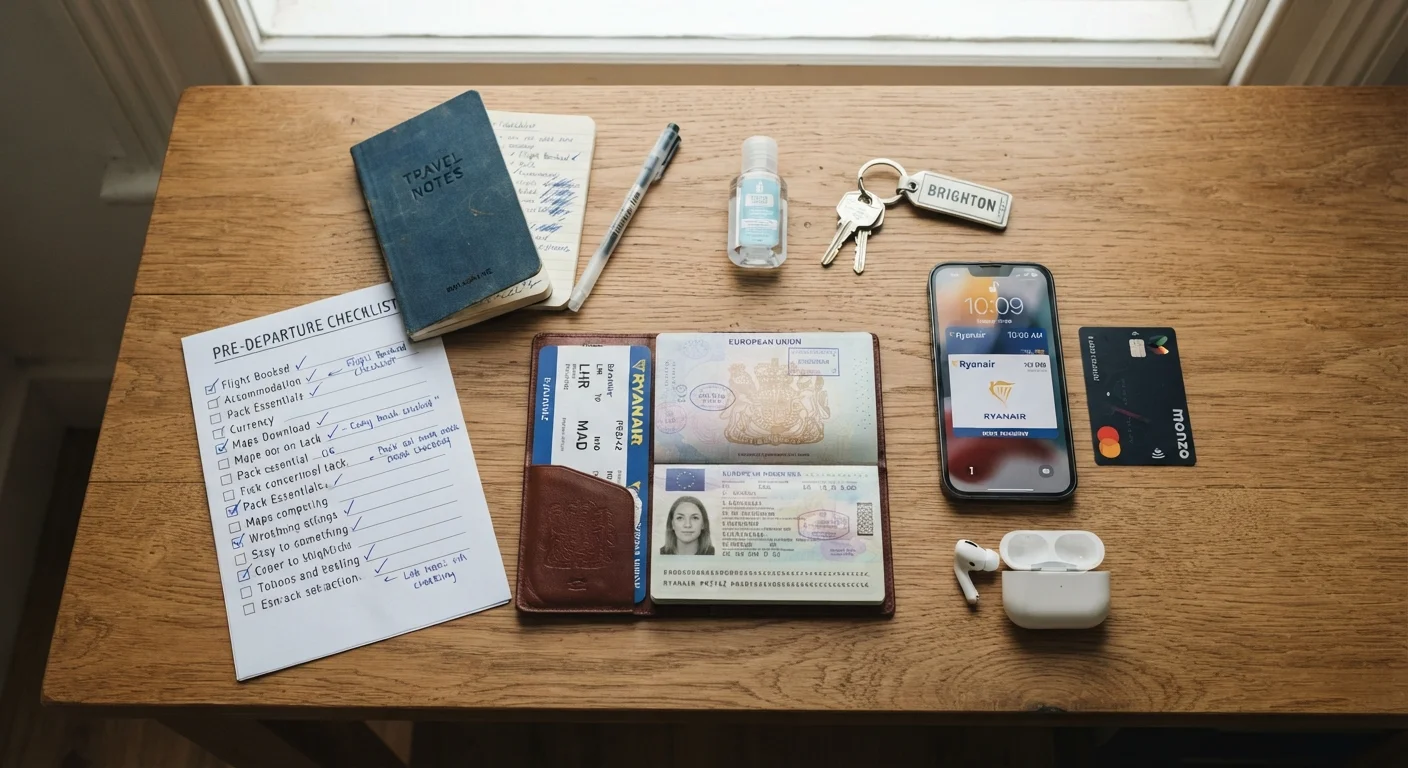


Why This Checklist Exists
Solo travel puts every logistical responsibility on one person: you. There's no partner to catch what you forgot, no family member double-checking the hotel confirmation. That's not a weakness - it's the nature of the format. But it does mean pre-departure preparation needs to be deliberate and systematic.
This checklist covers the four domains where solo travelers most commonly hit avoidable snags: documents and entry requirements, finances and insurance, safety information, and packing logistics. If you're still building your trip from scratch, start with the complete solo trip planning roadmap first, then return here when you're two weeks out from departure.
Work through each group below in the days before you leave. Items marked must are non-negotiable - skipping them carries real consequences. Items marked should are strongly recommended for most trips. Nice-to-have items add resilience and comfort without being critical.
Documents & Entry Requirements
Finances & Insurance
Safety Information & Emergency Prep
Bookings, Logistics & Packing
Tools You'll Need
You don't need specialized software to complete this checklist. The tools below are standard for any organized solo traveler.
Government travel advisory portal
Verify current entry requirements, visa rules, safety advisories, and traveler registration for your destination.
Printed or written document backup
Store copies of passport, insurance policy, and key contacts in a format accessible without power or connectivity.
Offline maps app
Navigate your destination without relying on cellular data or local Wi-Fi availability.
Cloud storage or encrypted digital backup
Access scanned copies of critical documents from any device if originals are lost or stolen.
For a companion resource focused purely on what information to record before you leave - contacts, account numbers, emergency procedures - see what every solo traveler should write down before leaving. It pairs directly with this checklist.
A Note on Safety and Financial Prep
Two areas warrant extra attention for solo travelers specifically: safety infrastructure and financial continuity. On safety, your preparation should assume your phone could be lost or stolen on day one. That means emergency contacts, travel insurance policy numbers, and your accommodation addresses need to exist somewhere other than your phone - printed or written is fine. The pre-departure safety checklist goes deeper on this dimension if your destination involves elevated risk.
Your Phone Is Not a Reliable Safety Net
A stolen, dead, or SIM-locked phone eliminates access to every contact, confirmation, and emergency number stored in it. Before you leave, write down your insurance emergency number, your accommodation's address, and at least one emergency contact on paper. Keep that paper in a separate location from your phone and wallet. This one habit has proven decisive in real travel emergencies.
On finances, the most common solo travel disruption is a blocked card. Banks routinely flag foreign transactions as fraud when they haven't been notified. A two-minute call before you leave prevents a genuinely stressful situation at a checkout counter or ATM abroad. If you want to audit your broader financial preparation, the pre-departure budget checklist covers insurance, bookings, and spending setup in more detail. For ongoing money-saving tactics tailored to solo travelers, browse the Budget Solo Travel hub.
Don't Rely on Airport Currency Exchange
Airport currency exchange counters typically offer significantly less favorable rates than ATMs or in-city exchange offices. Bring just enough foreign cash to cover transport and immediate needs on arrival, then source more currency in-destination. Verify ATM availability at your arrival airport in advance so you're not caught short if exchange windows are closed.
Finally, if you want a framework for handling things that go wrong once you're on the ground, review emergency preparedness for solo travelers before departure - not after an incident occurs.
This checklist provides general travel preparation guidance. Entry requirements, visa rules, health advisories, and insurance terms change frequently. Always verify current requirements with official government sources and your service providers before travelling.