
Why Written Records Still Matter for Solo Travelers
Digital tools fail at the worst moments - dead battery, stolen phone, no signal in a rural area, or a compromised account. When you're traveling alone with no one to cover for you, a physical written record is the backup that actually works when it matters most.
This checklist focuses specifically on what to write down and keep accessible in analog form. It complements good digital hygiene - for that side of things, see digital safety habits for solo travelers - but operates on a different principle: paper doesn't need a charge, a password, or a network connection.
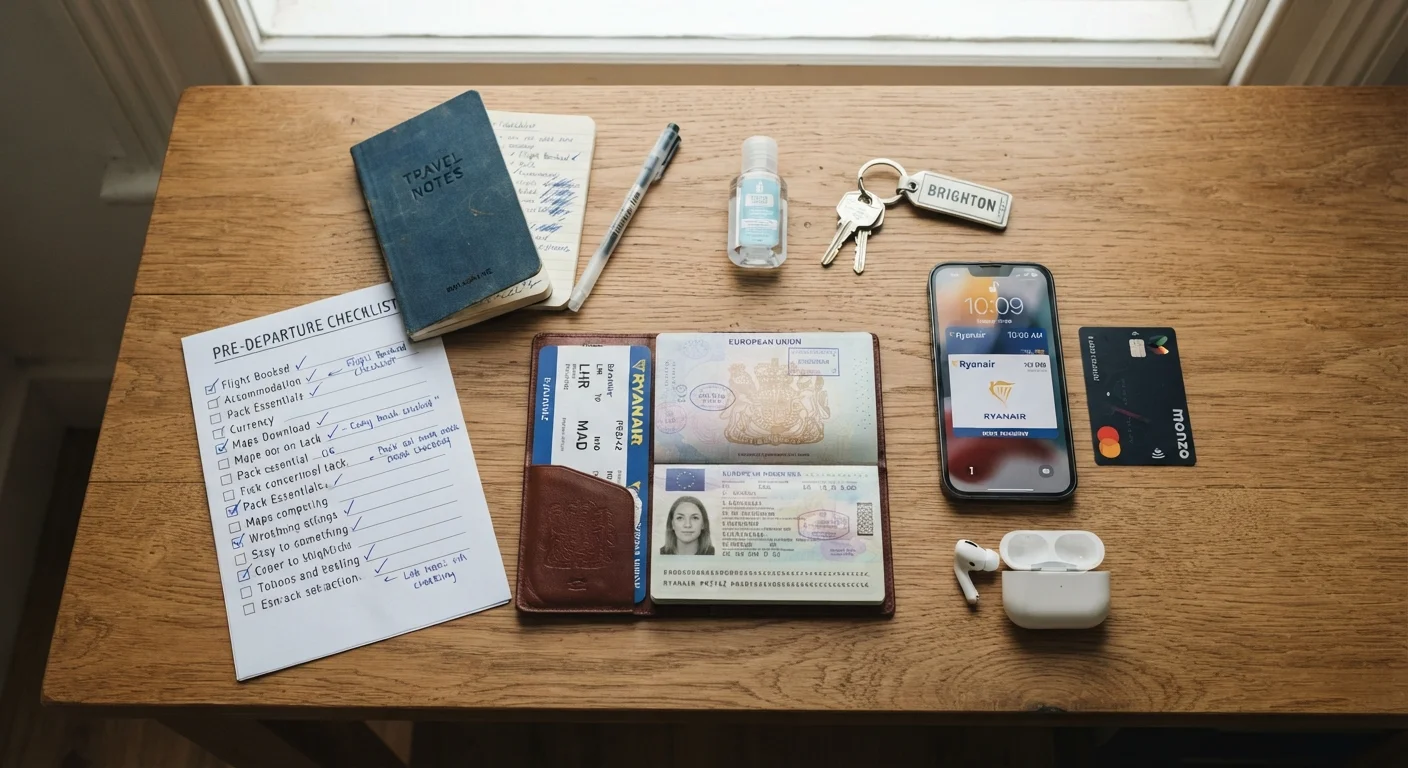
The goal isn't to carry a binder. It's to have a compact, organized reference you can grab in an emergency, hand to someone who needs to help you, or read when your devices are unavailable. Work through the groups below before any departure - international or domestic.
Identity and Travel Documents
Emergency Contacts
Insurance and Financial Details
Medical Information
Accommodation and Itinerary
Practical Local References
How to Organize and Store What You've Written Down
Format matters as much as content. A wall of handwritten notes you can't quickly scan is nearly as useless as nothing. Keep these guidelines in mind:
- Use a small, dedicated card or folded sheet - not a journal you'd have to flip through under stress. A 4×6 index card laminated or tucked in a waterproof sleeve works well.
- Make two physical copies - one kept on your body (money belt, inside jacket pocket) and one stored separately in your main luggage. If your bag is stolen, the copy on your body survives, and vice versa.
- Leave a third copy with your emergency contact at home - they'll need your policy numbers and itinerary details if they ever have to help remotely.
- Use legible print, not cursive - someone helping you in an emergency may not be a native English reader.
Don't Write Down Full Account Numbers or PINs
Your written record should include enough to identify and contact your bank or insurer - not enough to give a thief full account access. Last four digits and a customer service number are sufficient. Never write PINs, full card numbers, or online banking passwords on any physical document.
For guidance on what to share with fellow travelers versus what to keep private, read our guide on sharing personal information as a solo traveler. The written record described here is for your use and trusted contacts - not for general display.
Once your written records are in order, make sure the person holding your itinerary knows how and when to expect check-ins from you. Setting up a reliable check-in routine is a straightforward step that significantly raises the odds of a fast response if something goes wrong.
For a broader pre-trip audit that covers finances and bookings alongside safety prep, the Solo Traveller's Pre-Departure Checklist walks through the full scope of what to handle before departure.
Verify Entry and Health Requirements Officially
Visa rules, vaccination requirements, and border entry conditions change with little notice. The details you record should be verified directly through your destination country's official government sources and the US Department of State before departure - not taken from third-party travel sites or this article alone. Always check official sources close to your travel date.