
Build Your Response Framework Before You Leave
Emergencies don't wait until you're ready. The solo traveler who handles a crisis well almost always prepared before departure, not during it. Your goal is a response framework - a set of decisions made in advance that require almost no thinking under stress.
| U.S. Embassy Emergency Line | Available 24/7 for Americans in crisis abroad (U.S. State Department) |
| STEP Enrollment | Free; available at travel.state.gov (U.S. State Department) |
| Passport Replacement Abroad | Requires police report + photos + fee at local U.S. embassy (U.S. State Department) |
| Emergency Cash Recommended | $100-$200 USD equivalent, stored separately (General solo travel guidance) |
| Key Documents to Copy | Passport, insurance card, visa, travel itinerary (General solo travel guidance) |
| Global Emergency Number | 112 works in most countries as a universal emergency line (ITU / general emergency communications) |
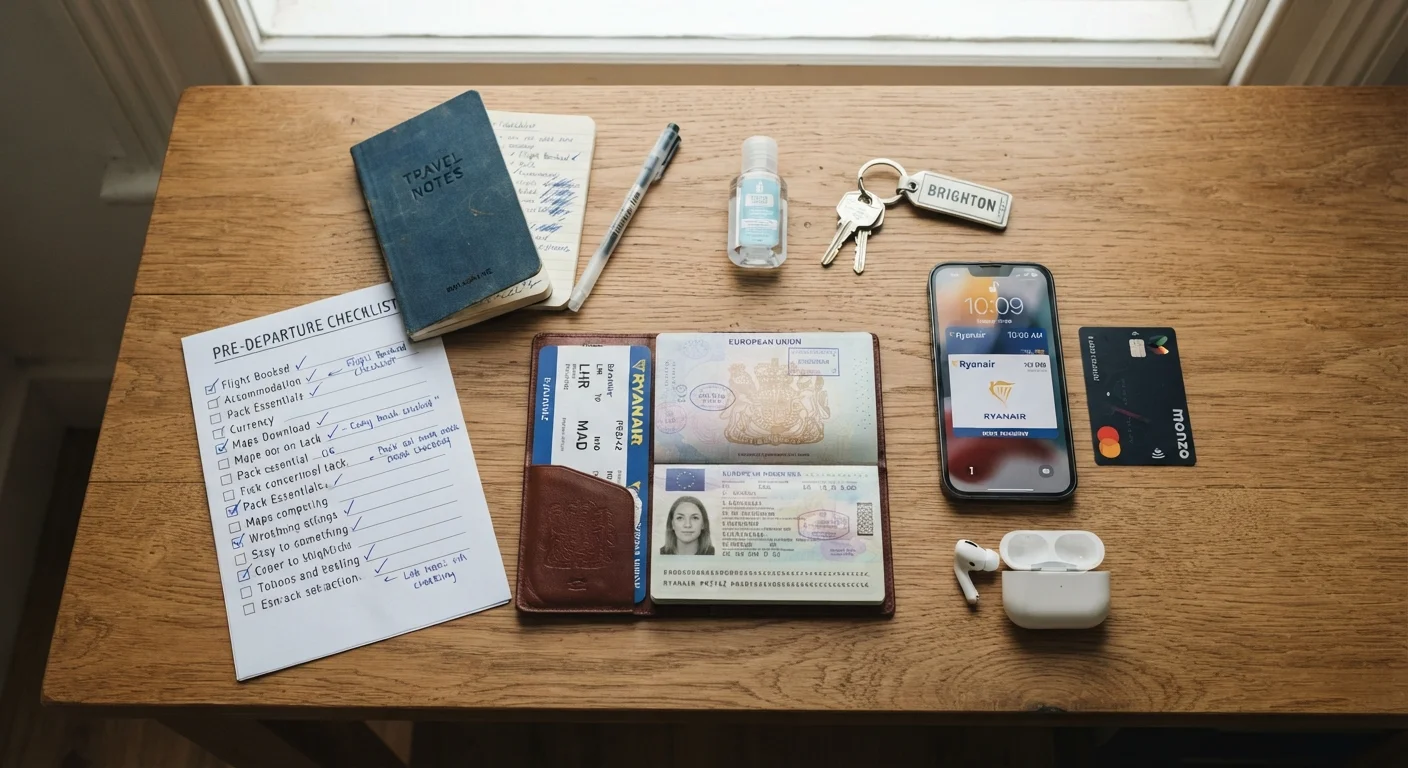
Start with documents. Photograph every critical document - passport, visa, travel insurance card, vaccination records - and store copies in at least two places: a secure cloud folder and an email draft you can access from any device. Also carry one physical photocopy kept separately from the originals.
Register your trip. U.S. citizens should enroll in STEP (Smart Traveler Enrollment Program) at travel.state.gov before every international trip. It's free and ensures the local embassy can locate and contact you during a regional crisis or evacuation.
Know your insurance policy cold. Before departure, write down: your policy number, the 24-hour emergency line, and what the policy requires you to do first in a medical emergency (some require pre-authorization for hospital admission). See our pre-departure safety checklist for a full run-through of what to prepare. Note: travel insurance details are general information - consult your policy documents and a qualified adviser for decisions about your own coverage.
Lost or Stolen Passport: Step-by-Step
A stolen or lost passport is the most common serious crisis solo travelers face. Move methodically:
- File a police report immediately. You'll need the report number for your embassy and for any insurance claim. Get a written copy.
- Contact the nearest U.S. embassy or consulate. Call the 24-hour emergency line. Bring your police report, two passport photos (find a local photo shop), proof of citizenship (a photocopy is acceptable), and the replacement fee. The embassy can issue an emergency passport - often same-day for urgent travel.
- Notify your bank. If your wallet was also taken, cancel compromised cards immediately. Your emergency cash reserve becomes critical here.
- Check your travel insurance. Many policies reimburse passport replacement fees and related expenses.
For the full context on building safety habits from the ground up, see our introduction to solo travel safety.
Medical Emergency: What to Do First
In a genuine medical emergency, call the local emergency number first - 112 works as a universal fallback in most countries, though local numbers vary. Once stable, your next calls are to your travel insurance emergency line and your designated home contact.
Verify Entry & Safety Rules Before You Go
Visa requirements, vaccination rules, border policies, and travel advisories change frequently. Always check official sources - the U.S. State Department (travel.state.gov) and the destination country's embassy website - before departure and again close to your travel date. Do not rely solely on third-party summaries.
Key actions:
- Carry a physical emergency contact card with your blood type, known allergies, current medications, and insurance details - kept on your person, not just in your luggage.
- If hospitalization is likely, have someone notify your insurer before or during admission. Many policies require this for full reimbursement.
- If you're in a location with limited medical infrastructure, your insurance may arrange medical evacuation. Understand what your policy covers before you need it - medical evacuation without coverage can cost tens of thousands of dollars.
Solo travel safety planning covers how to assess medical risk by destination type before you book.
Robbery and Theft: Immediate Priorities
If you're robbed, your immediate priority is personal safety - comply, don't resist, and wait until you're safe to act. Then:
- Move to a public, populated place.
- File a police report - required for insurance and passport replacement.
- Use your emergency cash reserve or contact your bank's international line to get emergency funds wired.
- Call your travel insurance emergency number to initiate a theft claim.
Prevention minimizes the damage: Use a split-wallet strategy - carry only the day's spending money in your main wallet, keep cards and backup cash in a separate concealed location. This limits what you lose in a single incident.
1 in 6
Travelers who experience a trip disruption annually
Industry estimates suggest a significant share of international travelers face at least one serious disruption - missed connections, medical issues, or theft - per year.
$50,000+
Potential cost of medical evacuation without coverage
Medical evacuation from remote or developing regions can reach six figures; without travel insurance this cost falls entirely on the traveler.
Good solo trip planning includes mapping the local police station location at every major stop - a five-minute task that saves significant time in a crisis. Also review our pre-departure budget checklist to ensure your financial backup systems are in place before you leave.
Emergency Contact Card
A physical or digital card listing your key contacts, insurance policy numbers, blood type, and embassy details. Carried separately from your main wallet so it survives theft or loss.
Travel Insurance
A policy that can cover medical evacuation, trip cancellation, theft, and other emergencies abroad. Coverage varies widely - always read the policy document before purchasing. This is general information, not a recommendation for any specific product.
STEP (Smart Traveler Enrollment Program)
A free U.S. State Department service that registers your trip so the nearest embassy can contact you during a local emergency or crisis evacuation.
Embassy vs. Consulate
Both are official government offices abroad. An embassy is the primary diplomatic mission in a country's capital; consulates are regional offices. Either can assist citizens in emergencies.
Emergency Cash Reserve
A small sum of local or widely accepted foreign currency kept hidden from your main wallet - intended only for genuine emergencies such as robbery or card failure.
Medical Evacuation
Organized transport of a patient from a location where adequate medical care is unavailable to a facility equipped to treat them, often by air. This service can be extremely costly without coverage.