
Start With the Right Destination
The single biggest planning mistake first-time solo travelers make is picking a destination before they've assessed whether it fits their experience level. Start by asking three questions: How straightforward is the visa process for US citizens? Is English widely spoken or are translation resources readily available? And does the destination have reliable infrastructure for independent travel - public transit, hostels or budget hotels, and tourist-facing services?
Countries with straightforward e-visa or visa-on-arrival processes (such as Portugal, Japan, or Thailand) reduce friction significantly for a first trip. If you're genuinely new to solo planning, consider starting with a destination that's logistically forgiving - one where getting lost doesn't become a safety issue and where solo travelers are common enough that services cater to them.
Planning Solo Travel as a Complete Beginner is a useful companion if you're still working through foundational destination decisions before diving into logistics.
Research Solo Traveler Communities for Destination Intel
Before finalizing a destination, spend 30 minutes reading recent posts in solo travel forums or subreddits. Firsthand accounts from travelers who visited in the past 6-12 months surface practical realities - current safety conditions, transport quirks, and budget accuracy - that no guidebook captures quickly enough.
Set a Realistic Budget Before You Book Anything
Budget first, book second. A working solo trip budget has six categories: flights, accommodation, ground transport, food, activities, and a contingency buffer (typically 10-15% of your total). Assign a rough dollar figure to each before you open a single booking tab.
Solo travel has one unavoidable cost disadvantage: you rarely benefit from room-sharing or group discounts the way paired travelers do. Factor this in honestly. Hostels with dorm beds remain one of the most effective ways to offset single-occupancy costs - see Budget Lodging on Your First Solo Trip for a breakdown of every lodging type and what to expect from each.
For broader money-saving tactics designed specifically for people traveling alone, the Budget Solo Travel hub is worth bookmarking as a reference throughout your planning process.
70%+
Solo travelers who are women
Multiple travel industry surveys over recent years consistently find that women make up the majority of solo travelers worldwide, reflecting a significant shift in independent travel demographics.
10-15%
Recommended contingency buffer
Travel finance guidance from consumer budgeting resources commonly recommends reserving 10-15% of a total trip budget for unexpected costs, delays, or emergencies.
This article provides general financial information for planning purposes and is not personalised financial advice. Budget estimates vary significantly by destination, season, and individual spending habits.
Build Your Itinerary Without Overplanning
A common trap: building a day-by-day schedule so dense that any delay - a late train, a spontaneous conversation, a bad night's sleep - breaks the entire trip. Solo travel works best with structured anchors and flexible fill.
Structured anchors are the non-negotiables you book in advance: accommodation, any tours or experiences with timed entry (museum reservations, guided hikes), and major transport legs. Everything else - meals, secondary sights, day trips - should remain loosely planned so you can adapt based on what you find when you arrive.
A practical rule: plan no more than two committed activities per day, especially in the first half of your trip. This leaves room for adjustment without the anxiety of falling behind schedule.
Book your first and last nights in advance, then leave middle nights more flexible - especially for longer trips where you may want to extend time in one place.
Locking in arrival and departure accommodation eliminates the highest-stakes logistics while preserving flexibility for the bulk of your trip, which is where spontaneous decisions tend to add the most value.
Walk or take public transit on your first full day rather than booking tours - it calibrates your sense of scale, cost, and neighborhood before you commit additional spend.
First-day orientation on foot or by local transit gives you information that makes every subsequent planning decision more accurate and efficient, and it's typically free or near-free.
Book Flights, Lodging, and Transport
Book in this order: flights first (they set your arrival and departure anchor points), then accommodation for at least the first two nights, then any internal transport that requires advance purchase (intercity trains, ferries, or regional buses in areas where they sell out). Remaining logistics can usually be handled closer to travel dates or on the ground.
When comparing accommodation, prioritize location over price per night. Staying centrally often costs less overall once you account for transit time and transport costs to and from remote budget properties. Look for lodging near a major transit hub for your first night - arriving tired in an unfamiliar city is much more manageable when your accommodation is easy to reach.
Read Cancellation Policies Before Confirming
Non-refundable bookings can lock in hundreds of dollars with no recourse if plans change. For your first solo trip, prioritize flexible rates even if they cost slightly more. Pay particular attention to the fine print on accommodation cancellation windows - some properties charge a full night's fee for cancellations within 48-72 hours of arrival.
Where possible, book refundable or flexible-rate options for your first solo trip. Plans shift, and being locked into non-refundable bookings adds financial stress to what should be an empowering experience. Read cancellation policies carefully before confirming.
Prepare Documents, Safety Basics, and Day-One Logistics
Preparation in the final week before departure is where planning converts into confidence. Work through this checklist:
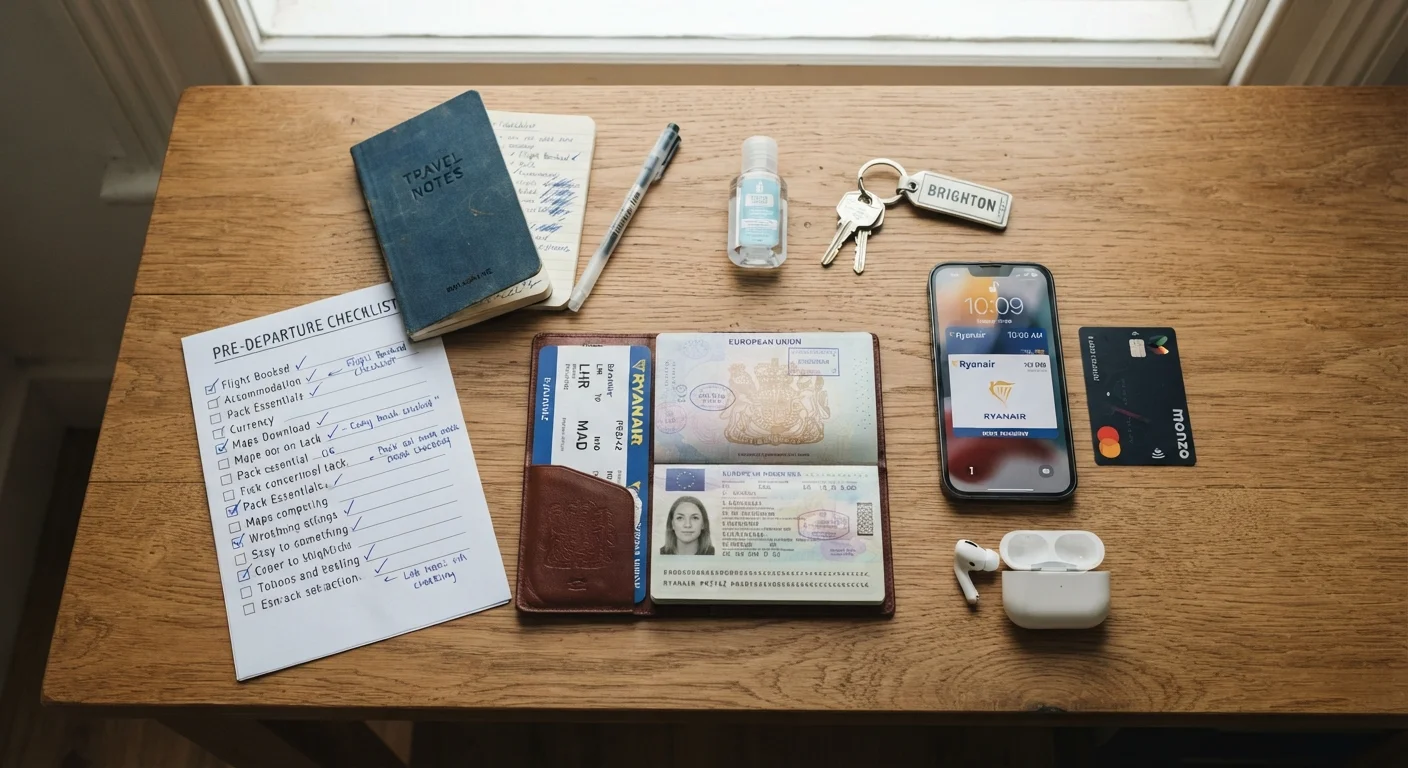
- Documents: Passport (check expiry - many countries require 6 months validity beyond travel dates), visa if required, travel insurance confirmation, and copies stored separately from originals (digital and physical).
- Money: Notify your bank of travel dates, carry a small amount of local currency for arrival, and confirm your card's international fee structure.
- Connectivity: Research SIM card options for your destination or confirm your phone plan's international data coverage before departure.
- Safety document: A single-page note with your accommodation addresses, local emergency numbers, nearest embassy contact, and one trusted contact at home who knows your itinerary.
Day one specifically deserves its own micro-plan: know how you're getting from the airport to your accommodation, what the cost should be, and what your first meal option looks like. Eliminating these unknowns for arrival day removes a significant source of first-trip anxiety.
For a deeper look at staying safe on the ground, Solo Travel Safety: A Ground-Up Introduction covers the core principles in practical detail. And if budget is a primary concern alongside planning, Your First Solo Trip on a Budget is a straightforward companion resource.
Visa Requirements Vary Widely
US passport holders enjoy visa-free or visa-on-arrival access to many countries, but requirements vary by destination and can change. Always verify current visa requirements directly through the destination country's official immigration authority or the US State Department's travel pages - not third-party travel sites - well in advance of booking.
Entry requirements, visa rules, health advisories, and local laws change. Always verify current requirements with official government sources - including the US State Department and the destination country's embassy or consulate - before you travel.