

Why Budget Prep Starts Before You Pack
Most solo travel overspending doesn't happen at a market stall or restaurant - it happens in the 48 hours around departure. Forgotten travel insurance purchased at the airport costs double. An ATM withdrawal in a foreign terminal with no fee-free card drains 5-10% immediately. A missed visa requirement means a last-minute online fee or, worse, a denied boarding.
This checklist is built to close those gaps before they open. It's organized by category so you can work through it systematically, not scramble through it in a panic. Cross-reference it with the broader solo traveler pre-departure checklist if you also want to cover logistics, safety, and document tasks in one pass.
Finances & Banking
Travel Insurance
Bookings & Reservations
Entry Requirements & Documents
Safety & Emergency Prep
What to Have Ready Before You Sit Down With This Checklist
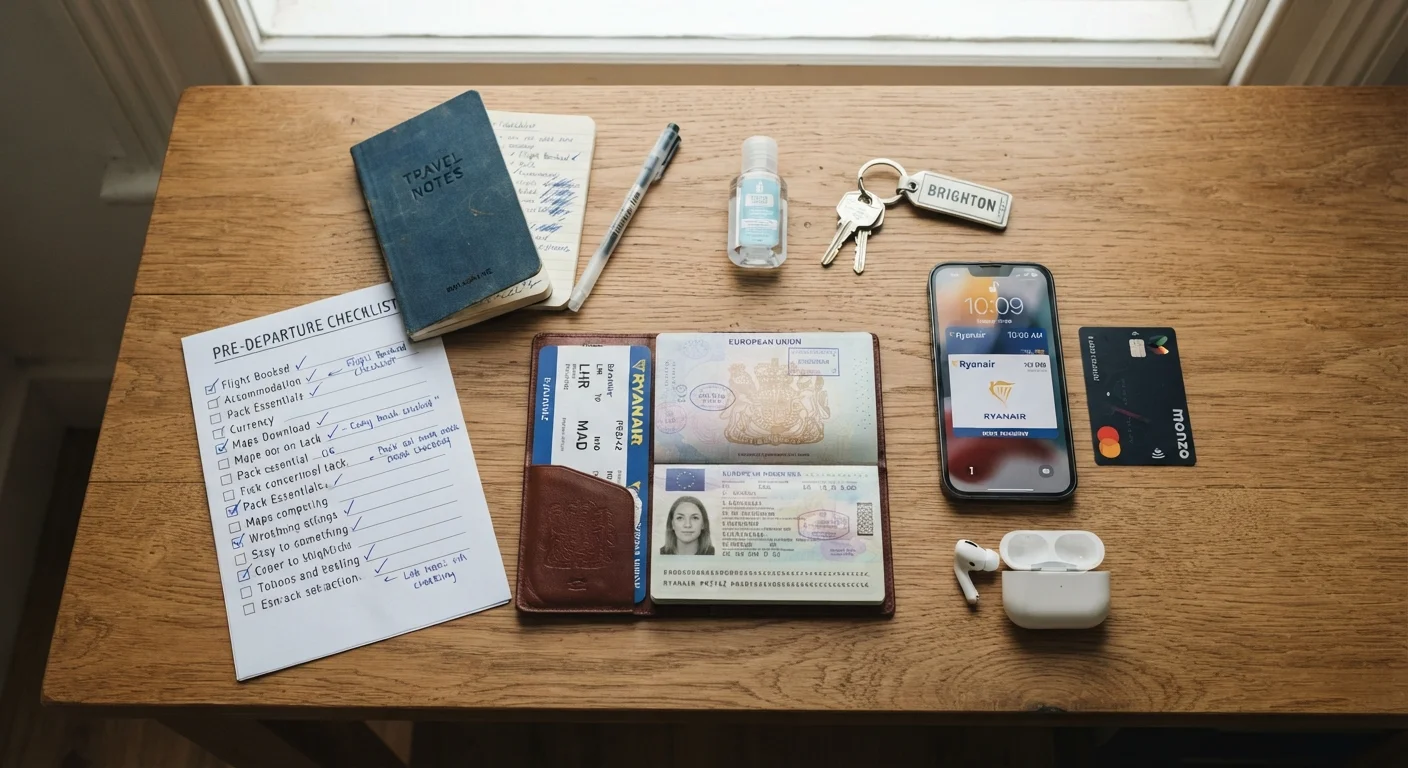
To complete this checklist efficiently, gather your confirmed booking confirmations, passport, travel itinerary, and any existing insurance policy documents. If you're traveling internationally, have your destination country's entry requirements pulled up from official government sources - do not rely on third-party summaries for visa or vaccination requirements, as these change without notice.
Official government travel advisory portal
Verify current travel advisories, entry requirements, and visa rules for your destination from authoritative sources.
Offline maps app (downloaded before departure)
Navigate without data or roaming charges - essential for airport arrivals and unfamiliar neighborhoods.
Password manager or encrypted notes app
Store digital copies of documents, policy numbers, and booking references securely and accessibly offline.
Currency conversion reference (offline-capable)
Quickly verify exchange rates when making cash decisions without relying on data connectivity.
For a deeper look at mapping out daily spending once you land, the daily travel budget planner checklist is a natural next step after you complete the pre-departure items here.
Don't Rely on Airport Currency Exchange
Airport currency exchange desks routinely charge 8-15% above the mid-market rate. Whenever possible, withdraw local currency from an in-network ATM at your destination or arrange fee-free currency access through your bank before departure. The first ATM after customs is almost always the most expensive option in any airport.
After the Checklist: Don't Leave These Loose Ends
Once you've worked through every item, do one final pass on two things that solo travelers routinely underestimate: their airport transfer cost on arrival, and their first-night check-in logistics. Both are moments when you're tired, potentially disoriented, and most vulnerable to overpaying or making a poor decision.
Write down - physically, not just in your phone - your accommodation address, a local emergency number, and your insurance policy number. The key information every solo traveler should record before leaving article has a full reference list worth keeping in your bag. Also confirm you know your response plan if something goes wrong - emergency preparedness for solo travelers covers that ground in detail.
This article provides general travel planning information and is not a substitute for professional financial, legal, or medical advice. Always verify entry requirements, insurance terms, and safety advisories with official government and provider sources before traveling.