

Choosing Your First Solo Destination
The single most consequential decision in solo trip planning is where to go - and for first-timers, the answer should be strategic, not just aspirational. Choose a destination that matches your current confidence and logistics tolerance, not necessarily the one at the top of your wish list.
Consider these factors:
- Transportation clarity: Can you navigate the airport, train system, or city buses without needing a local guide from day one?
- Language access: Is English widely spoken, or will you need to learn key phrases? Neither is a dealbreaker, but factor it into your planning time.
- Safety profile: Check your government's official travel advisories (the U.S. State Department publishes country-level ratings) and read them critically - not all advisories mean avoid, but they give you an accurate baseline.
- Solo traveler infrastructure: Some cities have thriving hostel scenes, walking tours, and well-worn solo routes. These make meeting people and navigating easier.
Shorter trips to closer destinations are also valid choices. A four-day solo trip to a domestic city gives you real planning experience without international complexity. That experience compounds. See the complete solo trip planning roadmap if you want a deeper walk-through of destination research.
Travel advisory
An official government-issued warning or recommendation about safety conditions in a foreign country. In the U.S., these are published by the State Department and rated on a scale from Level 1 (normal precautions) to Level 4 (do not travel).
Visa
An official authorization - usually a stamp or document - that allows you to enter a foreign country for a specific purpose and duration. Requirements vary by country and your nationality.
Daily budget
The total amount of money you plan to spend per day on a trip, covering food, local transport, activities, and incidentals - excluding big fixed costs like flights.
Hostel
A budget-friendly accommodation type that typically offers shared dormitory rooms alongside common spaces. They are popular with solo travelers because of their lower cost and social atmosphere.
Travel insurance
A policy that can cover financial losses from trip disruptions, medical emergencies, or lost luggage while traveling. Coverage terms vary widely between providers and plans.
Building a Realistic Budget
Solo travel costs more per person than group travel - you cannot split accommodation or transport with anyone. Acknowledging this upfront helps you plan honestly rather than get blindsided mid-trip.
A functional solo travel budget has five components:
- Flights or transport to your destination
- Accommodation (nightly rate × number of nights)
- Daily expenses - food, local transport, entry fees, activities
- Pre-trip costs - travel insurance, visa fees, gear you need to buy
- Emergency buffer - 15-20% of your total as a contingency
Research average daily costs for your destination using travel forums and destination-specific cost breakdowns. These vary dramatically: Southeast Asia, parts of Latin America, and Eastern Europe tend to have lower daily costs than Western Europe or Japan.
Track Costs at the Category Level First
Before you obsess over individual expenses, get your five budget categories roughly right - flights, accommodation, daily costs, pre-trip fees, and buffer. Once the totals are reasonable, you can drill into line items. Starting at the detail level often leads to underestimating big-ticket categories.
For a detailed breakdown of keeping these costs manageable, the plain-language budget starting point and the broader budget solo travel hub are worth reading before you finalize numbers.
Booking Flights and Accommodation
Once your destination and budget are set, bookings are the next concrete action. For flights, flexible travel dates generally yield better options - midweek departures and returns are often less expensive than weekend travel, though fares fluctuate and no outcome is guaranteed.
For accommodation as a solo traveler, you have more options than most beginners realize:
- Hostels - dormitory-style beds at lower cost, with built-in social opportunity. Private rooms in hostels are often available if you want your own space without hotel pricing.
- Budget hotels and guesthouses - more privacy, typically more expensive than dorms but often cheaper than chain hotels.
- Short-term rentals - can work well for longer stays but require more vetting as a solo traveler.
Whatever you choose, book at least your first night before you land. Arriving in an unfamiliar place without confirmed accommodation is an avoidable stressor. Our guide to budget lodging for solo travelers covers each option in practical detail.
Accommodation Reviews Matter More for Solo Travelers
When you travel alone, you cannot rely on a companion's judgment if something feels off at check-in. Read recent reviews carefully - particularly comments about safety, staff responsiveness, and neighborhood context. Solo-traveler-specific comments in reviews are especially useful.
Safety, Documents, and Logistics
Safety planning for solo travel is less about fear and more about preparation. A few simple habits close most of the gap between prepared and unprepared travelers.
Documents to carry and copy:
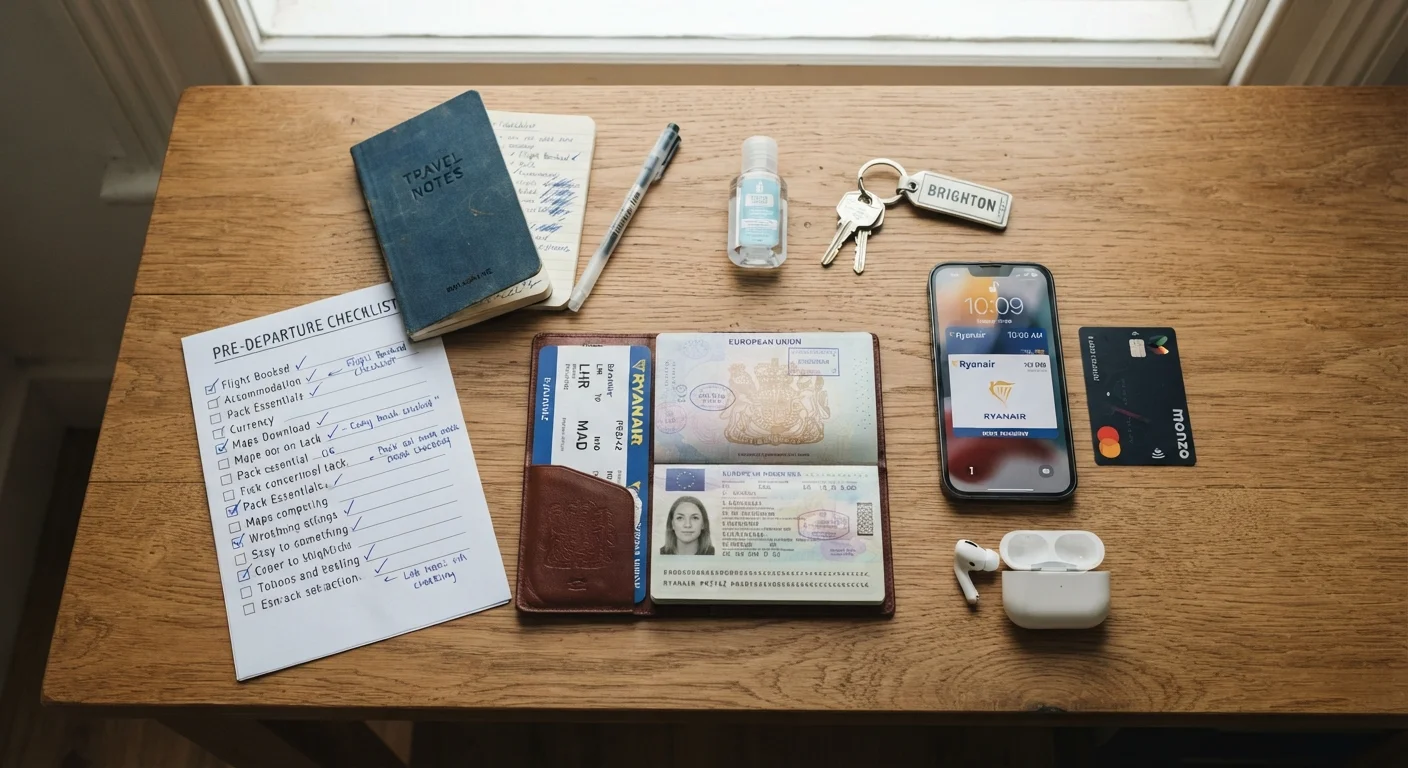
- Passport (carry the original; store a photo of the data page in cloud storage and email a copy to yourself)
- Travel insurance confirmation and emergency contact number
- Visa approvals if applicable
- Accommodation addresses for at least your first few stops
Logistics to confirm before departure:
- How you will get from the airport to your accommodation
- Whether your bank cards work internationally without excessive fees
- How you will access local currency on arrival
- Who at home has your full itinerary
Entry requirements - visas, vaccination records, health declarations - change. Always verify through official government and embassy sources in the weeks before travel, not at the time of booking. For a broader foundation on staying safe on your own, the solo travel safety introduction and the Solo Safety Tips hub are practical next reads.