
Why Safety Myths Cause Real Problems
Safety myths fall into two damaging categories: those that make travelers overconfident and those that discourage people from traveling at all. Both distort decision-making. When you plan around inaccurate information, you either skip precautions that genuinely matter or waste energy on rituals that don't do much. This article examines the most persistent myths circulating in solo travel communities - and replaces them with more grounded guidance.
If you're just starting out, our introduction to solo travel safety covers the core principles before you go further.
Myth
If you dress like a local and avoid looking like a tourist, you won't be targeted.
Fact
Blending in can reduce low-level hassle, but experienced opportunistic thieves identify targets by behavior and distraction - not clothing.
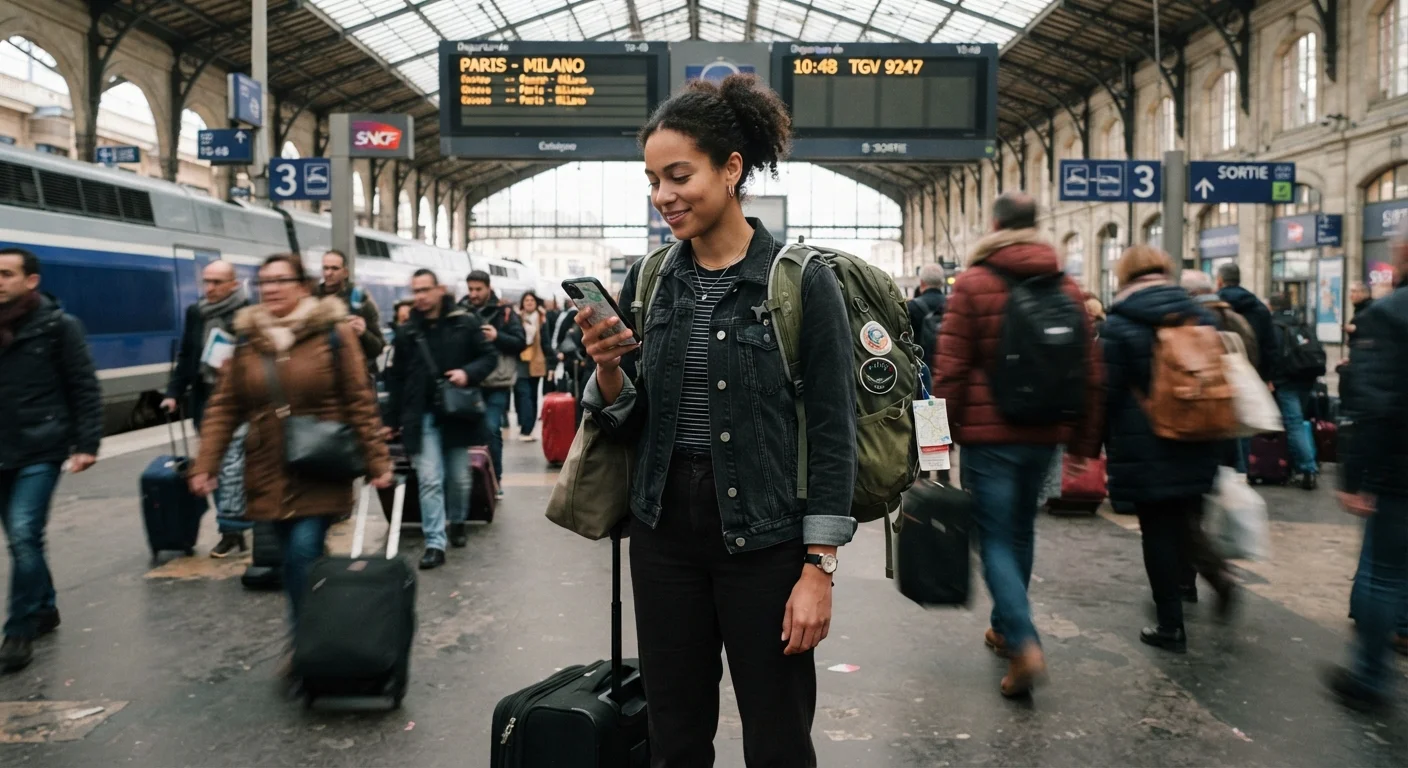
The idea that the right outfit will protect you is appealing but overstated. Pickpockets and scammers operating in high-traffic areas watch for people who are distracted, disoriented, or unaware of their surroundings - behaviors that have little to do with what you're wearing. Keeping your phone out while navigating unfamiliar streets, visibly struggling with luggage, or pausing to read signs all signal vulnerability far more loudly than a backpack or sneakers do. Situational awareness - knowing where your belongings are, staying alert in crowded spaces, recognizing when someone is getting unusually close - is a more transferable and reliable skill than any particular dress code.
Myth
Solo travel is inherently more dangerous than traveling with others.
Fact
Risk depends far more on destination, behavior, and preparation than on whether you travel alone or in a group.
Groups create their own vulnerabilities. Travelers in pairs or groups often pay less attention to their environment because they're focused on conversation. They may also take larger risks because the presence of others creates a false sense of collective security. Solo travelers who are well-prepared, stay informed about their destination, and maintain basic situational awareness frequently make safer decisions than distracted group travelers. The variables that genuinely predict safety outcomes - knowledge of local conditions, accommodation quality, avoiding high-risk situations at night - apply equally regardless of group size. That said, some destinations and situations do carry higher risk for solo travelers, particularly women traveling alone; this is worth researching specifically for your destination rather than applying a blanket rule either way.
Myth
Staying in tourist areas or expensive neighborhoods means you're in a safer zone.
Fact
High-traffic tourist areas are actively targeted by thieves and scammers precisely because they concentrate distracted, unfamiliar visitors.
Popular squares, transit hubs, and major landmarks consistently appear at the top of pickpocketing incident reports in cities worldwide. Expensive neighborhoods carry different risks - including higher financial exposure if something goes wrong - but are not inherently secure. The assumption that cost or tourist density equals safety leads travelers to drop their guard exactly where they should maintain it. Local residential areas that travelers avoid out of unfamiliarity are often statistically safer than the crowded squares they default to. Research the specific risk profile of your destination rather than using neighborhood price points as a proxy for safety.
Myth
Your phone's offline maps and translation apps eliminate most navigation risk.
Fact
Technology assists navigation but doesn't protect you when you're staring at a screen in an unfamiliar environment.
Offline tools are genuinely useful - no one is arguing against downloading maps before you land. The problem is behavioral: consulting your phone on a busy street corner, walking while navigating, or visibly pulling out a device in a less secure area all create exposure. Before entering a new neighborhood, review your route, note a few landmarks, and use your phone discreetly rather than continuously. Battery failure, software glitches, and GPS dead zones are also real failure modes. A basic printed map or a handwritten note with your accommodation address provides a reliable backup at zero cost.
Myth
Travel insurance is optional if you're young, healthy, and going somewhere 'safe.'
Fact
Medical evacuation alone can cost tens of thousands of dollars; health status and perceived destination safety don't change that exposure.
A sprained ankle requiring a hospital visit, a stomach illness that needs IV treatment, or an accident on a rented scooter can produce bills that dwarf the entire cost of the trip - in countries categorized as low-risk. Young travelers with no pre-existing conditions are not immune to accidents or sudden illness. Travel insurance that includes adequate medical evacuation coverage is one of the few safety costs that financial planners and travel safety experts consistently treat as non-negotiable. The premium is generally modest relative to the risk it offsets. Understand which safety costs are worth keeping even when you're watching your budget closely.
Myth
If other travelers on forums say a place is safe, it probably is.
Fact
Forum safety assessments reflect individual experiences at a specific time and don't constitute reliable, current risk analysis.
Traveler forums are useful for practical tips - recommended neighborhoods, reliable transport options, what to pack. But a thread from eighteen months ago saying a city felt safe tells you very little about conditions now. Political situations, crime patterns, and public health conditions can shift significantly. For genuine safety assessment, check your government's official travel advisory (the U.S. State Department's travel.state.gov, for example) and cross-reference with on-the-ground sources closer to your departure date. Forum consensus is a starting point, not a substitute for current, authoritative information.
Putting Accurate Safety Thinking Into Practice
Most of the myths above share a common flaw: they substitute simple rules for actual situational judgment. Real safety planning involves understanding the specific risks in a specific destination - not applying universal formulas. Even experienced solo travelers fall into the trap of over-relying on habits that worked before. Overconfidence is its own safety hazard, and it tends to grow with experience rather than shrink.
Don't Confuse Familiarity With Safety
Returning to a destination you've visited before can create complacency - conditions change, and past safety doesn't guarantee current safety. Check updated travel advisories before each trip, even to places you know well. A destination that felt secure two years ago may have a different risk profile today.
Good safety preparation is also compatible with traveling on a budget. Knowing where not to cut costs - a quality lock, travel insurance, a well-located base - is more valuable than any single piece of gear or software. For a structured approach to planning safer solo trips from the start, see our safety planning guide covering what genuinely deserves your attention.
This article provides general travel safety information for educational purposes. Always verify entry requirements, local laws, and travel advisories with your government's official travel authority before departing. Conditions change, and no article can substitute for current, destination-specific guidance.