
Why Looking Lost Makes You a Target
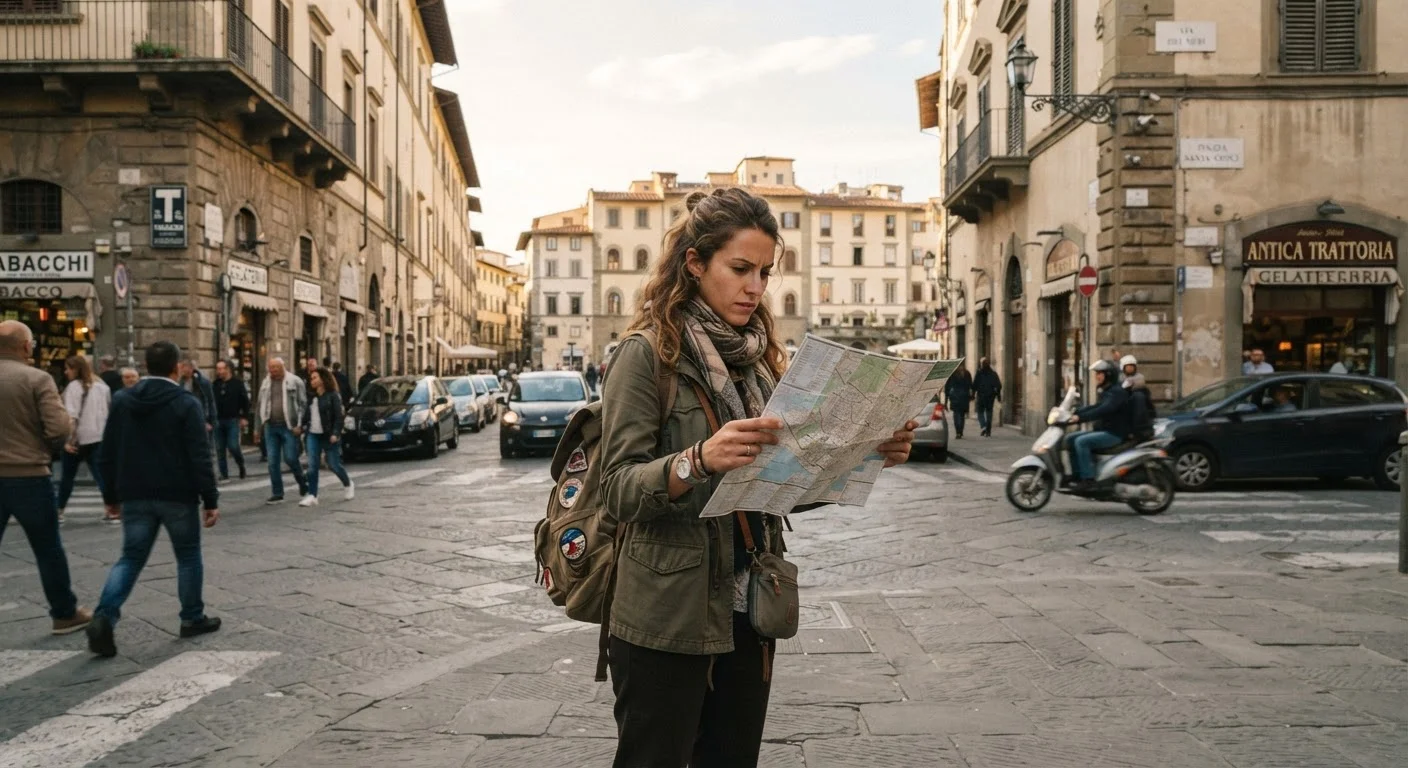
Opportunistic crime in cities is largely predictable: it concentrates on people who signal uncertainty. Hesitating at a corner, spinning a phone to reorient a map, or scanning surroundings with a confused expression all broadcast the same message - this person doesn't know where they are. That's a useful signal for anyone looking for an easy mark.
This isn't about living in fear. It's about understanding that how you move through a city affects your risk profile as much as where you go. Situational awareness is a learnable skill, not a personality trait, and the physical habits in this guide are where it becomes practical.
The goal isn't to look like a local - that's rarely achievable. It's to look like someone who knows exactly where they're going, even when you're still figuring it out.
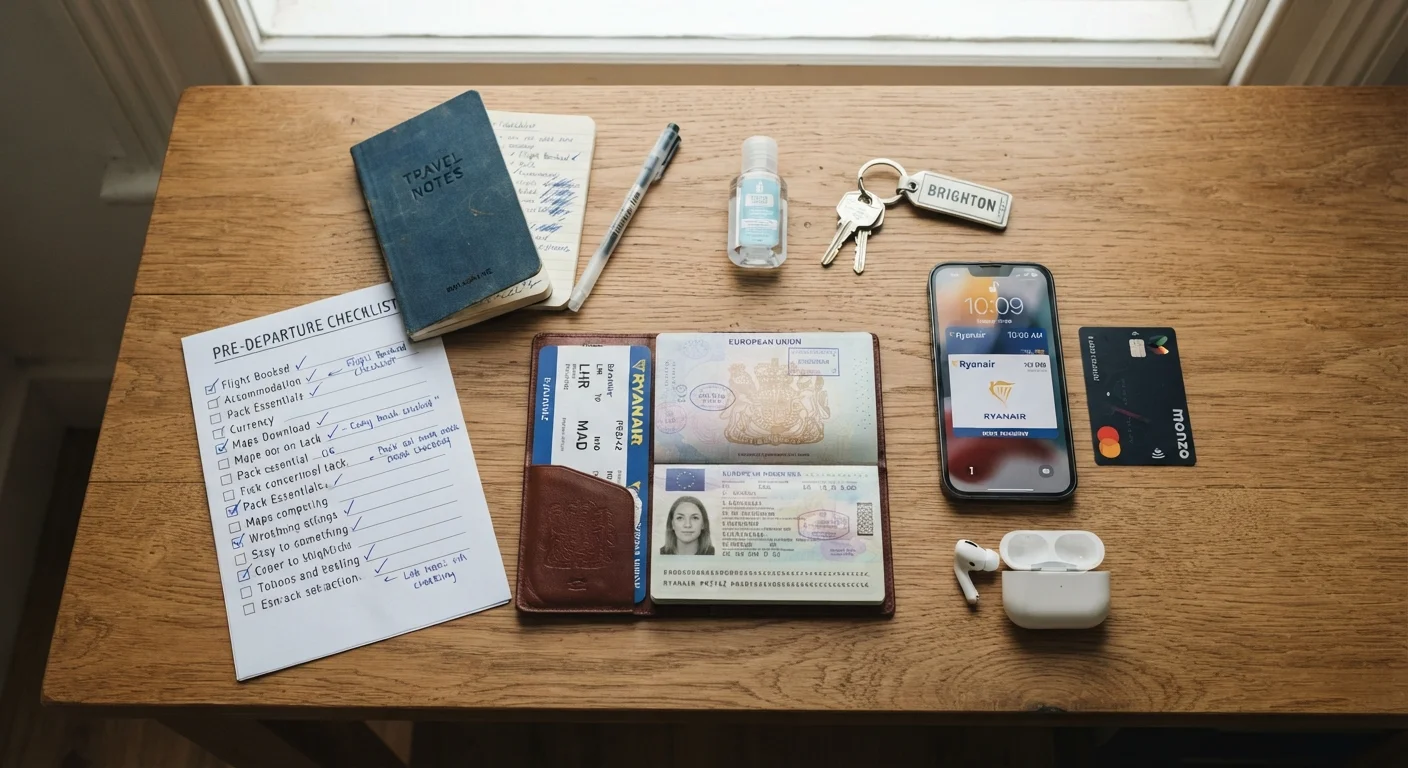
What you will need
Preparation: The Work You Do Before You Leave the Door
Most navigation confidence is built before you step outside. Scrambling to orient yourself on a busy sidewalk is avoidable if you spend 10 minutes at your accommodation first.
Download offline maps before you leave your accommodation
Open your maps app and download the area you'll be exploring while you still have reliable Wi-Fi. Offline maps eliminate the need to stream data in real time, which means no spinning loading screens on a street corner. Download a larger area than you think you need - urban exploration rarely stays within a tidy radius.
Memorize your route before leaving, not during
Study your intended route while seated at your accommodation. Note two or three visual landmarks along the way - a distinctive building, a plaza, a transit station - rather than relying entirely on turn-by-turn navigation. If your phone dies or signal fails, you'll still have a mental map to work from.
Also identify: the direction back to your accommodation, the nearest metro or bus stop, and one fallback option (a hotel lobby or café) where you can stop safely to regroup.
Set your posture and pace before you walk out
This sounds trivial but it isn't. Take a breath before leaving your accommodation and consciously set your posture: shoulders back, head level, stride steady. Starting with that baseline makes it easier to maintain when you're concentrating on navigation. Once you're outside and uncertain, correcting your body language is harder.
Use a discreet navigation method while moving
If you need to follow navigation while walking, use earbuds with spoken directions rather than staring at your screen. Alternatively, glance at your phone only when stationary. Both approaches keep your head up and your hands less visibly occupied. A map printed on paper and folded small is also worth carrying as a backup - it's harder to snatch and doesn't signal expensive hardware.
Identify safe reorientation points in advance
Before leaving, note two or three specific places - a café chain, a pharmacy, a museum entrance - where you can comfortably stop, sit, and check your map without appearing lost or exposed. If you get turned around, walk purposefully to one of these points rather than stopping mid-sidewalk. Reorienting from a fixed, safe position is always better than doing it in the open.
For a fuller framework around pre-trip research, see our guide on how to research a destination you've never visited alone - it covers neighborhood safety, transport options, and local norms in depth.
On the Ground: Moving Through the City Confidently
Preparation gets you out the door oriented. Execution keeps you looking that way as conditions change.
Use the 'Step Aside' Rule
Whenever you need to check your map or pause to think, step out of pedestrian flow first - into a doorway, against a wall, or inside a business. This removes the hesitation signal from a public, exposed position and gives you a moment to think without feeling watched. Make it an automatic reflex from day one.
Body language basics: Walk at a steady, purposeful pace - not fast enough to look rushed, not slow enough to look uncertain. Keep your head up and make brief, neutral eye contact with people around you. Avoid stopping abruptly on busy sidewalks to check your phone; step to the side, into a shop doorway, or sit somewhere before reorienting.
Asking for directions safely: When you do need help, choose your source carefully. Staff at cafés, pharmacies, hotels, and transit offices are consistently reliable choices - they're accountable, stationary, and used to answering questions. Avoid accepting unsolicited help from strangers who approach you first, particularly near tourist landmarks or transport hubs where scams are more common.
Phone and map hygiene: Keep your phone in a pocket or bag when you're not actively using it. If you're checking a map, do it briefly and deliberately - not while walking. Consider a secondary, low-value phone for navigation in higher-risk areas. This isn't paranoia; it's a practical habit covered in our introduction to solo travel safety.
Families traveling with children face a related but distinct set of navigation challenges - keeping kids safe in unfamiliar places addresses those specifically.
Unsolicited Helpers Aren't Always Helpful
In popular tourist areas, strangers who approach you offering directions or assistance are occasionally running short-change or distraction scams. This doesn't mean everyone is a threat - but it does mean you should be the one to initiate help-seeking, not respond to it. If someone approaches you aggressively or persistently, disengage and move toward a staffed business or transit office.