
Why Preparation Beats Reaction Every Time
The anxiety many parents feel about traveling with kids in unfamiliar places is completely understandable - but it's worth separating real risk from perceived risk. Families travel safely to new destinations every day, and the habits that make that possible are genuinely straightforward. What they share is one quality: they're practiced before they're needed, so nobody has to think under pressure.
The biggest mistake families make isn't choosing the wrong destination - it's assuming a safety conversation in the moment will be enough. Kids, especially young ones, don't retain instructions delivered during a stressful, stimulating trip. They retain routines built through repetition. That's the insight that underlies every step in this guide. If you're also navigating the broader documentation side of international travel, our guide to passports and parental consent is a useful companion read.
What you will need
Ready to build those habits? Here's what to put in place before and during your trip.
Child ID wristband or safety card
Stores parent contact details in a form a young child can show to a trusted adult without needing to recall information under stress.
Family communication app with location sharing
Allows parents and older children to share real-time location and send quick check-in messages without relying on voice calls.
Printed destination card (in local language)
Shows your accommodation address and emergency contact to locals or drivers when language is a barrier.
Portable phone charger
Ensures devices stay powered during long days of sightseeing when access to outlets is unpredictable.
Step-by-Step: Building Your Family Safety System
Equip every child with identification
Before you leave home, write or print a card with your name, mobile number, accommodation address, and any critical medical information. Slip one into every child's pocket or shoe, and use a waterproof wristband for toddlers and preschoolers who can't manage a card reliably. For children who are old enough, spend a few days before the trip drilling your phone number until it's automatic - make a game of it.
If you're travelling internationally, include the country code in the number. A local emergency number is also worth adding; it differs by country, so look it up during your pre-trip research.
Establish a meeting point at every new location
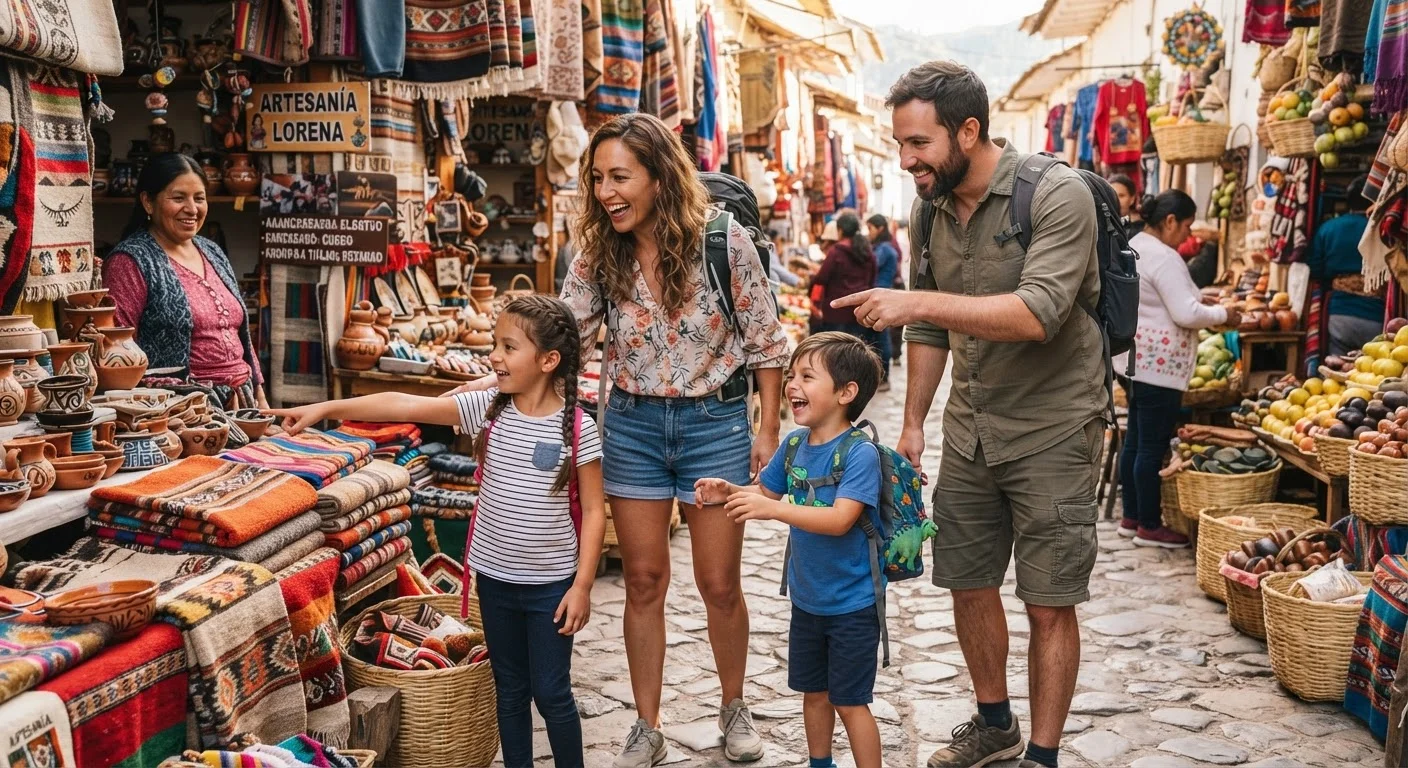
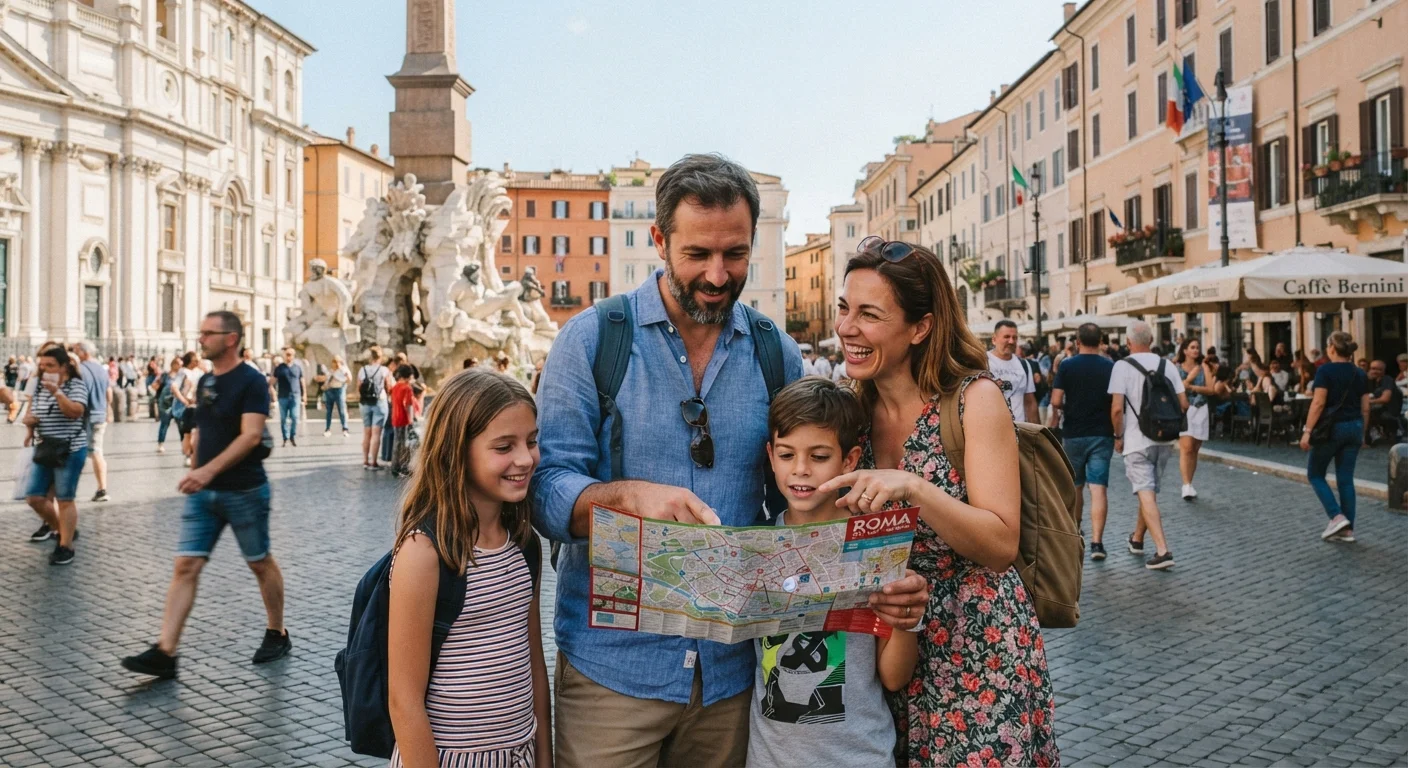
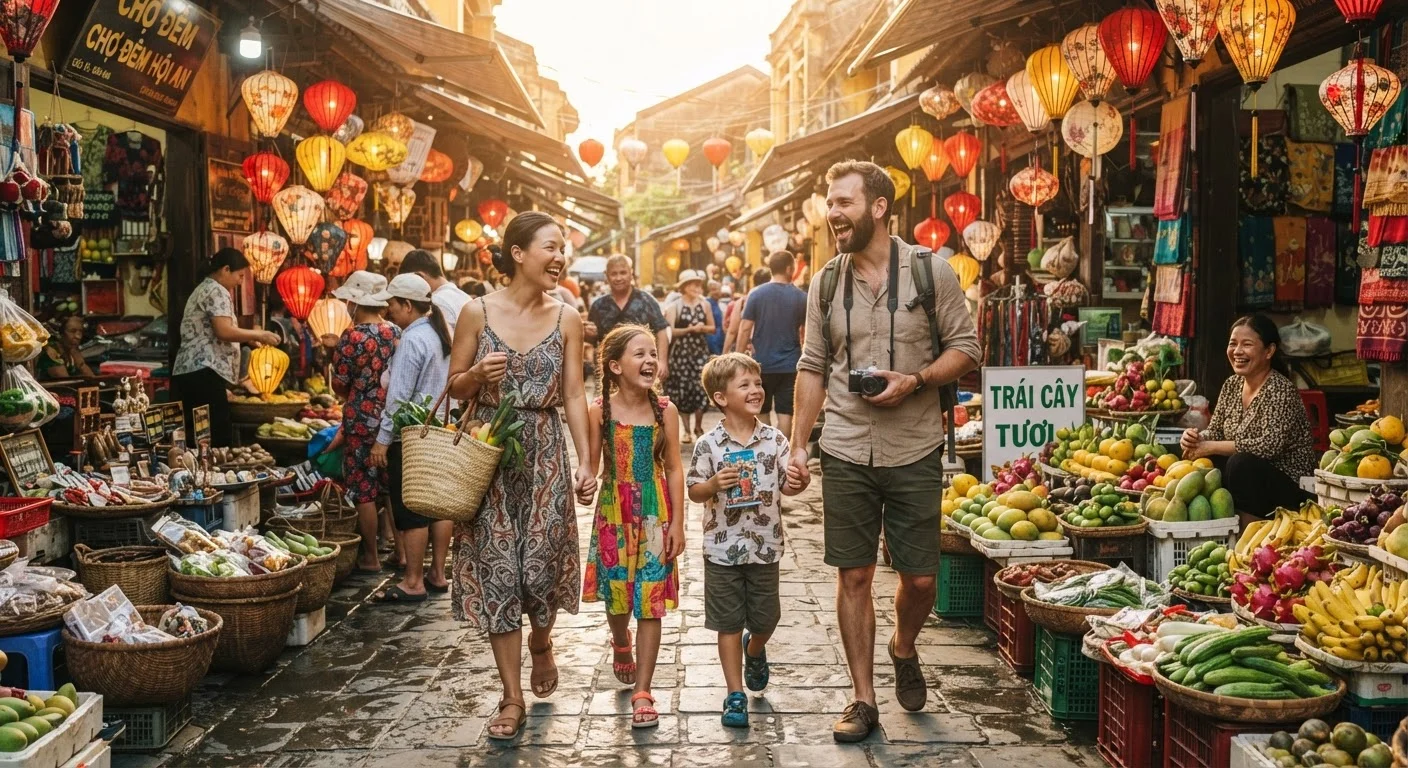
The moment you arrive at an airport, theme park, market, or unfamiliar neighborhood, identify a single, unmistakable landmark - a large statue, the main entrance gate, an information desk - and name it clearly to the whole family. Keep the description simple enough for your youngest child to repeat back to you. Repeat this ritual every time you enter a new environment, making it feel like a normal part of exploring rather than a scary drill.
For busy venues, choose a spot that is staffed if possible - a guest-services desk or a uniformed security post - so a separated child has an adult to approach immediately.
Teach kids who to approach for help
The old rule of 'find a police officer' isn't always practical abroad, where uniforms vary and language barriers exist. A more reliable approach: teach children to look for a store employee behind a counter, a parent with young children, or a uniformed venue worker. Role-play at home - 'What would you say if you couldn't find me?' Practice the exact phrase: 'I'm lost. My parent's name is [Name] and their number is [Number]. Can you help me call them?'
For destinations where English isn't widely spoken, pair this with our guide to key phrases and communication signals so older kids have a few words ready in the local language.
Set clear boundaries before exploring independently
As children get older, some independent exploration is healthy and developmentally appropriate. Before giving a tween or teen any latitude, agree on a geographic boundary ('you can walk as far as the market entrance but no further'), a check-in schedule ('text me every 45 minutes'), and a firm return time. Make sure location sharing is active on their device and that they know your exact location too.
Cover what to do if their phone dies or loses signal - which physical landmark do they return to, and what's the backup plan? Having this conversation in a low-pressure moment, ideally before you leave home, means everyone operates from a shared plan rather than improvising under stress.
Make safe transport choices a family habit
Unfamiliar cities often mean unfamiliar transport options, and the variety can feel overwhelming with kids in tow. Stick to officially licensed taxis dispatched through hotel concierges or verifiable app-based services where available. Before boarding, note the vehicle's license plate and, for older children, show them how you're doing it - you're modeling a habit, not inducing fear.
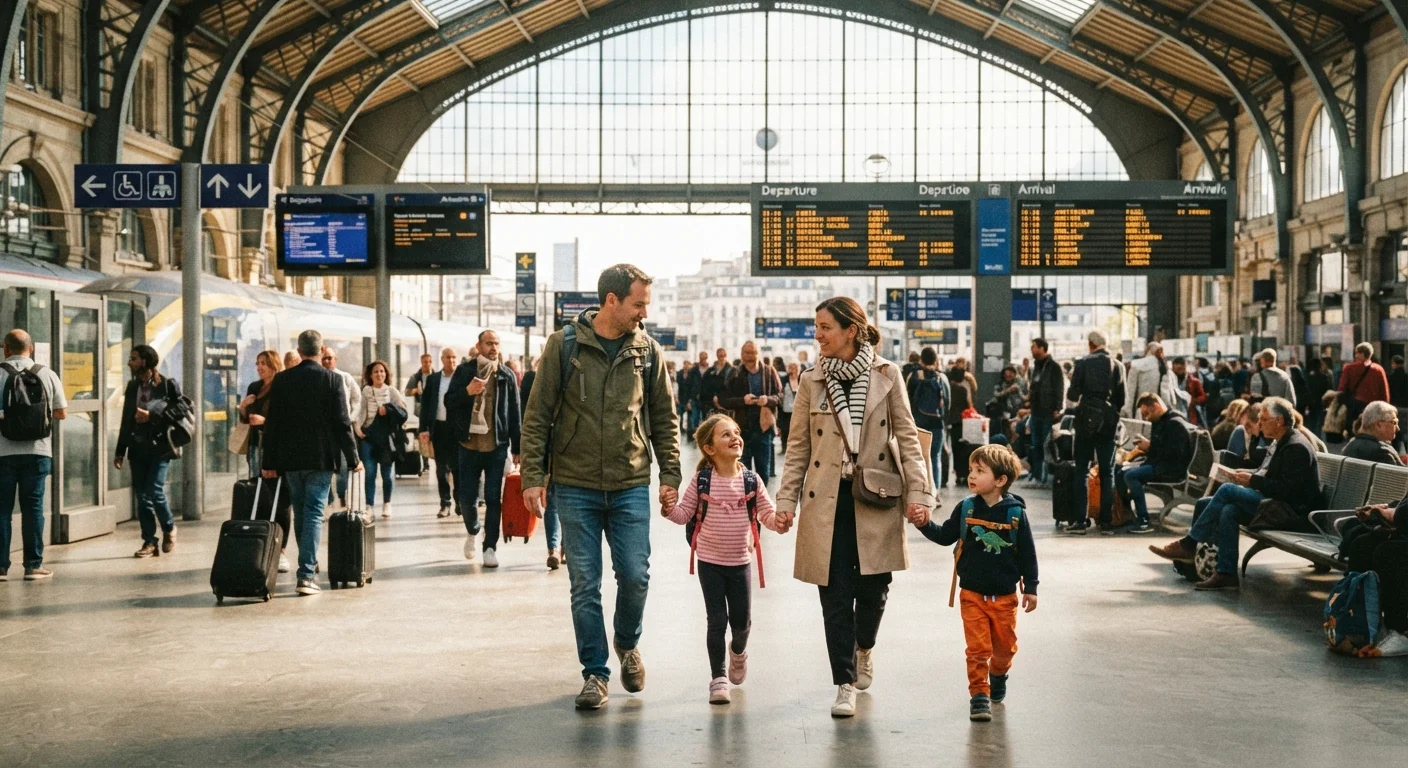
When using public transit, keep young children physically between adults on platforms and position yourself near the doors rather than deep in a carriage, making it easier to exit together if the group gets separated at a stop. For broader destination-specific considerations, our guide to evaluating destinations covers transport infrastructure as part of the overall picture.
Run a quick debrief at the end of each day
Five minutes before bed is all it takes to reinforce the habits. Ask each child: 'What was our meeting point today?' and 'What would you do if you couldn't find us?' Praise correct answers without fanfare, and gently correct gaps without alarm. This daily loop cements the routines quickly - by day three of a week-long trip, most kids can answer instantly. It also gives you a natural window to flag tomorrow's new environment and the meeting point you'll pick there.
Don't Rely Solely on a Phone
Devices run out of battery, lose signal, or get lost - especially with kids involved. Always back up your digital safety plan with a physical ID card, a memorized phone number, and a verbal meeting-point agreement. No single layer of protection is enough on its own.
None of these steps require expensive gear or elaborate planning - they require intentional conversation and a few minutes of practice. The families who travel most confidently aren't the ones who avoid challenges; they're the ones who've already decided how they'll handle them. For a broader look at what makes destinations genuinely manageable for families at different ages, see our complete guide to travelling with children of different ages.
Keeping Perspective: Safety and Adventure Aren't Opposites
It bears saying directly: the goal of a family safety plan isn't to travel in a state of vigilance. It's to build just enough structure that you can relax and enjoy the trip. Once your kids know the meeting-point habit, once they have ID on their person and a phone number in their head, you're genuinely free to explore with confidence rather than anxiety.
If you've ever wondered whether your worries about traveling with kids are typical or outsized, our look at common myths about traveling abroad with kids is worth a read - many of the most common fears don't hold up to scrutiny. And if you're curious how children actually handle the unpredictability of travel, why kids handle long trips better than parents expect might surprise you.
Prepared families aren't cautious families - they're confident ones.