
Why Solo Travel Costs More - and How to Fight Back
Solo travelers absorb costs that group travelers split. Hotel rooms charge per room, not per person. Tour operators tack on single-supplement fees. Taxis and tuk-tuks cost the same whether one or four people are in them. Understanding this structural disadvantage is the foundation of any effective solo budget strategy.
The good news: solo travelers also have advantages. You make faster decisions, adapt to cheaper options without negotiating with anyone, and can optimize every choice purely around value. See our breakdown of why solo trip budgets spiral for a detailed look at the structural cost drivers - and how to plan around each one.
~20-30%
Single-supplement premium on package tours
Industry estimates suggest solo travelers routinely pay a 20-30% surcharge above the per-person rate when booking package tours designed for double occupancy.
2-3%
Foreign transaction fee on most standard cards
Most standard bank-issued debit and credit cards charge a 2-3% foreign transaction fee on every international purchase, a cost that compounds significantly over a multi-week trip.
Day 1-3
When most in-trip budget decisions are locked in
Travel researchers consistently find that the lodging, transport, and activity choices made in the first few days of a trip determine the overall budget outcome more than any later decision.
Pre-Trip: Where the Real Budget Work Happens
Most budget overruns are locked in before you ever leave home. Rushed bookings, skipped research, and vague itineraries are expensive. Spend time here and you spend less everywhere else.
- Set a total trip budget and work backward - daily spend limit, transport envelope, accommodation cap, activities allowance, and emergency buffer. A vague budget is no budget at all.
- Research visa and entry costs carefully. These vary widely and can eat into your first week's spending money. Always verify with official government sources, as requirements change without notice.
- Compare travel insurance options for medical evacuation, trip cancellation, and gear coverage. Skipping it to save money is a risk that can bankrupt a solo traveler without a travel companion to share emergency costs.
- Use a no-foreign-transaction-fee debit or credit card to avoid the 2-3% charges that silently erode every purchase abroad.
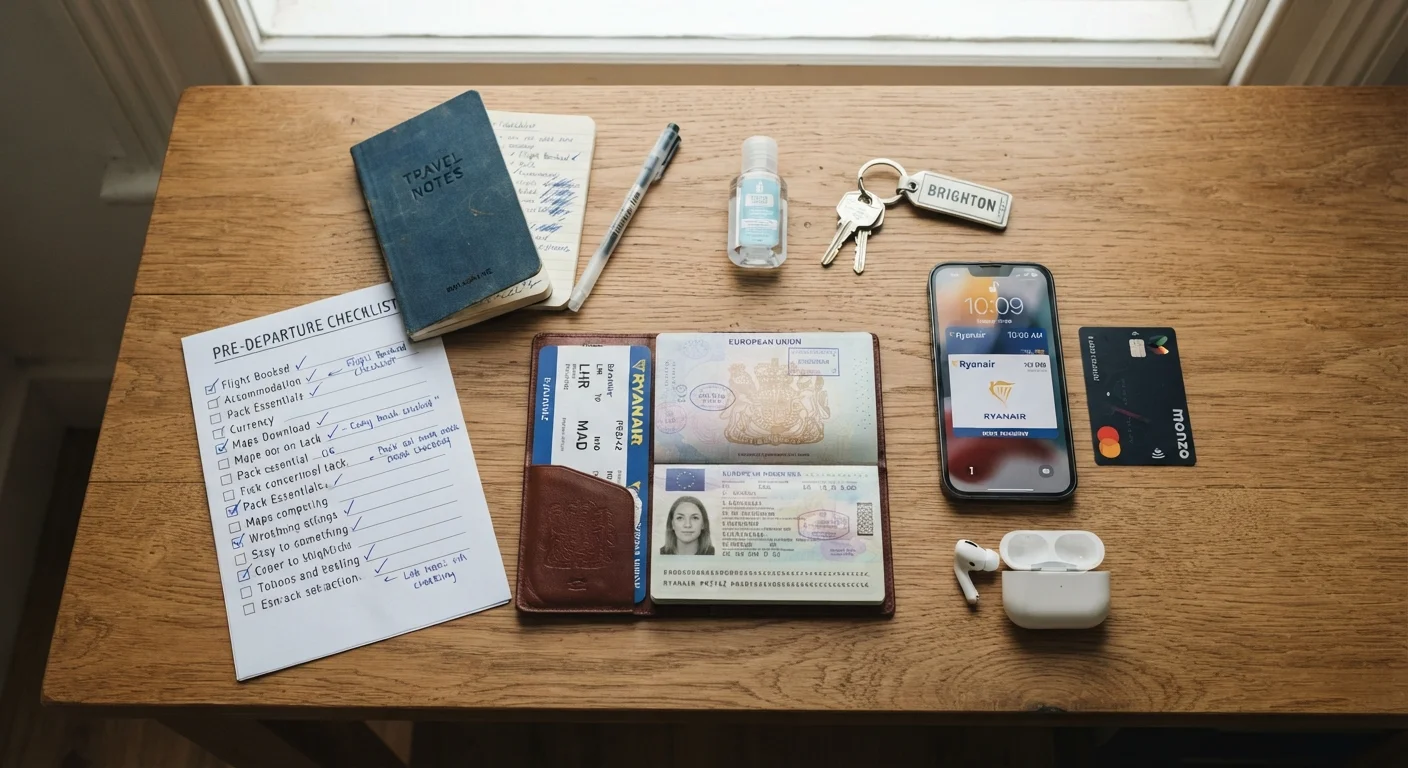
The pre-departure budget checklist covers the full sequence - finances, insurance, bookings, and safety prep - so you leave without expensive gaps.
Open a dedicated travel account and load only your trip budget into it before departure. This creates a hard spending limit and makes tracking effortless - you always know exactly what's left.
Mixing travel spending with everyday accounts is a primary reason travelers lose track of their actual expenditure. Separation creates accountability without requiring complex spreadsheets.
Book the first and last nights of your trip in advance, even if you prefer flexibility in the middle. Arrival-day and departure-day accommodation stress leads to expensive, rushed decisions.
Fatigue and logistical pressure on arrival and departure days push travelers toward convenience over value. Locking these two nights removes the variable from your most vulnerable moments.
Transportation: Booking Smart From Departure to Arrival
Flights and long-distance transport are usually the largest single budget item. A few reliable strategies apply regardless of destination:
- Flexible dates matter more than airline loyalty. Shifting a departure by one or two days can alter the fare materially. Midweek travel - particularly Tuesday and Wednesday departures - tends to be cheaper on many routes, though this isn't universal.
- Secondary airports serving major cities often mean lower fares and fewer fees. Factor in the ground transport cost to compare fairly.
- Overnight buses and trains double as accommodation for a night, effectively cutting one lodging cost from your budget. This works especially well on longer regional routes in Southeast Asia, Europe, and Latin America.
- Book local transport on arrival where possible. Pre-booked airport transfers through third parties frequently cost two to three times the local taxi or transit rate.
For destination-specific transport strategies, the daily travel costs hub covers ground transport, rideshares, and transit passes across different trip contexts.
Lodging: Paying for Sleep, Not Square Footage
Accommodation is where solo travelers feel the single-supplement penalty most acutely. The workarounds are well-established and genuinely effective:
- Hostel dormitories remain the most cost-efficient option in most of the world, with the social side-benefit of built-in travel companions who often share transport or activity costs.
- Private rooms in guesthouses or family-run B&Bs often undercut hotel rack rates while providing a more grounded local experience.
- Apartment or room-share platforms become cost-effective on stays of four nights or longer, especially if you have kitchen access and can self-cater some meals.
- Strategic location choice reduces daily transport spend. A slightly more expensive room near transit hubs or a walkable city center can be cheaper net of saved taxi and transit fares.
Our guide to budget lodging for solo travelers walks through every accommodation type with honest trade-offs. For multi-destination trips, see how to stretch a lodging budget across a multi-city trip.
Daily Spending: Food, Activities, and the Small Leaks
Daily costs compound. Small, repeated spending - bottled water, convenience store snacks, ATM fees, paid Wi-Fi - adds up to real money across a two-week trip. Managing these requires awareness, not deprivation.
- Eat where locals eat. Markets, street stalls, and lunch specials at sit-down restaurants consistently deliver better food at lower prices than tourist-facing establishments.
- Carry a reusable water bottle and refill at accommodation or filtered stations where safe. In destinations where tap water is unsafe, factor purification tablets or a filter into your gear list.
- Front-load paid activities. Museums, tours, and entry fees feel less painful on day two than day twelve when budget anxiety creeps in. Knowing your activity spend is done also reduces impulse decisions.
- Track spending daily - even rough figures in a notes app. Travelers who monitor in real time consistently outperform those who check in at the end of the trip.
For region-specific daily spending habits, practical habits for stretching your dollar in Latin America demonstrates how the same principles apply at the destination level.
The Journey Home: Protecting Your Budget to the End
The return leg is where disciplined budgets unravel. Fatigue, souvenir impulses, airport food, and last-minute transport conspire to drain whatever's left.
- Reserve a fixed return buffer - a separate mental (or literal) envelope of cash or card balance set aside from day one and not touched until the final 48 hours.
- Eat before the airport. Airport food costs three to four times the street price for equivalent quality. A meal near your accommodation before departure saves real money.
- Weigh your bag before checkout if flying. Checked-baggage overage fees at international airports can be steep, and souvenir purchases frequently push bags over limit.
- Confirm your return transport the day before departure. Missed connections due to misread schedules or local transport disruptions are an expensive and stressful way to end a trip.
Planning your next trip? The plain-language starting point for first-time solo budget travelers covers the full mindset and planning framework, and the solo trip planning hub has step-by-step guidance for building smooth, stress-free itineraries.
This article provides general travel budgeting information for educational purposes. Prices, entry requirements, visa conditions, and local regulations change frequently - always verify current conditions with official government sources and relevant service providers before you travel.