A practical checklist to map out food, transport, and activity costs before you land — so your budget holds up day to day.
Key Takeaways
Estimating costs by category before departure prevents mid-trip budget surprises.
Food, transport, and activities each need their own daily spending ceiling.
A 10-15% buffer built into your daily figure absorbs unexpected costs.
Currency and payment setup done at home saves money and stress on arrival.
Tracking actual spend against your plan lets you course-correct early.
Why a Pre-Trip Budget Planner Pays Off
Most travelers set a rough trip total - airfare plus hotel - then cross their fingers that daily spending sorts itself out. It rarely does. Food, local transport, entrance fees, and incidentals are where budgets quietly unravel, because no one planned for them specifically.
Run through the groups below before you pack. The whole process takes 30-60 minutes and can save a disproportionate amount of money - and stress - on the road.
Source recent, first-hand daily cost reports from travelers who visited your destination recently.
Required
Currency Converter App
Check live exchange rates and set up alerts if your trip is weeks away and rates are volatile.
Required
Spreadsheet or Budget App
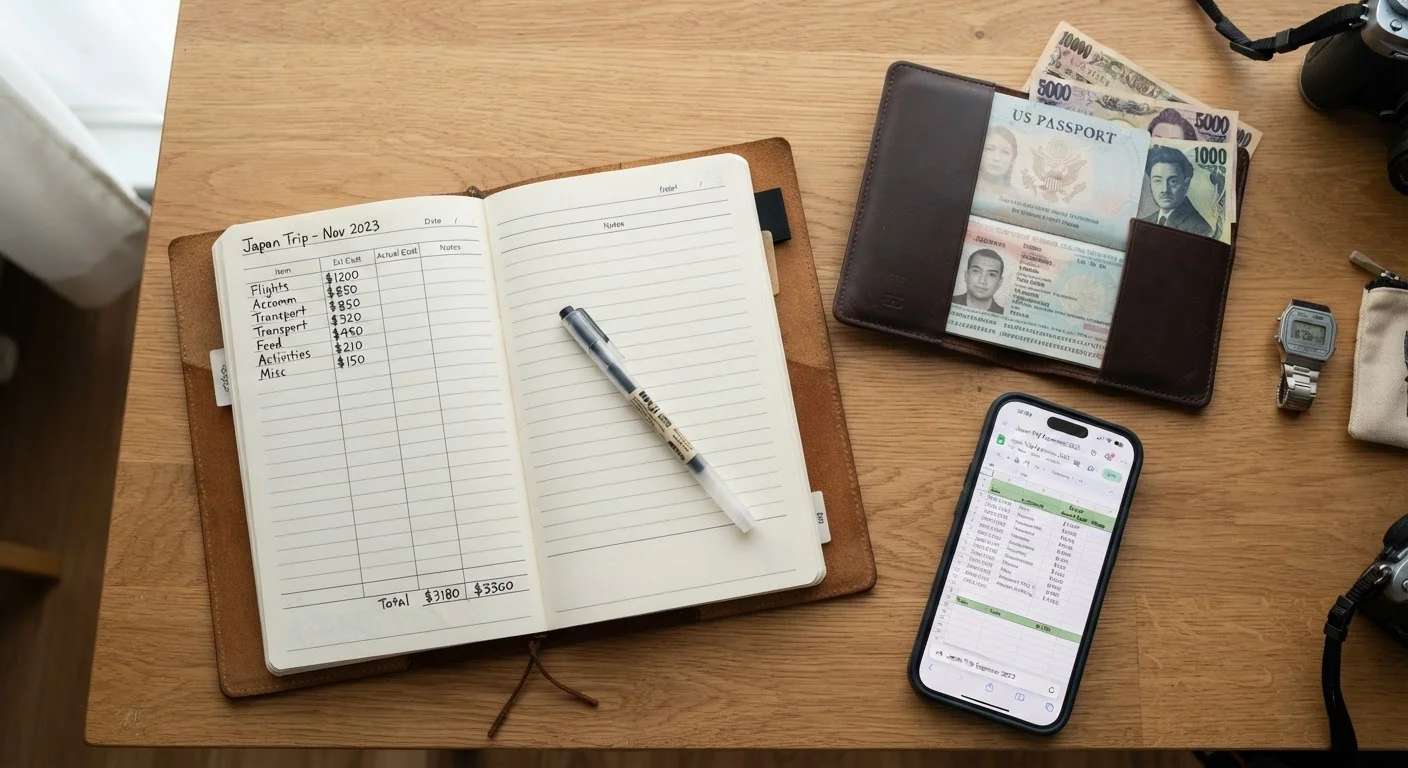
Build your per-category daily budget table and track actual spend against it while traveling.
Optional
Official Attraction Websites
Verify current admission prices directly rather than relying on outdated third-party listings.
The Pre-Trip Budget Checklist
Work through each group in order. Some items take two minutes; others require a quick search. Together they give you a per-day spending number grounded in actual destination costs rather than optimistic guesswork.
Research & Baseline Setting
Look up current typical daily costs for your destination using travel forums, recent blog posts, and government tourism data - not figures from several years ago.Must
Identify whether your destination has significant regional cost variation (e.g., capital city versus rural areas) and note different daily targets for each zone.Should
Check the current exchange rate and note any recent volatility that could affect your purchasing power.Must
Confirm whether peak season, local holidays, or major events coincide with your trip, as these can inflate accommodation, transport, and activity prices.Should
Food & Drink Budget
Set a daily food ceiling by splitting it across meals: estimate breakfast, lunch, and dinner separately based on local market rates rather than tourist restaurant prices.Must
Factor in at least one meal per day eaten at a local market, street stall, or grocery store to reduce average meal cost.Should
Allocate a small daily allowance for drinks, snacks, and coffee rather than treating these as free extras - they add up fast.Must
Note any dietary requirements that may limit your ability to eat at the most affordable local options, and adjust your food budget upward if needed.Nice to have
Local Transport
Research the primary modes of local transport available (metro, bus, shared taxi, tuk-tuk, rideshare) and their approximate fares for typical distances.Must
Identify whether a multi-day transit pass or city card offers better value than paying per ride, and factor the upfront cost into your day-one spending.Should
Estimate how many inter-city or inter-region moves your itinerary includes, and budget each separately - these can dwarf daily local transport costs.Must
Check whether airport transfers are meaningfully more expensive than standard local transport and plan accordingly.Should
Activities & Entrance Fees
List every paid attraction, tour, or experience you plan to attend and look up current admission prices from official venue websites.Must
Identify free or low-cost alternatives for at least half your planned activities - parks, markets, walking routes, and public beaches often cost nothing.Should
Spread activity costs across your trip rather than front-loading expensive days, so overspend on one day doesn't cascade through the rest.Should
Check whether student, senior, or multi-attraction passes are available that could reduce per-activity costs.Nice to have
Miscellaneous & Buffer
Add a daily miscellaneous line of at least 10-15% of your base daily total to cover tipping, small purchases, laundry, and minor emergencies.Must
Set aside a separate trip-level emergency reserve - distinct from your daily buffer - for situations such as a cancelled connection or unexpected medical co-pay.Must
Review your accommodation costs to confirm whether breakfast, Wi-Fi, or local transport are included, as these affect your true daily total.Should
Payment & Currency Setup
Confirm which payment methods are widely accepted at your destination - cash-heavy economies require more advance planning than card-friendly ones.Must
Notify your bank of travel dates and verify foreign transaction and ATM withdrawal fees so you can account for them in your daily spend.Must
Decide how much local currency to carry as a daily cash baseline versus relying on ATM withdrawals on the road, and plan your withdrawal schedule to minimize fees.Should
Averages Can Mislead
Published "average daily costs" for a destination are often pulled from a wide range of traveler types and travel styles. A backpacker sleeping in a dorm and eating street food will have a vastly different number than someone in a mid-range hotel eating at sit-down restaurants. Anchor your estimates to your actual planned accommodation type and eating habits, not generic averages.
This checklist produces a pre-trip estimate, not a locked-in contract. Prices shift, plans change, and some days cost more while others cost less. Build the habit of checking actual spend against your daily target every evening - catching a 20% overspend on day two is manageable; catching it on day eight is not. See the complete framework for managing daily travel costs for on-the-road tracking strategies.
Solo travelers can apply this same checklist directly to their itinerary planning - the solo trip planning hub has complementary guidance on structuring a cost-efficient solo itinerary. Families should cross-reference the budget family trip planner checklist, which layers in additional cost categories specific to group travel.
Budget Travel Tips Editorial Team is the collective byline for our editorial team and contributor network. Articles published under this byline or an editorial pen name are researched, written, and reviewed according to our editorial standards for clarity, consistency, and independence before publication.
The content on this site is for informational purposes only and is not a substitute for professional advice. Always consult a qualified professional for guidance specific to your situation.