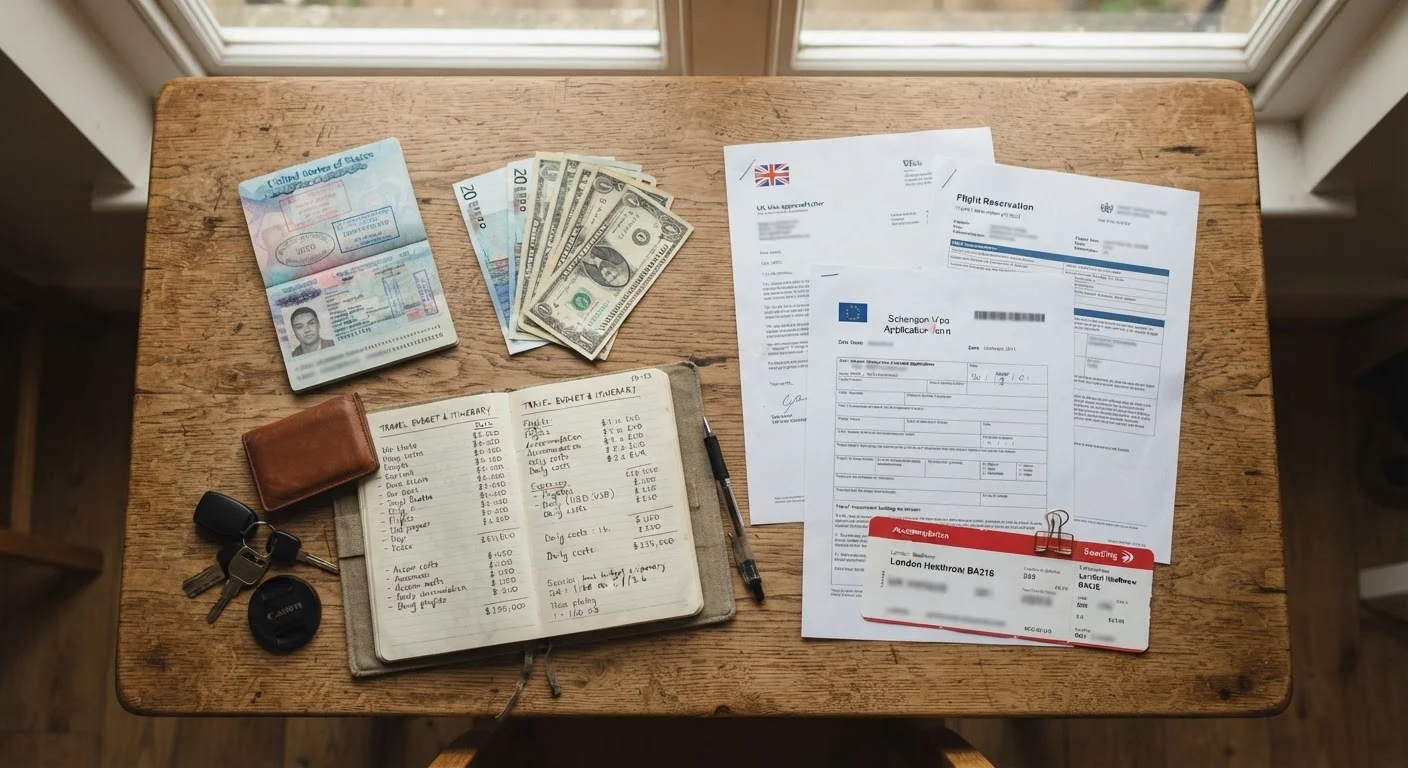

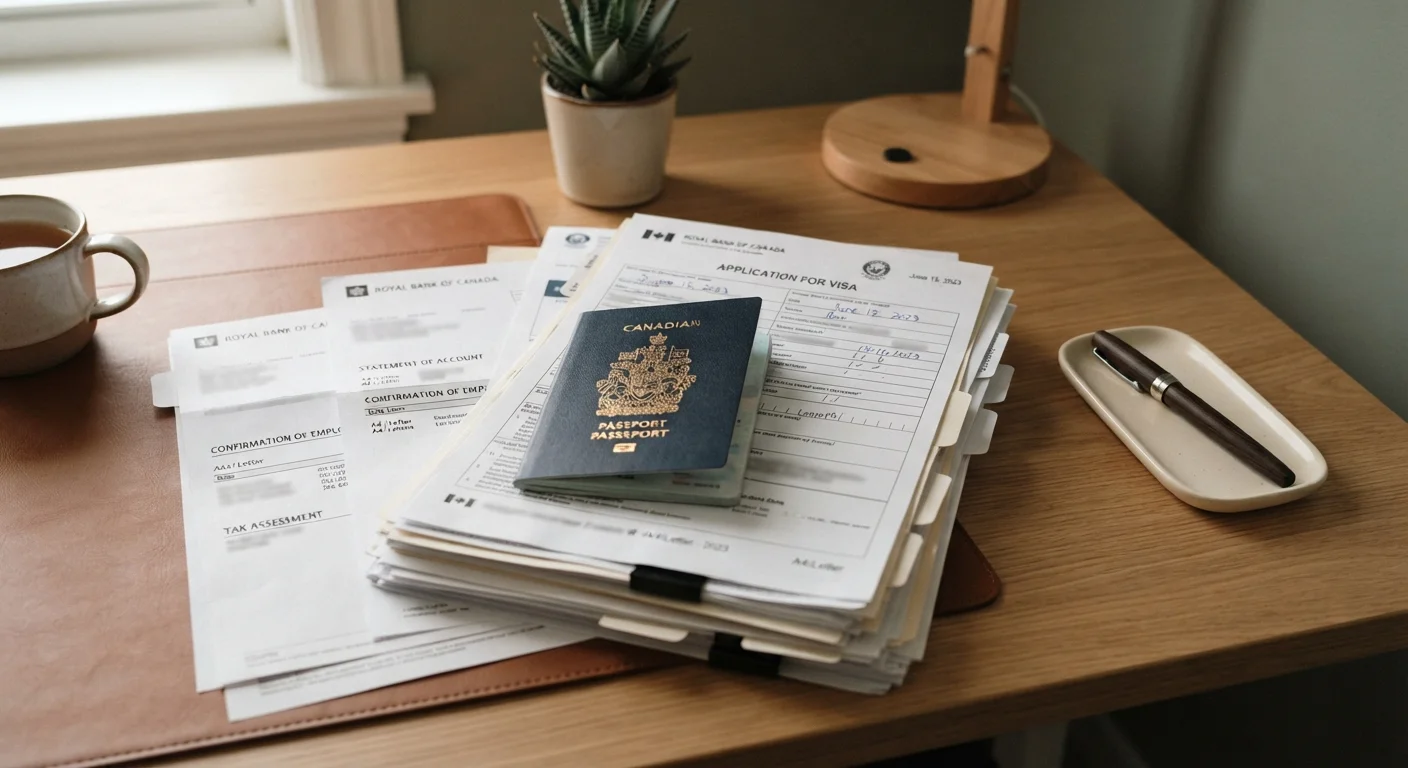
Why Consulates Demand Supporting Documents
A visa application is not merely a request to travel - it is a structured argument that you meet a country's entry criteria. Each document in your file answers a specific question the reviewing officer is required to resolve: Who are you? Can you support yourself? Will you leave? Understanding that logic transforms a stack of paperwork into a coherent case you can build deliberately.
The document requirements you'll encounter vary by visa category and destination, but nearly all consulates evaluate the same underlying concerns: identity verification, financial sufficiency, ties to your home country, and the purpose of your trip. The documents listed below map directly to those concerns.
Before diving in, note that requirements change. Always verify current checklists with the official embassy or consulate website for your destination - this article explains what documents prove, not what any specific application requires at any given time. See also our guide on different visa types and how they work to understand which process applies to your trip.
Invitation Letter
A formal letter from a host in the destination country confirming that they are inviting the applicant to visit and will provide accommodation. Some countries require it to be notarized or countersigned by local authorities.
Ties to Home Country
Evidence - such as employment, property ownership, or family - that gives a visa applicant compelling reasons to return home after their visit. Consulates use these to assess overstay risk.
Certified Translation
A document translation accompanied by a signed statement from a qualified translator affirming the accuracy and completeness of the translation. Required when documents are not in the consulate's accepted language.
Financial Sufficiency
A consulate's assessment that an applicant has enough funds to cover their stay without working illegally or becoming a public charge. Typically demonstrated through bank statements, pay stubs, or proof of assets.
Biographic Data Page
The page in a passport containing the holder's photo, name, date of birth, nationality, and passport number. Nearly every visa application requires a clear copy of this page.
ITR (Income Tax Return)
An official government tax filing document that records an individual's declared income for a given year. Some consulates request these - especially for self-employed applicants - as evidence of stable, reported earnings.
The Core Document Types - Decoded
Below is a reference breakdown of the most frequently requested supporting documents, what each one proves, and how consulates typically use it.
| Most frequently rejected reason | Insufficient proof of financial means or ties to home country (Commonly cited across EU Schengen refusal data) |
| Bank statement window | Typically 3-6 months of statements (Standard requirement across most consulates) |
| Translation requirement | Required for documents not in accepted languages (Verified per individual consulate guidelines) |
| Employment letter validity | Usually within 30-90 days of application date (Varies by consulate; confirm before submitting) |
| Flight itinerary | Many consulates accept unconfirmed/refundable bookings (Confirm with target consulate; policies differ) |
| Invitation letter notarization | Required by select countries (e.g., some Schengen states) (Check destination country consulate checklist) |
Identity and Travel History Documents
- Passport (biographic and visa pages): Confirms legal identity, citizenship, and existing travel history. Officers look for prior visits to similar destinations as evidence of prior compliance with visa rules.
- Previous visa copies: Demonstrates a pattern of lawful travel. U.S. Schengen visas, for example, often smooth applications to other European countries by showing border compliance history.
- National ID or birth certificate: Requested when a passport lacks clear biographical data or when the application involves a minor.
Financial Sufficiency Documents
- Bank statements (3-6 months): The primary proof of financial means. Officers assess average balance, income regularity, and whether a large deposit appeared suddenly - sudden spikes can raise questions.
- Pay stubs or employer salary letter: Confirms ongoing income. Combined with bank statements, it establishes that funds are earned, not borrowed for the application.
- Tax returns or ITR (Income Tax Returns): Used in some countries, particularly for self-employed applicants, to verify declared income over time.
- Proof of assets: Property deeds, investment account statements, or vehicle titles strengthen financial profiles for applicants with lower liquid savings.
Purpose-of-Trip Documents
- Flight itinerary (not necessarily a purchased ticket): Shows planned travel dates. Many consulates accept a travel agent-generated itinerary or a refundable booking rather than a paid ticket, since requiring a purchased ticket before visa approval creates a financial risk for the applicant. Confirm what your specific consulate accepts.
- Hotel reservation or accommodation proof: Confirms where you'll stay. For stays with friends or family, a signed invitation letter from the host may substitute.
- Invitation letter: Required for visits to private hosts in many countries. It typically includes the host's name, address, contact information, relationship to the applicant, and confirmation of accommodation. Some countries require it to be notarized or certified by local authorities.
- Conference or event registration: For business or professional visas, this documents why you are attending and is often paired with a letter from your employer.
- Enrollment letter (students): Confirms institutional affiliation and expected return to studies - a strong tie to home country.
Ties-to-Home-Country Documents
Consulates assessing tourist or short-stay visas are specifically evaluating your intent to return. Documents that establish ties include:
- Employment letter: States your position, salary, approved leave dates, and that your job will be held for your return.
- Property ownership documents: Ownership of real estate demonstrates roots that make overstaying financially irrational.
- Family ties evidence: Marriage certificate, children's birth certificates, or evidence of dependents in your home country can all support intent to return.
Understanding why refusals happen often comes down to a gap in one of these categories. Our article on common visa rejection reasons breaks down what refusal language typically signals.
If your trip crosses multiple countries, each may have its own document checklist. Planning that sequence carefully matters - see how to sequence multi-country visa applications before you begin.
How to Prepare Documents That Hold Up to Scrutiny
Consistency across your documents is as important as the documents themselves. The address on your bank statement should match your application form. Your travel dates should align with your leave approval letter. Discrepancies - even minor ones - can prompt a request for additional evidence or, in some cases, a refusal.
Document Consistency Is Evaluated Holistically
Consular officers are trained to compare documents against each other, not just against a checklist. An employment letter stating one salary while bank deposits reflect a very different amount - or travel dates that conflict with your leave approval - can cast doubt on the entire application. Before submitting, read through your full file as if you were the reviewer and look for any inconsistency that would require an explanation.
Translations are required whenever a document is not in the official language of the destination country or in English (where English is accepted). Use a certified translator and verify the consulate's specific translation requirements - not all accept machine translations or self-translations.
For document timing, most consulates want bank statements and employer letters dated within 30-90 days of application. Submit too early and documents may expire before processing completes. Our guide on when to submit your visa application explains how to align document freshness with your application window.
Once your visa is approved, a separate set of questions applies at the border itself. What border officers may ask to see goes beyond the visa stamp to cover what you should have on hand when you land.
Visa requirements, document standards, and consulate policies change frequently. Always verify current requirements directly with the official embassy, consulate, or government portal for your destination country before submitting an application. This article provides general educational information only and does not constitute legal or immigration advice.