
Why Application Order Is a Strategic Decision
Planning a trip through multiple countries feels straightforward until you realize that each country's visa regime operates on its own timeline, documentation standard, and validity logic. Apply in the wrong order and you may find yourself holding a Schengen visa that begins counting down before you even board your first flight, or a visa for Country B that requires proof of confirmed travel to Country C - which you haven't yet applied for.
The core principle is simple: lead with complexity, not chronology. Identify which visa in your itinerary has the longest processing window, the strictest documentation requirements, or the narrowest validity window - then apply for that one first, regardless of where it falls in your travel sequence. See our guide to application timing for how to map processing windows against your departure date.
Understanding the fundamental differences between visa types matters here. An e-visa approved in 72 hours behaves very differently from a consulate appointment that books out six weeks. For a clear breakdown, see what the difference between visa types actually means.
Mapping the Bottlenecks in Your Route
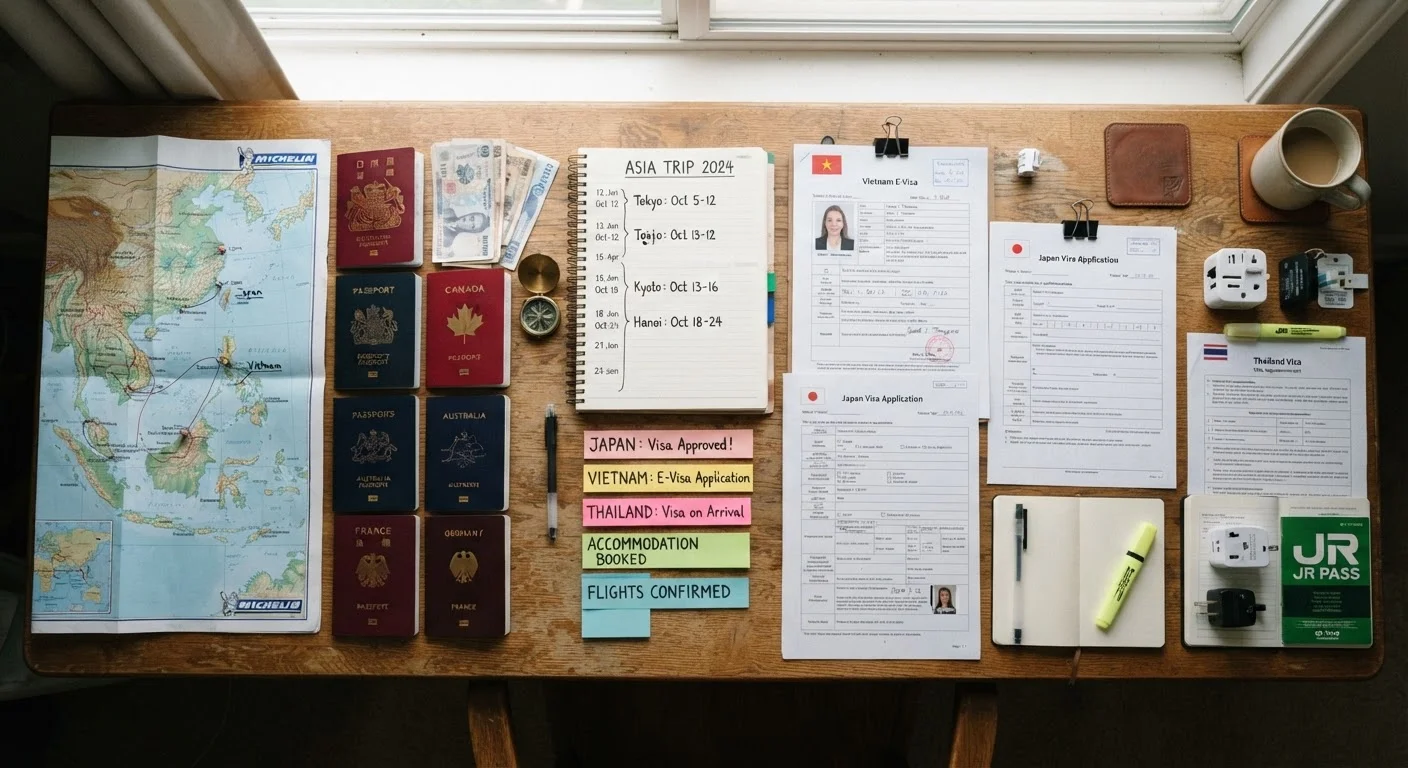
Before applying for anything, build a simple matrix of every country on your itinerary. For each, note the visa type required, estimated processing time, validity period (how long after issue the visa remains usable), and maximum stay permitted. This exercise routinely surfaces hidden conflicts.
Common bottlenecks U.S. travelers encounter include the Schengen zone's 90/180-day rule - which limits cumulative time across all member countries - India's e-visa validity clock, which starts from approval rather than entry, and China's visa appointment backlogs at certain consulates. For travelers entering the Schengen zone, a ground-up overview of Schengen entry rules is essential reading before you commit to dates.
Don't overlook transit. A layover in a country you're not technically visiting can still require its own permission. Transit visa rules vary significantly by nationality and airport, and getting this wrong can mean being denied boarding before your trip starts.
Building an Interdependency-Aware Sequence
Some consulates require applicants to show proof of onward travel - confirmed bookings or a previously issued visa for the next destination. This creates a dependency chain: you may need Country B's visa approved before Country A will even process your application. Mapping these dependencies before you apply prevents circular blockers.
If your itinerary includes countries with visa-free or visa-on-arrival access for U.S. passport holders, those require zero advance action and should be treated as flexible connectors between your constrained legs. Understanding how these arrangements actually work - and what they grant versus what they don't - is covered in how visa-free access agreements function.
Electronic travel authorizations (ETAs, ESTAs, and their equivalents) occupy a middle tier: they're not visas, but skipping them can block boarding. Australia, Canada, the UK, and others require these for U.S. travelers on certain entry routes. Process them after your embassy-dependent visas but before your travel dates firm up. A full breakdown is available in the complete guide to electronic travel authorizations.
Document preparation across multiple applications can be substantial. Each consulate may ask for overlapping but not identical supporting materials - bank statements covering different periods, invitation letters specific to that country, or distinct photo specifications. Understanding what each document proves helps you prepare once and adapt efficiently, rather than starting from scratch for each application.
Consulate Jurisdiction May Affect Where You Apply
For embassy-route visas, you typically must apply through the consulate with jurisdiction over your state of residence, not simply the nearest location. Some nationalities applying for certain visas - particularly Schengen visas - must apply at the consulate of the country where they'll spend the most days, or their first point of entry if days are equal. Confirm jurisdiction rules on each country's official immigration portal before booking an appointment.
When you're ready to finalize applications, run through a pre-submission checklist for each country individually before hitting submit.
Visa requirements, processing times, and entry conditions can change without notice. Always verify current requirements directly with the official embassy, consulate, or government immigration portal for each country on your itinerary before applying. This article provides general informational guidance and is not a substitute for official sources.