
Why Central America Deserves a Hard Look From Budget-Focused US Travelers
Central America sits within four hours of most major US hubs, requires no long-haul flights, and - depending on the country - can cost a fraction of comparable Caribbean or European trips. Yet it's routinely overlooked in favor of flashier destinations. That's a planning mistake worth correcting.
The region spans seven countries with meaningfully different cost profiles, entry rules, infrastructure quality, and traveler experiences. American travelers who treat "Central America" as a monolithic destination miss the granularity that separates a $50-per-day trip from a $150-per-day one. This country-by-country breakdown gives you the reference data to plan smarter. For broader Latin America cost strategies, see practical habits for keeping costs low across Latin America.
| Most affordable daily budget | Nicaragua (~$30-$50/day) (General traveler-reported estimates; varies by season and style) |
| Most expensive daily budget | Belize (~$80-$130/day) (General traveler-reported estimates) |
| Countries using USD directly | Panama (and El Salvador) |
| CA-4 shared visa zone | Guatemala, Honduras, El Salvador, Nicaragua - 90-day shared allowance (CA-4 Border Control Agreement) |
| Longest visa-free allowance for US citizens | Panama - 180 days (General entry rules; verify before travel) |
| Only English-official country in region | Belize |
| Flight time from major US hubs | Typically 2.5-5 hours depending on origin and destination |
Country-by-Country Cost and Entry Reference
The figures below represent general daily budget ranges for independent travelers - covering accommodation, meals, local transport, and activities - based on commonly reported traveler data. Costs fluctuate with season, exchange rates, and travel style. Always verify current visa and entry conditions through official sources before booking.
Guatemala
Guatemala consistently ranks as one of Central America's most affordable destinations. Budget travelers report spending roughly $35-$55 per day, with guesthouses in Antigua or Lake Atitlán running $15-$25 per night and local comedores (informal eateries) serving full meals under $5. US citizens do not require a visa for stays up to 90 days. Guatemala uses the quetzal (GTQ), giving dollar-carrying visitors reasonable purchasing power. The country's infrastructure varies significantly: Antigua and Flores are well-traveled and easy to navigate; rural Petén requires more logistical flexibility.
Belize
Belize is the outlier in Central America for budget travelers - costs run noticeably higher, typically $80-$130 per day. English is the official language, Belize dollars are pegged at 2:1 to the USD, and the tourism infrastructure is mature. US citizens enter visa-free for up to 30 days. The draw is undeniable: the Belize Barrier Reef is a world-class diving destination. But travelers seeking true budget travel may find better value elsewhere in the region.
Honduras
Honduras offers genuine value, particularly around the Bay Islands (Roatán, Utila), where budget dive certifications attract backpackers globally. Mainland budget daily costs run $40-$65; the Bay Islands skew slightly higher due to island pricing. US passport holders enter visa-free for 90 days under the CA-4 agreement (shared with Guatemala, El Salvador, and Nicaragua). The lempira (HNL) is weak relative to the dollar, stretching accommodation and food budgets considerably.
CA-4 Agreement
A regional border control arrangement between Guatemala, Honduras, El Salvador, and Nicaragua that allows travelers to move between the four countries under a single shared 90-day entry allowance. Crossing between CA-4 countries does not restart the timer.
Comedor
A small, informal local eatery common in Guatemala and other parts of Central America. Comedores typically offer simple, home-cooked meals at prices significantly below tourist-oriented restaurants.
Visa-free entry
Permission for citizens of specific countries to enter a destination without obtaining a visa in advance. US passport holders currently enjoy visa-free access to all seven Central American nations, though duration limits and conditions vary by country.
Pegged currency
A currency whose exchange rate is fixed at a set ratio to another currency - typically the US dollar. Belize's dollar is pegged 2:1 to the USD; Panama's balboa is pegged 1:1, meaning US dollars circulate directly.
Nicaragua
Nicaragua has historically been one of the least expensive destinations in the Americas, with daily budgets of $30-$50 achievable for independent travelers. US citizens have generally been able to enter visa-free, though entry requirements have been subject to change - travelers should verify current conditions with the U.S. Department of State and Nicaragua's immigration authority before travel. The córdoba (NIO) gives dollars strong purchasing power. Infrastructure in León and Granada is solid for tourism; more remote areas require planning.
Costa Rica
Costa Rica is the most developed and most expensive Central American destination, with daily costs typically ranging $75-$120 for budget-conscious travelers. US citizens enter visa-free for 90 days. The colón (CRC) is widely accepted alongside USD in tourist areas. The country's national park system and ecotourism infrastructure are exceptional, but that quality commands a price premium.
Panama
Panama uses the US dollar directly (the balboa is pegged 1:1), removing any currency friction for American visitors. Daily budgets typically run $60-$90 outside Panama City; the capital itself skews higher. US citizens enter visa-free for 180 days - the longest allowance in the region. The country bridges two continents and two oceans, making it a logical add-on for longer itineraries.
For a broader look at how Central America compares to other value-driven international destinations, the Mexico vs. Colombia budget comparison offers useful context on similar decision-making frameworks.
Entry Requirements and the CA-4 Zone Explained
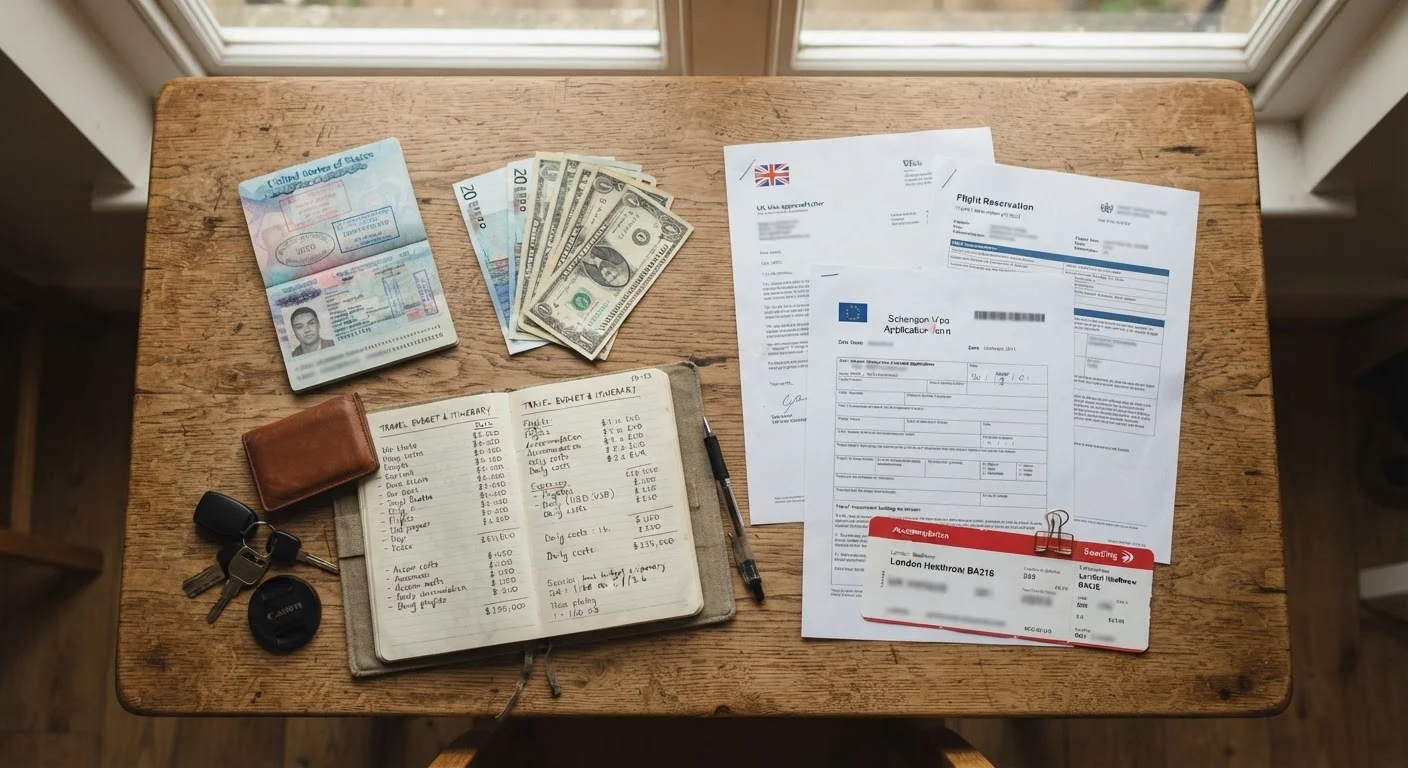
One of the most practically important details for planning a multi-country Central America trip is the CA-4 agreement - a shared border zone between Guatemala, Honduras, El Salvador, and Nicaragua. US citizens entering any of these four countries begin a shared 90-day clock. Crossing between them does not reset the counter. Belize, Costa Rica, and Panama operate independent entry rules.
This matters for itinerary design: a traveler spending 45 days in Guatemala and then crossing into Honduras has only 45 remaining CA-4 days, not a fresh 90. For comprehensive visa and entry documentation guidance, consult the Visa & Entry Guides hub before finalizing any multi-country itinerary.
Multi-Country Trips Require Careful Day-Counting
If your itinerary combines CA-4 countries with Belize, Costa Rica, or Panama, budget extra time to research how each country's entry rules interact with your overall schedule. Some travelers use a brief exit to a non-CA-4 country to manage their 90-day CA-4 allowance, but border policies on this practice vary and should be confirmed with official sources before relying on it as a strategy.
Entry requirements, visa policies, and border procedures can change without notice. Verify all requirements with the U.S. Department of State (travel.state.gov) and the official consulate or immigration authority of each country before travel. This article provides general reference information only and should not be treated as legal or regulatory guidance.