

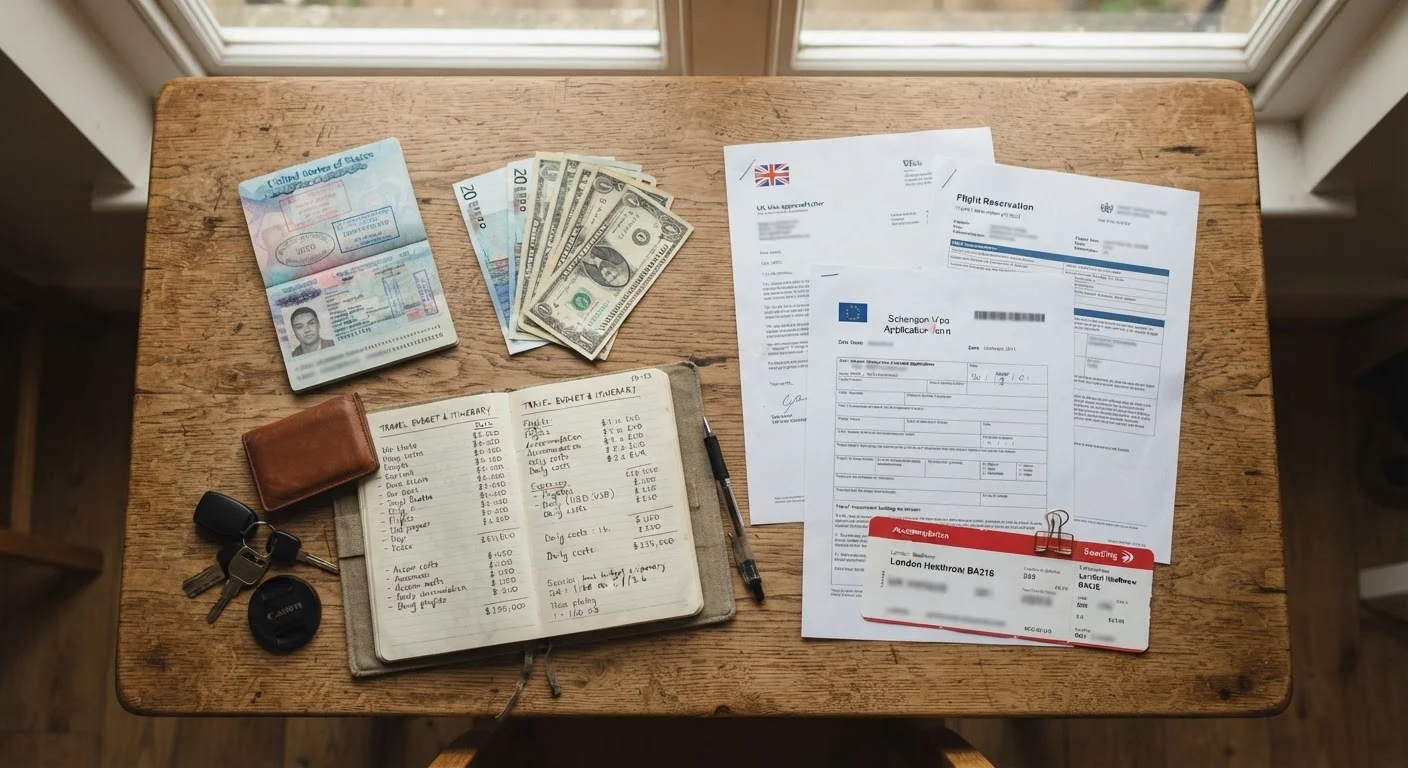
Why 'Cheap' International Trips Aren't Always What They Seem
A $450 round-trip fare to Southeast Asia looks transformative - until you add a $160 visa on arrival, $300 in required vaccinations, $80 in foreign transaction fees, and a $200 travel insurance premium. Suddenly your "cheap" trip has a $790 overhead before you've booked a single night's accommodation.
This checklist is designed to surface every cost and logistical requirement that budget travelers routinely overlook when booking international trips. Work through it before you finalize any booking, not after. Destinations like Vietnam, Portugal, Georgia (the country), and Colombia consistently deliver outstanding value for Americans - but only when you understand the full entry and cost picture upfront.
If you're planning a group or family trip abroad, the budget family pre-departure checklist covers additional considerations specific to traveling with children. For solo travelers, this solo-focused pre-departure checklist runs parallel ground with a solo safety lens.
Visa & Entry Requirements
Health, Vaccinations & Medical Prep
Travel Insurance
Currency Strategy & Banking Fees
Full-Cost Budget Audit
Tools You'll Need to Work Through This Checklist
Before you start, gather the following resources. Most are free; a few involve small one-time costs that pay for themselves in avoided fees and surprises.
U.S. Department of State Country Information Pages
Provides official entry requirements, travel advisories, and safety information for every destination country.
CDC Travelers' Health Website
Lists destination-specific vaccination recommendations and required immunizations for international travel.
Destination's Official Immigration Authority Website
Confirms current visa fees, validity periods, and application procedures directly from the source.
No-Foreign-Transaction-Fee Debit or Credit Card
Eliminates the 1-3% foreign transaction fee charged on purchases and ATM withdrawals abroad.
Travel Health Clinic
Administers required and recommended vaccinations and provides destination-specific medical guidance.
XE Currency App or Website
Provides live and historical exchange rate data so you can identify fair rates when converting currency.
Don't Trust Blog Posts for Visa or Vaccine Rules
Visa requirements, vaccination mandates, and entry conditions change without notice. A travel blog post written 18 months ago may describe rules that no longer apply - or miss a new requirement entirely. Always verify entry and health requirements using official government sources: the U.S. Department of State and the destination country's official immigration authority are the only sources you should rely on for these decisions.
Once you've completed this checklist, move on to the day-level planning: the daily travel budget planner checklist helps you map food, transport, and activity costs so your budget holds up on the ground. For accommodation specifically, run through the accommodation booking checklist before confirming any property. And if a fare triggered this whole process, double-check it first with the flight deal verification checklist to confirm baggage fees and refund terms are acceptable.
Medical Evacuation Can Cost More Than Your Trip
Emergency medical evacuation from many international destinations can cost $50,000-$200,000 or more - an expense that standard domestic health insurance typically will not cover abroad. Travel insurance with medical evacuation coverage is one of the highest-value purchases any international traveler can make, regardless of destination. Review policy terms carefully and purchase before your departure date, as most policies cannot be added after a trip has begun.
This article is for general informational purposes only. Visa rules, vaccination requirements, entry conditions, and travel advisories change frequently. Always verify current requirements with official government sources - including the U.S. Department of State and the destination country's official immigration authority - before booking or traveling.