

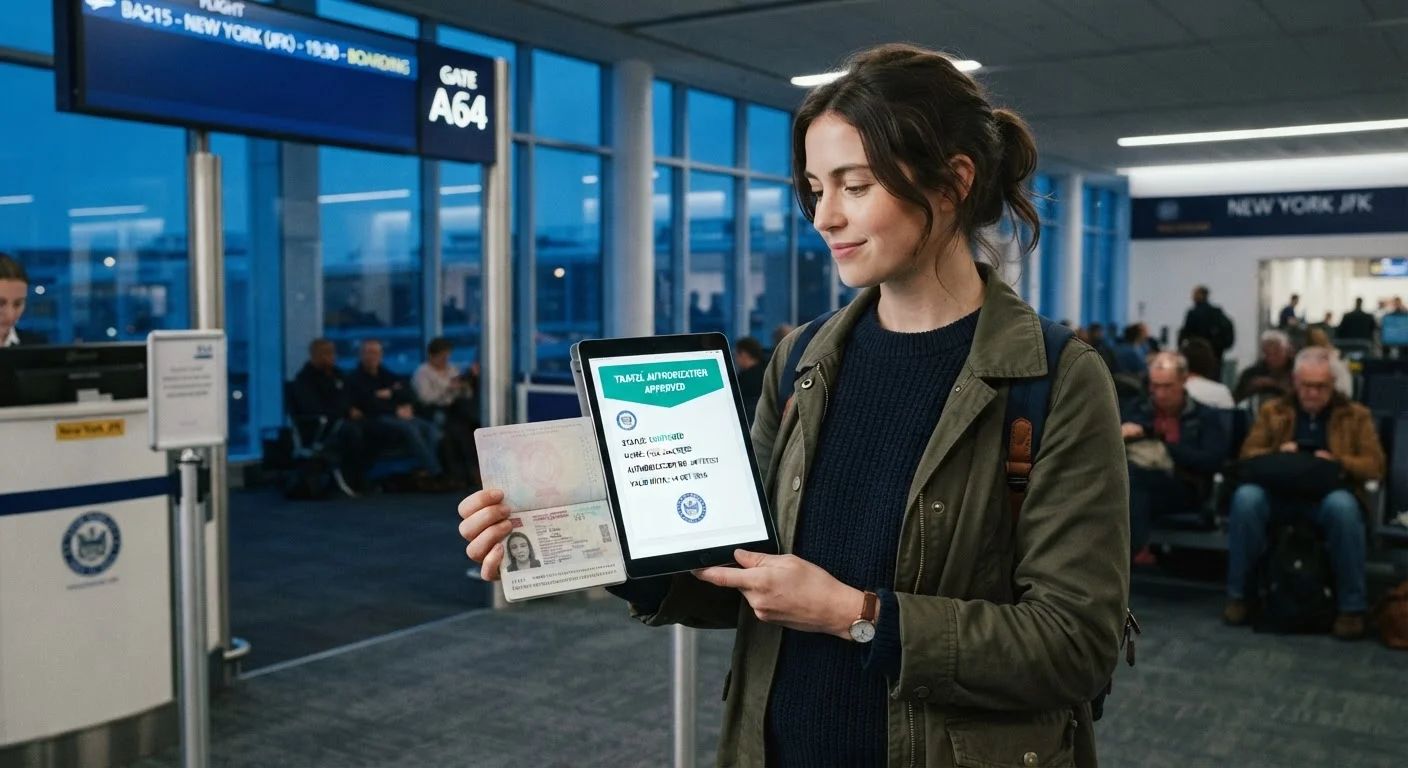
What an Electronic Travel Authorization Actually Is
An Electronic Travel Authorization (ETA) is a government-issued, digitally stored pre-clearance that a traveler must obtain before boarding a flight - or in some cases before crossing a land or sea border - to an eligible country. Unlike a visa stamp in your passport, an ETA is linked electronically to your passport number in the destination country's immigration database. There is no sticker, no embassy appointment, and no physical document to carry.
ETAs were designed to fill a specific gap: travelers from countries that enjoy visa-free access still need to be vetted before arrival. Governments use ETA schemes to screen for security concerns, verify passport validity, and collect biographic data - all before a passenger boards. If your ETA is denied, the airline cannot accept you for boarding under international carrier-liability rules.
The practical upshot for travelers: being visa-exempt does not mean entry is automatic. Always confirm whether your destination requires an ETA, separate from any visa requirement. For a broader map of how visa-free arrangements work, see how visa-free access agreements function.
Airlines Verify ETAs Before Boarding
Under international carrier-liability rules, airlines are fined if they transport a passenger who is subsequently refused entry. As a result, check-in staff verify ETA status against government databases before issuing a boarding pass. An expired, invalid, or missing ETA will result in denied boarding - regardless of how long you have been traveling or how straightforward your trip appears. This check happens before you reach immigration, so there is no opportunity to resolve it at the border.
The Major ETA Schemes: ESTA, eTA, and Country-Specific Systems
Several major destination countries operate their own branded ETA programs. Understanding what each covers - and who qualifies - prevents costly boarding denials.
United States: ESTA
The Electronic System for Travel Authorization (ESTA) is administered by U.S. Customs and Border Protection and applies to nationals of VWP countries - currently 42 nations including the UK, Germany, Japan, and Australia. ESTA permits stays of up to 90 days for tourism or business and is valid for two years or until your passport expires, whichever comes first. It covers air and sea travel; land border crossings from Canada or Mexico under VWP also require ESTA.
Canada: eTA
Canada's Electronic Travel Authorization (eTA) is required for visa-exempt foreign nationals flying into Canada. U.S. citizens are exempt. Approved eTAs are valid for five years or until passport expiry and cover multiple entries. Travelers arriving by land or sea from the U.S. do not need an eTA but must still carry valid travel documents.
United Kingdom: ETA
The UK's Electronic Travel Authorisation scheme is being phased in progressively. It applies to nationals of countries that can currently visit the UK without a visa. The UK ETA is valid for two years or until passport expiry and permits multiple trips of up to six months each.
Australia: ETA and eVisitor
Australia operates two separate electronic schemes: the ETA (subclass 601) for passport holders from a select group including the U.S., Canada, Japan, and several others; and the eVisitor (subclass 651), which is free and open to EU nationals. Both permit stays of up to three months per visit within a 12-month period.
Other Notable Systems
New Zealand requires an NZeTA for visa-waiver countries. Sri Lanka, Kenya, India (for eligible nationalities), and a growing list of African and Asian nations operate their own online authorization or e-visa systems - though some of these function more like simplified visas than true ETAs. Always verify the specific scheme for your destination and nationality before applying.
42
Countries eligible for U.S. ESTA (Visa Waiver Program)
As of the most recent U.S. Customs and Border Protection program roster; eligibility is reviewed periodically.
2 years
Maximum ESTA validity period per approval
ESTA approvals are valid for two years or until passport expiry, whichever comes first, covering unlimited trips within that window.
CAD $7
Canada eTA application fee
Canada's eTA is among the lowest-cost electronic authorization fees globally; verify current fees on the official canada.ca portal.
5 years
Maximum validity of Canada's eTA
Canada's eTA is valid for five years or until passport expiry, making it convenient for frequent travelers to the country.
How ETAs Differ From Visas
The distinction matters because the application process, cost, and lead time differ significantly. An ETA is not a visa. It is a pre-clearance that allows a visa-exempt traveler to present themselves at the border. A visa, by contrast, is an authorization - often stamped or affixed - that grants entry to travelers who would not otherwise be eligible under visa-free agreements.
In practice: if your nationality is eligible for a country's visa-waiver program, you apply for an ETA. If your nationality is not eligible, you apply for a visa - which may be a visa on arrival, an e-visa completed online, or a traditional embassy appointment. For a clear breakdown of those distinctions, see the practical differences between visa types.
One critical shared rule: neither an ETA nor a visa guarantees entry. Both are prerequisites for presenting yourself at the border. The immigration officer retains full discretionary authority to refuse entry based on questioning, documentation, or other factors.
Screenshot your approved ETA confirmation and store it offline before traveling. While border systems read authorizations electronically, having proof of approval on hand can resolve check-in disputes without delay.
System outages and airline database sync errors occasionally cause valid ETAs to appear unconfirmed at check-in; having a confirmation number readily available accelerates resolution.
If you hold dual citizenship, always apply for the ETA using the passport you intend to present at the border - and travel consistently with that same passport on that trip.
Immigration databases match your ETA to a specific passport number; presenting a different passport from the one on your authorization creates a mismatch that can result in denied boarding or secondary screening.
Applying: Timelines, Fees, and Common Pitfalls
Most ETA applications are completed online in under 10 minutes through official government portals. Processing is typically instant or within 72 hours, but individual applications can be flagged for manual review - occasionally taking several business days. Apply at least a week before departure to avoid risk.
Fees by Scheme
- ESTA (USA): $21 USD per application at time of writing - verify the current fee on the official CBP website before applying.
- eTA (Canada): CAD $7 per application.
- ETA (UK): £10 per application.
- NZeTA (New Zealand): NZD $17 via app or NZD $23 via website, plus an International Visitor Conservation and Tourism Levy (IVL).
- ETA/eVisitor (Australia): The eVisitor is free; the ETA carries a service charge of AUD $20.
Common Pitfalls
- Third-party sites: Unofficial sites charge inflated fees to submit the same official application. Always apply directly through the destination government's portal.
- Passport renewal: An ETA is linked to your passport number. If you renew your passport after receiving an ETA, you must apply for a new authorization - your old one becomes invalid.
- Name mismatches: The name on your ETA application must match your passport exactly. Errors can cause check-in problems even if the authorization is approved.
- Dual nationals: If you hold two passports, ensure your ETA is linked to the passport you will present at the border.
Apply for Your ETA Before Booking Non-Refundable Flights
While most ETA applications are approved quickly, a small percentage are flagged for additional review - which can take several days. If you are traveling as a dual national, have an unusual travel history, or are applying for the first time, submit your ETA before committing to non-refundable airfare. Approval is not guaranteed, and cancellation fees on international tickets can be substantial.
When an ETA Is Not Enough
Several situations fall outside what an ETA covers, and confusing the two categories leads to denied boarding or refused entry.
Longer stays: ETAs cap permitted stays - typically 90 days (ESTA) or three to six months. Travelers intending to study, work, or remain longer need the appropriate visa category, not an ETA. For the paperwork involved in full visa applications, see what each supporting document proves.
Criminal history or prior immigration violations: Most ETA systems automatically disqualify applicants with certain criminal records or prior deportations. These travelers generally must apply for a visa through the embassy, where they can provide context and supporting documentation.
Transit through certain countries: An ETA for a final destination does not cover transit through a third country. Some countries require their own transit authorization or transit visa even for airside connections. This is a frequently overlooked issue - review transit visa rules before booking a connection.
Multi-country itineraries: If your trip spans several countries, each leg may have independent ETA or visa requirements. Sequencing applications correctly is essential - multi-country visa strategy explains how to approach this without derailing your plans.
Beware Unofficial ETA Application Sites
Search engines frequently surface third-party websites that mimic official government portals and charge fees of $50-$100 or more to submit a standard ETA application on your behalf. The underlying application is identical to what you can submit yourself in minutes at no extra cost. Always navigate directly to the official government immigration portal - for ESTA, that is cbp.dhs.gov; for Canada's eTA, canada.ca; for the UK ETA, gov.uk. Verify the URL carefully before entering passport or payment details.
Keeping Your Authorization Valid Across Multiple Trips
Multi-year ETAs like ESTA and Canada's eTA are a genuine logistical convenience for frequent travelers - but they require active management.
Before each trip, verify that your ETA is still valid by checking the official portal using your passport number. Do not assume it remains active because it was valid on your last trip. Key validity triggers to monitor:
- Passport expiry: Your ETA expires when your passport does, even if the authorization itself has remaining time.
- Change in circumstances: If you acquire a criminal record, change citizenship status, or experience other qualifying changes after approval, you are obligated to apply for a new ETA - using an invalid authorization is a serious immigration violation.
- Country-specific rules: Some schemes, like ESTA, have a 90-day stay limit per visit but also an informal expectation that travelers are not establishing residency through repeated back-to-back trips. Patterns of near-continuous presence can prompt questioning at the border.
For travelers who regularly use visa stamps alongside electronic authorizations, understanding what those stamps actually record is useful context - see how to read a visa stamp for a practical breakdown.
Entry requirements, fees, and eligibility rules change. Always verify current requirements with the official government immigration authority of your destination country and your own government's travel advisory service before booking or traveling.
ETA Approval Does Not Mean Guaranteed Entry
An approved ETA gives you permission to board a flight and present yourself at the destination country's border. The final entry decision rests with the immigration officer on duty, who can ask questions, request additional documentation, or refuse entry. Carry evidence of your onward travel, accommodation, and sufficient funds - even when an ETA is already approved.