
The Interbank Rate vs. What You Actually Get
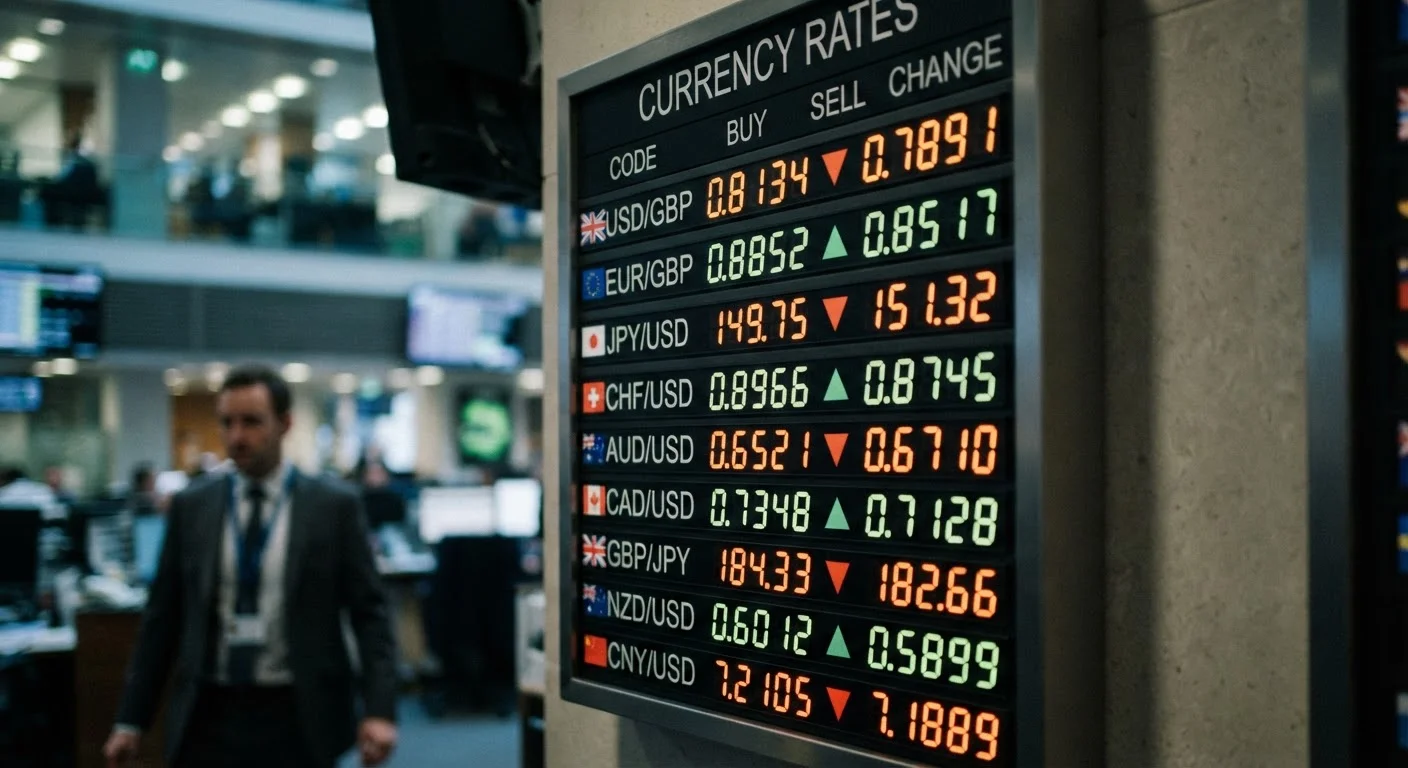
Every currency exchange transaction starts from the same global reference point: the interbank rate, also called the mid-market rate. This is the rate at which major banks trade currencies with each other in the wholesale market. It shifts in real time based on supply and demand across global forex markets.
Retail travelers never access this rate directly. Every provider - your bank, the ATM abroad, the hotel front desk, or the airport kiosk - takes that baseline and applies a markup, which is how they cover operational costs and earn a margin. The size of that markup varies enormously by provider and location, and is rarely disclosed in plain terms.
This gap between the interbank rate and your actual rate is what most travelers don't see. It can range from under 1% with a well-structured travel card to more than 10% at a tourist-area currency desk. Understanding this gap is the first step toward controlling it. For a detailed look at the full range of charges layered onto currency transactions, see our traveler's glossary of currency fees.
1-3%
Typical card network markup over interbank rate
Most major card networks (Visa, Mastercard) apply a conversion assessment of around 1%, before any issuer fee is added on top.
Up to 15%
Markup at some airport currency kiosks
Consumer finance researchers and travel publications have documented spreads at busy airport currency desks that can reach or exceed 10-15% above the interbank rate.
$4-$12
Typical combined ATM fees per withdrawal abroad
Costs vary widely by bank and ATM network, but a combination of foreign ATM fees and currency conversion charges commonly falls in this range per transaction.
What Moves the Underlying Rate
Before any provider markup is applied, the interbank rate itself is constantly moving. Several forces drive it:
- Supply and demand: When more buyers want a currency than sellers are offering, its value rises. A country experiencing strong tourism, exports, or foreign investment will typically see its currency strengthen.
- Interest rate decisions: Central bank policy directly influences currency strength. When a country raises interest rates, its currency often appreciates as foreign capital flows in seeking higher returns.
- Economic indicators: Inflation data, employment figures, and GDP growth affect how traders value a currency relative to others.
- Political stability: Elections, policy uncertainty, or geopolitical events can cause sharp short-term swings that ripple through to the rates travelers see.
None of these forces are predictable with certainty, which is why attempting to time a currency exchange like a stock trade is generally inadvisable. The impact on a typical traveler's budget is modest compared to the certainty of choosing a low-markup provider.
“For most travelers, the largest single source of unnecessary currency loss isn't a bad decision - it's simply not knowing that a markup exists and that it varies by where you transact.”
— International Travel Editorial Team, Editorial analysis based on published consumer finance research
How Providers Set the Rate You Receive
Each type of provider applies its markup differently, and the costs can stack:
- Banks and credit unions
- Typically apply a percentage spread over the interbank rate when you order foreign currency or when your debit card processes a transaction abroad. Many also charge a separate flat foreign transaction fee.
- ATMs abroad
- The local ATM network applies its own conversion rate, then may charge a flat withdrawal fee. Your U.S. bank may add a second fee on top. The machine may also offer to convert the amount to dollars on the spot - a choice known as dynamic currency conversion, which almost always costs more.
- Airport and hotel currency desks
- These operate with the least price pressure and routinely apply the widest spreads. Convenience is the product; the rate is secondary.
- Card issuers
- Credit and debit cards convert at a rate set by the card network (Visa or Mastercard), which is typically very close to the interbank rate. The card issuer then adds its own foreign transaction fee - commonly 1-3% - unless the card is specifically designed to waive it.
Check the Mid-Market Rate Before You Exchange
Before handing over any cash or tapping your card, look up the current mid-market rate through a publicly available financial data source. Compare it to the rate being offered. The difference is your cost - and knowing it lets you decide whether to accept the transaction or find a better option nearby.
Understanding these layers helps explain why travelers quietly lose money on currency exchange without a single obvious charge ever appearing on their statement.
Practical Implications for International Travelers
The exchange rate you receive is not a fixed number - it's the outcome of market conditions, provider markup, timing, and transaction method, all interacting at once. For budget-conscious travelers, the most controllable variable is which provider you use, not when you exchange.
A few durable principles apply regardless of destination:
- Compare the rate being offered against the current mid-market rate, available through publicly accessible financial data sources, to gauge the markup before committing.
- Avoid exchanging currency at locations with no visible competition nearby - airport concourses, cruise terminals, and resort lobbies are prime examples.
- Understand every fee layer: the spread, any flat transaction fee, and any ATM surcharge operate independently and compound against you.
- Always pay in local currency when given a choice at the point of sale.
If you're preparing for your first trip abroad, our travel money guide for first-time international travelers walks through the full practical picture from pre-trip planning to spending on the ground.
Exchange rates and fee structures change frequently. Always verify current rates and terms directly with your bank, card issuer, or relevant financial provider before traveling. This article is for general informational purposes only and does not constitute personalized financial advice.