
How Foreign Currency Actually Works
When you spend money in another country, your US dollars must first be converted into the local currency at an exchange rate - the price of one currency expressed in another. This rate fluctuates daily based on global markets. The rate you actually receive, however, depends heavily on where you exchange your money.
Exchange Rate
The price at which one currency can be converted into another. It fluctuates daily based on global financial markets.
Mid-Market Rate
The midpoint between the buy and sell prices of two currencies - the "true" rate you see on currency tools like Google. Banks add a markup above this rate when exchanging money.
Foreign Transaction Fee
A charge added by your US bank or card issuer whenever you make a purchase in a foreign currency, typically 1-3% of the transaction amount.
Dynamic Currency Conversion (DCC)
When a foreign merchant or ATM offers to convert your purchase into US dollars on the spot - usually at an unfavorable rate. Always decline and pay in the local currency instead.
ATM Surcharge
A flat fee charged by the ATM operator (and sometimes your home bank) each time you withdraw cash from a foreign ATM.
Prepaid Travel Card
A card you load with a set amount of money in one or more currencies before traveling, used like a debit card abroad. Fees and terms vary by provider.
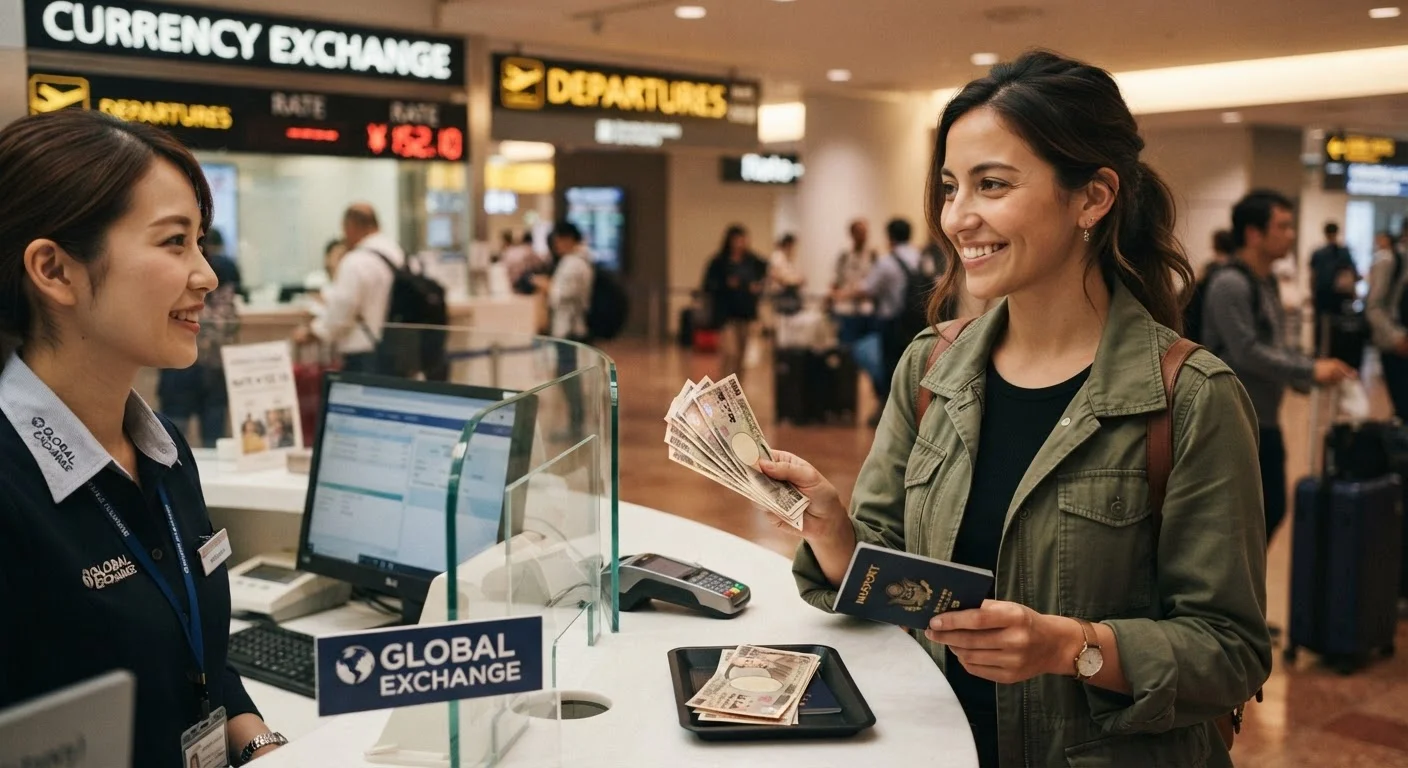
The mid-market rate (also called the interbank rate) is the "true" exchange rate you see on Google. Banks and exchange services add a markup above this rate - that difference is how they earn revenue. Airport kiosks and hotel desks typically charge the steepest markups. Understanding this before you travel means you won't be caught off guard when your $100 converts to far less than expected.
For a broader look at how your dollar performs in different destinations, see our guide to international budget travel for Americans.
Your Payment Options Abroad
First-time international travelers typically have four options for accessing money abroad: credit cards, debit cards, cash, and prepaid travel cards. Each has trade-offs.
- Credit cards offer fraud protection and, on cards without foreign transaction fees, competitive exchange rates. They're widely accepted in cities and tourist areas but may require a PIN for chip-and-PIN terminals common in Europe.
- Debit cards used at local ATMs give access to cash at rates close to the mid-market rate, though your bank may charge ATM and foreign transaction fees.
- Cash remains essential in markets, rural areas, and countries with limited card infrastructure. Some destinations function almost entirely on cash; others have moved largely cashless. Learn what to expect by destination before you arrive.
- Prepaid travel cards let you load a fixed amount in one or more currencies. They limit overspending but may carry reload or inactivity fees - read the terms carefully.
Most travelers do best combining a no-foreign-transaction-fee credit card for larger purchases with a debit card for ATM withdrawals, plus a modest cash reserve.
Fees That Quietly Drain Your Budget
Fee awareness is one of the highest-return skills in international travel. The most common charges to watch for:
Never Accept Dynamic Currency Conversion
When a foreign ATM or card terminal asks if you want to pay in US dollars instead of the local currency, always decline. Dynamic Currency Conversion locks in an exchange rate set by the merchant - not your bank - and is almost always significantly worse than the rate your card issuer would apply. Choosing the local currency gives you the better deal every time.
- Foreign transaction fees
- Charged by your card issuer on purchases made in a foreign currency - typically 1-3% per transaction. On a $2,000 trip, that adds up to $40-$60 in silent costs.
- ATM surcharges
- The local ATM operator may charge a flat fee per withdrawal (often $3-$8), and your home bank may add its own fee on top. Withdrawing larger, less-frequent amounts reduces the impact.
- Dynamic Currency Conversion (DCC)
- When a foreign merchant or ATM offers to charge you in US dollars instead of local currency, that's DCC - and the rate is almost always unfavorable. Always choose to pay in the local currency.
For ongoing strategies to manage daily spending, our daily travel costs hub covers food, transport, and activity budgeting in practical detail.
How Much Cash to Carry (and When)
There's no universal answer, but a practical framework helps. Before departure, research whether your destination is primarily cash-based or card-friendly - this shapes how much local currency you'll actually need on hand.
Withdraw from Bank ATMs, Not Kiosks
ATMs operated by established local banks typically charge lower fees and offer rates closer to the mid-market rate than independent kiosks found in tourist areas or airports. Look for ATMs attached to a physical bank branch when possible. Withdrawing a larger sum in fewer transactions also minimizes per-withdrawal fees.
A reasonable starting point for most destinations: arrive with enough local currency for your first 24 hours - transport from the airport, a meal, and any immediate small purchases. Withdraw more from a local bank ATM once you're settled. Avoid carrying your entire trip budget in cash at once.
If you're traveling with family, budget family travel planning involves additional considerations around cash access and spending across multiple travelers.
Staying Safe With Your Money
Financial security while traveling is as important as financial efficiency. A few foundational practices protect you from the most common problems:
- Notify your bank before departure. Most US banks will flag or block overseas transactions flagged as unusual. A quick call or in-app travel notice prevents your card from being frozen when you need it most.
- Carry a backup card separately. If your wallet is lost or stolen, a second card stored in your luggage or hotel safe gives you a recovery option.
- Use hotel safes for excess cash. Carry only what you expect to spend each day. Distributing cash across multiple pockets or a concealed travel pouch reduces loss from pickpocketing.
- Monitor your accounts remotely. Enable transaction alerts on your phone so you can detect unauthorized charges in real time.
For travelers planning longer stays, managing money on a long-term international trip addresses multi-currency accounts and sustained budgeting over weeks or months.
Exchange rates, fees, and banking policies vary and change over time. Always verify current terms with your card issuer and check official government sources for any entry-related financial requirements before travel.