
The Core Fees Every International Traveler Encounters
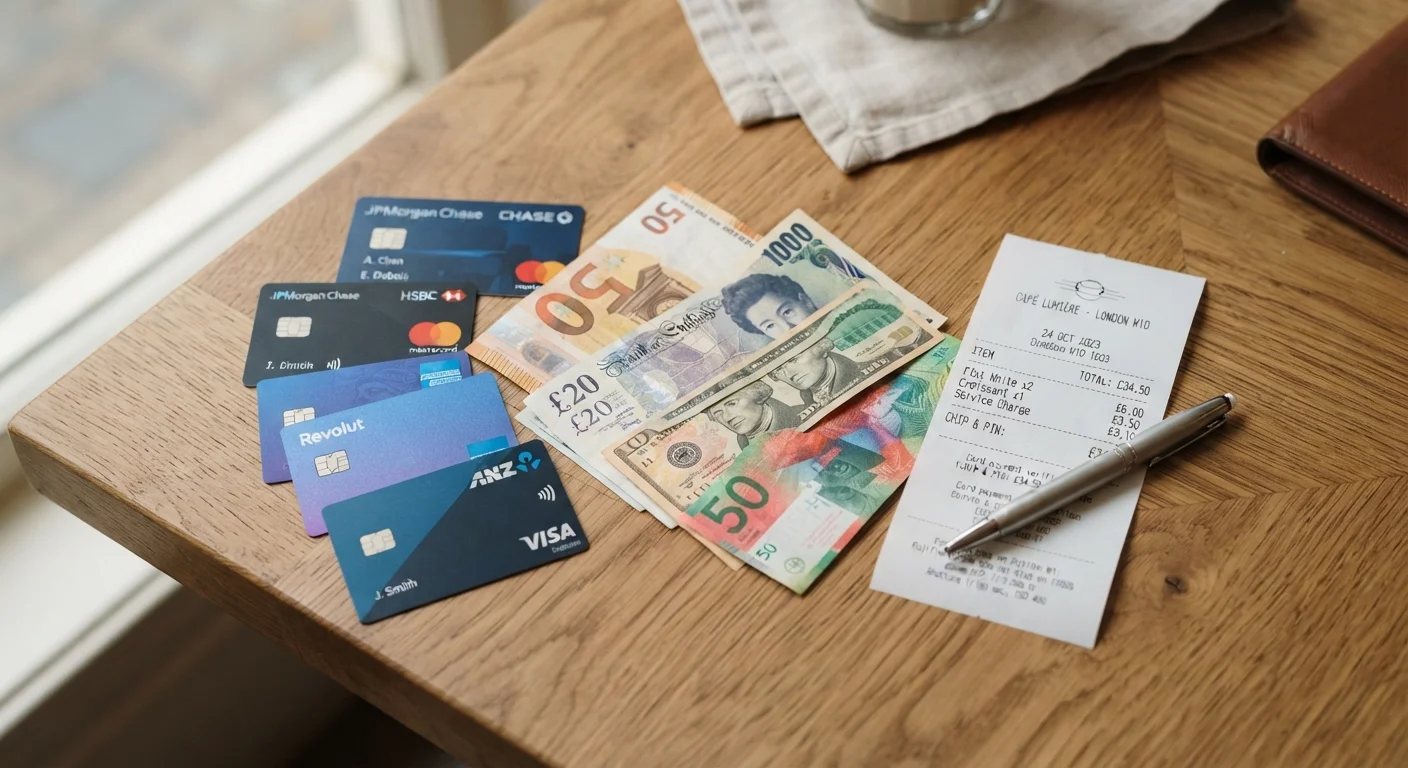
Spending money abroad almost always involves multiple overlapping fees charged by different parties - your card issuer, the card network, and the ATM or merchant terminal. Understanding which fee comes from where is the first step to minimizing them.
Foreign Transaction Fee
A fee charged by your card issuer whenever you make a purchase in a foreign currency or through a foreign bank. Typically ranges from 1% to 3% of the transaction amount and appears as a separate line item on your statement.
Mid-Market Rate
The midpoint between the buy and sell prices for a currency pair on global markets - sometimes called the interbank rate. It is the benchmark rate shown on financial data sites and is rarely offered directly to consumers.
Currency Markup
The difference between the mid-market rate and the rate a bank, card network, or exchange bureau actually applies to a transaction. This spread is how most financial intermediaries earn revenue on currency conversions.
Dynamic Currency Conversion (DCC)
An optional service at international point-of-sale terminals and ATMs that converts the transaction into your home currency on the spot. DCC rates are set by the merchant's bank, not your card network, and almost always include a significant markup.
ATM Operator Fee
A surcharge charged by the ATM's owner - a local bank or independent operator - for using their machine. This fee exists regardless of what your home bank charges and is set locally.
Non-Network ATM Fee
A fee your own bank charges when you withdraw cash from an ATM outside its network. Often a flat dollar amount per withdrawal, applied in addition to any ATM operator fee.
Card Network Conversion Rate
The exchange rate applied by Visa, Mastercard, or another card network when converting a foreign-currency charge into your billing currency. These rates update daily and are generally close to the mid-market rate, though the precise spread varies.
Buy/Sell Spread
The gap between the rate at which a currency exchanger buys foreign currency from you and the rate at which it sells to you. A wider spread means a larger implicit fee hidden within the quoted rate.
The foreign transaction fee is probably the most widely known, but many travelers confuse it with the currency markup applied by the card network. They are separate charges. Your card issuer's foreign transaction fee is a percentage applied to the converted total; the card network's conversion rate determines what that total is in U.S. dollars before the fee is applied. For a deeper look at what moves those conversion numbers, see what actually determines the exchange rate you receive.
At ATMs, two separate fees usually apply simultaneously: the non-network ATM fee from your home bank and the ATM operator fee from the machine's owner. Neither party discloses the other's charge - the ATM screen typically shows only the operator fee, and your bank's fee appears later on your statement. Understanding both is essential to making informed decisions about when and where to withdraw cash. For broader strategies on managing these costs day-to-day, the guide on managing money across borders without losing it to fees provides a useful framework.
Dynamic Currency Conversion and the Buy/Sell Spread
Two fee mechanisms that receive less attention - but often cost more - are dynamic currency conversion (DCC) and the buy/sell spread at currency exchange counters.
| Typical foreign transaction fee range | 1%-3% per transaction (Standard range disclosed in U.S. card issuer agreements) |
| DCC markup above mid-market rate | Often 3%-12% (European Central Bank and consumer finance research) |
| Common ATM operator fee abroad | $2-$7 per withdrawal (Varies widely by country and operator) |
| Card network rate proximity to mid-market | Usually within 0.5%-1% (Visa and Mastercard rate disclosures) |
| Airport exchange bureau spread (typical) | 5%-15% above mid-market (General consumer finance guidance; varies by location) |
| Who sets the ATM operator fee | The ATM owner, not your home bank |
With DCC, a terminal or ATM offers to show the charge in U.S. dollars rather than local currency. This sounds convenient, but the rate applied is set by the merchant's acquiring bank, not by your card network. The markup embedded in that rate typically far exceeds whatever foreign transaction fee your card charges. Declining DCC - and paying in local currency - almost always results in a lower total cost, because it allows your card network to apply its own rate, which is generally closer to the mid-market benchmark.
At exchange bureaus, the buy/sell spread serves a similar function. An exchanger that quotes "0% commission" is typically earning its revenue through a wider spread between buy and sell rates. Airport and hotel exchange desks tend to apply the widest spreads due to captive audiences. The article on why travelers lose money on currency exchange covers this pattern in detail. For context on broader travel costs, the daily travel costs hub offers additional perspective on stretching your budget across food, transport, and activities.
Verify Fee Details Before You Travel
Fee structures, exchange rate policies, and ATM surcharges change frequently. Always confirm the specific terms in your card's current cardholder agreement and check with your bank before departing. This glossary is general educational information, not personalized financial advice - consult a licensed financial professional for guidance suited to your situation.
This article is for general informational and educational purposes only. It does not constitute personalized financial advice. Fee structures, exchange rates, and bank policies change frequently - always verify current terms with your card issuer and bank before traveling.