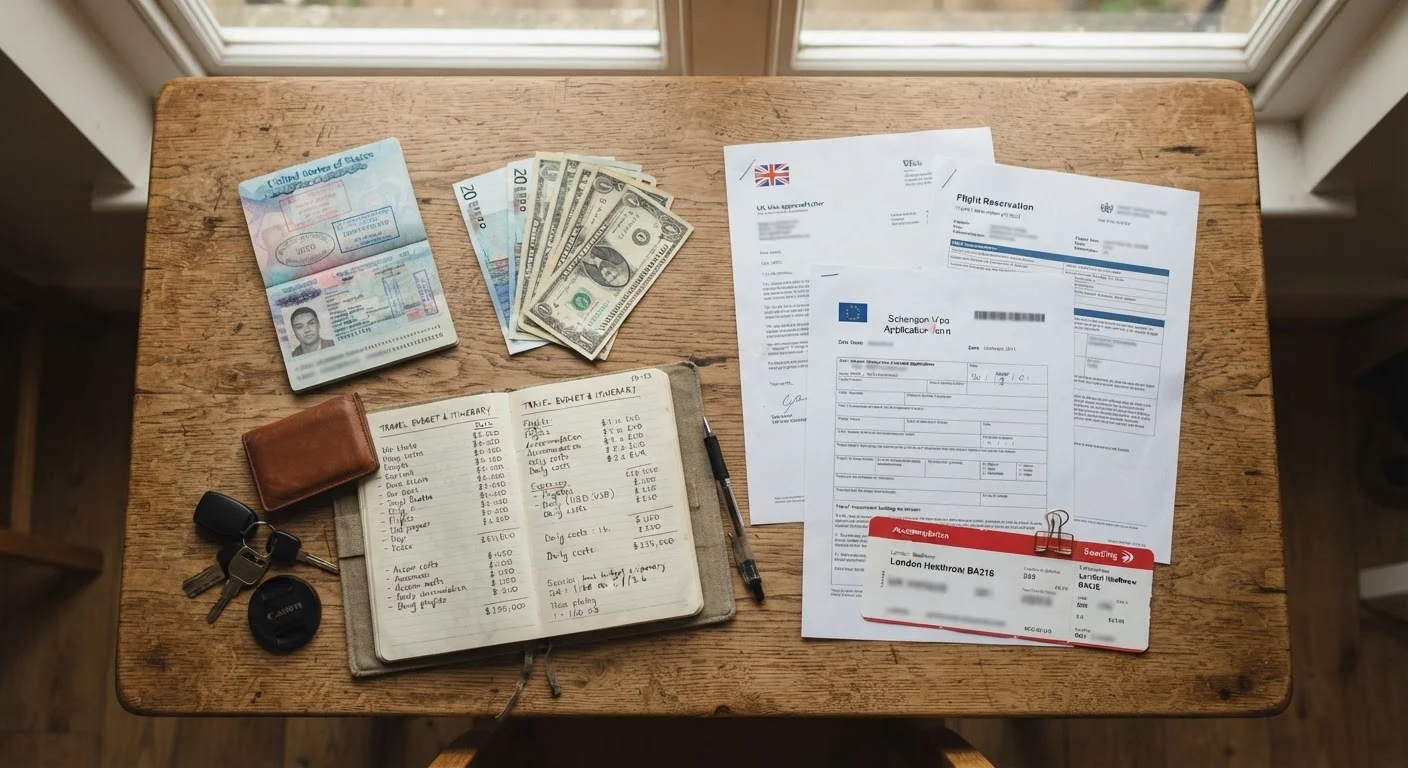


Why Long-Term Travel Demands a Different Money Strategy
A two-week vacation allows you to load a travel card, carry a rough daily budget, and absorb small financial mistakes without lasting damage. A trip lasting two months or more offers no such margin. Currency swings accumulate. Fees compound. A single card block abroad can strand you. The financial infrastructure that works for a short holiday is simply not robust enough for extended international travel.
The core challenge is variability. You may move between countries with vastly different cost levels - Southeast Asia one month, Western Europe the next - and your purchasing power can shift dramatically without your underlying spending changing at all. Understanding these dynamics upfront is what separates travelers who return on budget from those who quietly overspend and scramble to recover.
If your trip will last more than 30 days, also review what visa category you'll be entering each country under. See long-stay vs. tourist visa considerations to understand when a standard tourist stamp stops being sufficient.
3-5%
Typical foreign transaction fee range
Many U.S. bank accounts charge 1-3% per foreign transaction; combined with ATM operator fees, effective costs can reach 5% per withdrawal.
183 days
Common tax residency trigger in many countries
Numerous countries consider individuals tax-resident after 183 days in a calendar year; thresholds vary and should be verified with official sources.
10-20%
Currency swing impact on effective daily budget
Exchange rate fluctuations over a multi-month trip can alter purchasing power by 10-20% compared to rates at departure, based on historical volatility patterns.
Setting Up the Right Banking Infrastructure
Before departure, audit your existing bank accounts for international ATM fees, foreign transaction fees, and daily withdrawal limits. Many U.S. community banks and credit unions charge 1-3% on foreign transactions; over three months of daily spending, that adds up to a meaningful loss.
Carry at least two payment cards on different networks (Visa and Mastercard, for example) and store them in separate bags or locations. If one card is frozen or lost, you need immediate access to funds without waiting days for a replacement. Notify your bank of your travel dates and countries - even with modern fraud detection, unusual international spending patterns can trigger automatic blocks.
For managing fees across multiple currencies, a structured approach to cross-border money management can help you identify which fees are unavoidable and which are simply a product of the wrong account choice.
Open a dedicated travel checking account before departure and treat it as your sole spending account abroad - never link it to your primary savings. This limits exposure if the card details are compromised.
Isolating your travel funds means a card compromise or fraudulent charge cannot drain your full financial reserves, and dispute resolution is contained to one account.
Set up automatic low-balance alerts on every card you carry - not just your primary one. A forgotten secondary card running dry is a common and avoidable emergency.
Long-term travelers often set and forget backup cards; automated alerts ensure you're never surprised by a depleted reserve when you actually need it.
Building and Maintaining a Working Budget
A long-term travel budget isn't a single number - it's a tiered system. Start with a total trip fund, divide it into monthly allocations, then break those into weekly envelopes. This layered structure means a splurge week doesn't blow the whole trip; it simply borrows from the following week's allowance, giving you clear visibility into recovery.
Track expenses by category: accommodation, food, transport, activities, and miscellaneous. Reviewing these weekly - not just when something feels off - lets you identify drift early. If accommodation is eating 50% of your budget in one country, you can compensate with cheaper food choices or slower travel to cut transport costs.
For a step-by-step method to estimate costs before you leave and adjust once you're on the road, see building a daily travel budget that actually holds. If you're traveling with others, tracking shared expenses across currencies requires its own system. For broader daily cost management strategies, the daily travel costs hub offers destination-specific benchmarks.
Review Your Budget Weekly, Not Daily
Daily expense tracking is useful, but weekly reviews are where patterns emerge. Set aside 15 minutes each Sunday to compare your actual spending against your weekly envelope. If one category is consistently over, adjust the following week's plan - don't wait until you're three weeks over budget to notice the drift.
Handling Cash, ATMs, and Currency Across Borders
Cash remains essential in many destinations - rural areas, local markets, and smaller guesthouses frequently don't accept cards. Withdraw local currency from bank-affiliated ATMs rather than standalone machines in tourist zones, which often carry higher fees and less favorable exchange rates. Withdraw in larger, less frequent amounts to reduce per-transaction fees, but don't carry more cash than you're comfortable losing.
When crossing into a new country, resist converting large sums at airport exchange counters. Rates there are typically 5-10% worse than mid-market rates. Withdraw a small amount from an ATM on arrival for immediate needs, then assess the local ATM landscape before committing to larger withdrawals.
If your trip spans three or more countries, carrying multiple currencies simultaneously has genuine trade-offs worth understanding before you find yourself holding a stack of currencies you can't easily exchange.
Avoid Dynamic Currency Conversion
When paying by card abroad, merchants or ATMs may offer to charge you in U.S. dollars rather than local currency - a process called Dynamic Currency Conversion (DCC). Always choose to pay in the local currency. DCC rates are set by the merchant and are routinely 3-7% worse than your card's exchange rate. Declining DCC is one of the simplest ways to avoid unnecessary losses on every card transaction.
Protecting Your Money From Fraud and Emergencies
Long-term travel extends your exposure window to card skimming, phishing, and petty theft. Use ATMs inside bank branches where possible, shield your PIN physically, and check your account transactions at least every two to three days. Catching an unauthorized charge quickly limits the damage and speeds up the dispute process with your bank.
Maintain an emergency fund - separate from your travel budget - that you do not touch under normal circumstances. A commonly cited guideline is one to two months of living expenses held in reserve. Keep this in a different account from your daily spending card and know exactly how to transfer funds to yourself abroad if needed (wire transfer, international transfer via your bank's app).
Always Have a Second Access Path to Your Money
A blocked or lost card is one of the most common and disruptive financial emergencies for long-term travelers. Before departure, confirm that a trusted contact at home can initiate a wire transfer or authorize an emergency funds transfer to you abroad if every card you carry fails simultaneously. Know your bank's international customer service number and keep it stored somewhere that doesn't depend on your phone being charged or connected.
Travel insurance that covers trip interruption, medical evacuation, and emergency cash advance is worth evaluating before departure. Policies vary significantly in what they cover; read the fine print and verify with the insurer directly. This is general guidance - consult a licensed insurance professional for advice specific to your situation.
Tax and Legal Considerations for Extended Stays
Spending significant time abroad can create tax obligations in your destination country, affect your U.S. tax filing, or both. The threshold varies by country - some trigger tax residency after 90 days, others after 183 days. This is not a hypothetical concern; it's a documented compliance issue for long-term travelers and remote workers.
U.S. citizens are required to file federal tax returns regardless of where they live or work. If you hold foreign bank accounts with balances above certain thresholds, additional reporting requirements (such as FBAR filings) may apply. These rules are complex and the penalties for non-compliance can be significant. This article provides general context only - consult a qualified tax professional or international tax attorney before making decisions about your specific situation.
For solo travelers managing these logistics independently, the budget solo travel hub covers the broader financial and practical landscape of going it alone internationally.
This article is for general informational purposes only and does not constitute financial, tax, legal, or investment advice. Verify all visa, entry, tax, and banking information with official government sources and qualified professionals before traveling.
Regulations Change - Verify Before You Go
Banking rules, ATM fee structures, visa conditions, and tax residency thresholds are subject to change by governments and financial institutions. Information in this article reflects general patterns rather than current regulatory specifics for any single country. Always verify entry and financial rules with official government sources and your bank before departing.