
How Budget Carrier Pricing Actually Works
Budget airlines use an unbundled fare model: they strip the ticket down to the seat and charge separately for nearly everything else - checked bags, carry-on bags above a personal item, seat selection, priority boarding, and sometimes even payment by card. The headline number you see in a search result is the floor, not the ceiling.
This isn't inherently bad. Travelers who move with a single small bag and don't care where they sit can genuinely pay close to that base price. The problem is that most passengers don't realize which add-ons they'll need until they're already in the checkout flow, where fees are framed as upgrades rather than essentials.
For a clear breakdown of the terminology involved - fare classes, surcharges, and what "base fare" actually covers - see our plain-language glossary of flight pricing terms. Understanding the vocabulary is step one to reading a budget fare honestly.
$7.3B+
Annual ancillary fee revenue across U.S. carriers
The U.S. Bureau of Transportation Statistics has tracked bag and reservation fees as a distinct revenue category since 2010; combined ancillary fees routinely reach multi-billion dollar totals industry-wide each year.
$35-$75
Typical carry-on bag fee range (one way) on U.S. budget carriers
Fee schedules published directly by major U.S. low-cost carriers as of recent years show carry-on fees in this range, varying by route, booking timing, and tier.
Booking Timing: When to Pull the Trigger
Budget carriers typically release seats in fare buckets - blocks of seats priced at ascending levels as the flight fills. The lowest buckets sell out first, and once they're gone, prices jump. General industry patterns (tracked by fare aggregators over many years) suggest domestic routes on low-cost carriers tend to see their most competitive pricing roughly 4-8 weeks before departure, though this varies by route, season, and demand.
For international routes operated by ultra-low-cost carriers, the window is often longer - sometimes 8-12 weeks - because seat inventory is larger and competition from full-service carriers forces them to hold promotional pricing longer.
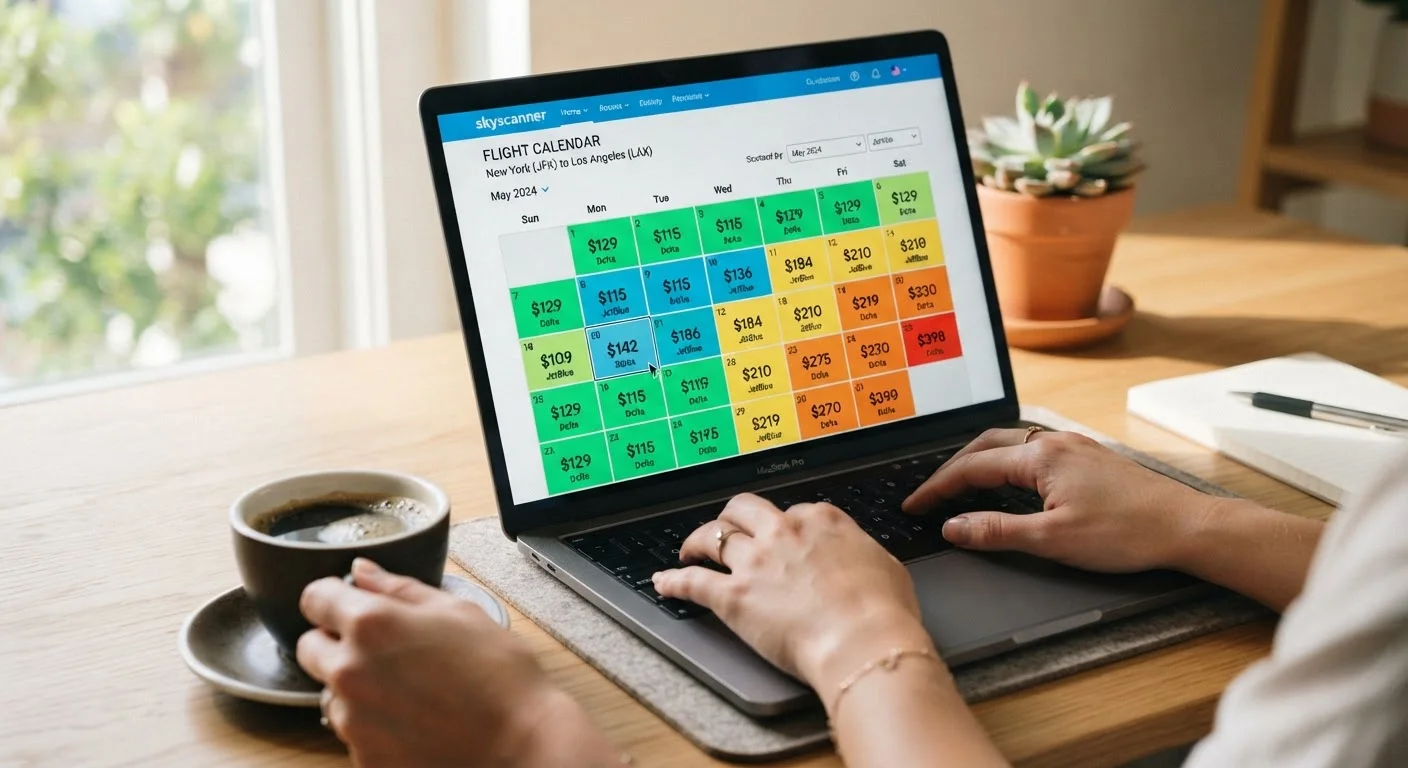
Fare calendars are your most direct tool for spotting these patterns. Our guide on reading an airline fare calendar without getting confused walks through exactly what those price grids do and don't show you.
Set a Fare Alert Before Your Booking Window Opens
If your travel dates are more than 8 weeks out, consider setting a fare alert rather than booking immediately. Budget carriers sometimes release promotional pricing in batches, and monitoring the route lets you act quickly when the lowest bucket opens. Most major flight search tools offer free email alerts for specific routes.
Calculating the True Total Before You Buy
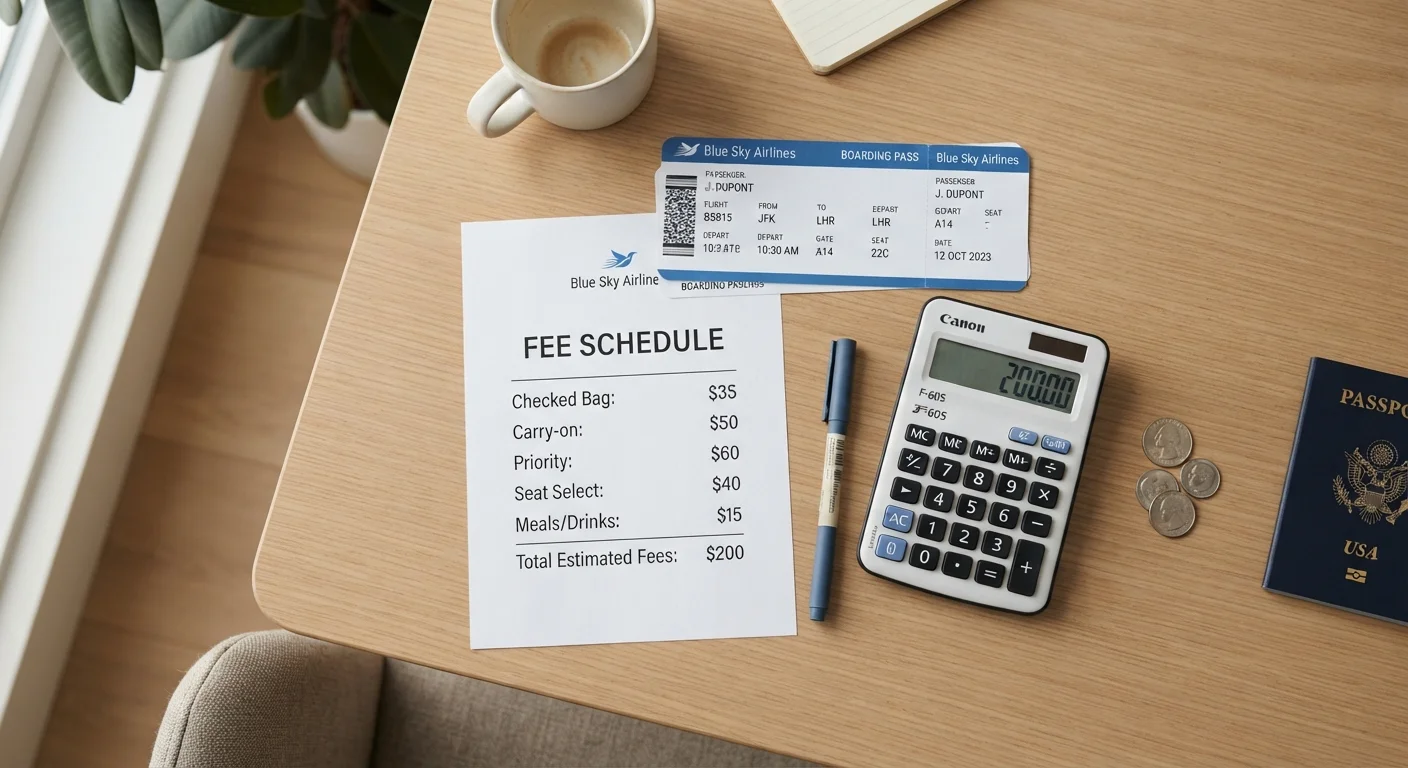
Before committing to any budget fare, build a complete cost estimate. Add up: the base fare, any checked or carry-on bag fee, a seat selection fee if you need one (or the cost of being randomly assigned), and the payment processing fee if paying by card rather than a specific accepted method.
Then compare that total against what a full-service carrier's basic economy ticket costs on the same route - including its own bag and seat restrictions. The gap often narrows considerably, and sometimes reverses. Our true cost comparison between budget and full-service carriers runs through common journey types to show where each option actually wins.
Also factor in airport location. Many budget carriers operate from secondary airports that are cheaper to land at - but if getting there costs $40 in ground transport versus $10 from a central hub, that delta eats directly into your savings.
Build a full-cost itemization before comparing fares across carriers.
Budget airline checkout flows are designed to reveal fees incrementally, making the final price feel like a series of small decisions rather than one large number. A pre-built checklist forces the true comparison upfront. This prevents the sunk-cost effect of discovering an expensive bag fee only after you've already selected seats.
Pack to the personal item limit whenever the trip allows it.
A personal item (typically a small backpack that fits under the seat) is included in virtually every budget fare. A carry-on bag, by contrast, now costs $35-$75 each way on many low-cost carriers. Eliminating that single fee on a round trip can save more than the difference between fare tiers.
Skip seat selection if flexibility is acceptable.
Budget carriers charge $5-$25 or more per seat per segment for pre-selection. If you don't need a specific position - window, aisle, or front-of-cabin - letting the airline assign your seat at check-in costs nothing. For solo travelers on short flights, this is often a no-cost trade-off.
Use the airline's preferred payment method to avoid processing fees.
Some budget carriers add a per-passenger, per-segment processing fee for credit card payments, while exempting debit cards or specific partner cards. This fee is easy to overlook but can add $5-$15 per person per segment. Checking the payment page before entering card details takes under a minute.
Search secondary and nearby airports as departure or arrival alternatives.
Budget carriers often concentrate service at lower-cost secondary airports. If that airport is accessible at low or no extra cost, the route savings are real. If ground transport is expensive or time-consuming, the savings can disappear quickly.
Quick Wins You Can Act on Today
Budget airline fees are largely predictable once you know the playbook. The practices above are the strategic layer; the actions below are what you do in the next 20 minutes to cut costs on a booking you're actively researching.
For travelers building more complex itineraries around low-cost carrier legs, the guide to structuring multi-destination trips covers how to combine budget carrier segments without letting fees compound across stops. And if you're deciding between flying budget or repositioning to a cheaper hub, positioning flights explained lays out when that math actually works.