
Where the Money Actually Goes Differently
Travel pace isn't just a lifestyle preference - it's a financial decision that reshapes your daily cost structure from the ground up. The two biggest cost drivers affected by pace are accommodation and transportation, which together often account for 50-70% of a travel budget.
With slow travel, staying five or more nights in one place opens access to weekly rates, guesthouse discounts, or short-term apartment rentals - options unavailable to travelers checking in for one or two nights. A private room that runs $80/night nightly might drop to $55/night on a weekly rate. Multiply that across 30 days and the savings are substantial.
Fast-paced itineraries, by contrast, generate frequent transit costs: intercity buses, train segments, domestic flights, and rideshares to and from terminals. These add up faster than most travelers anticipate when planning. A traveler moving to a new city every two days on a two-week trip might spend as much on internal transport as on accommodation.
| Criterion | Slow Travel | Fast-Paced Itineraries |
|---|---|---|
| Accommodation rate | Weekly/monthly discounts available | Full nightly rates apply |
| Internal transport costs | Low - fewer moves | High - frequent transit |
| Food flexibility | Grocery shopping feasible | Mostly restaurant-dependent |
| Entry fees & tourist costs | Spread over more days | Concentrated in short windows |
| Planning complexity | Lower - fewer bookings | Higher - logistics stack up |
| Ideal trip length | 3+ weeks | 1-2 weeks |
For a fuller picture of how daily spending compounds across a multi-stop trip, the daily budget best practices guide for complex itineraries breaks down tracking strategies by destination type.
Dining, Groceries, and the Time Factor
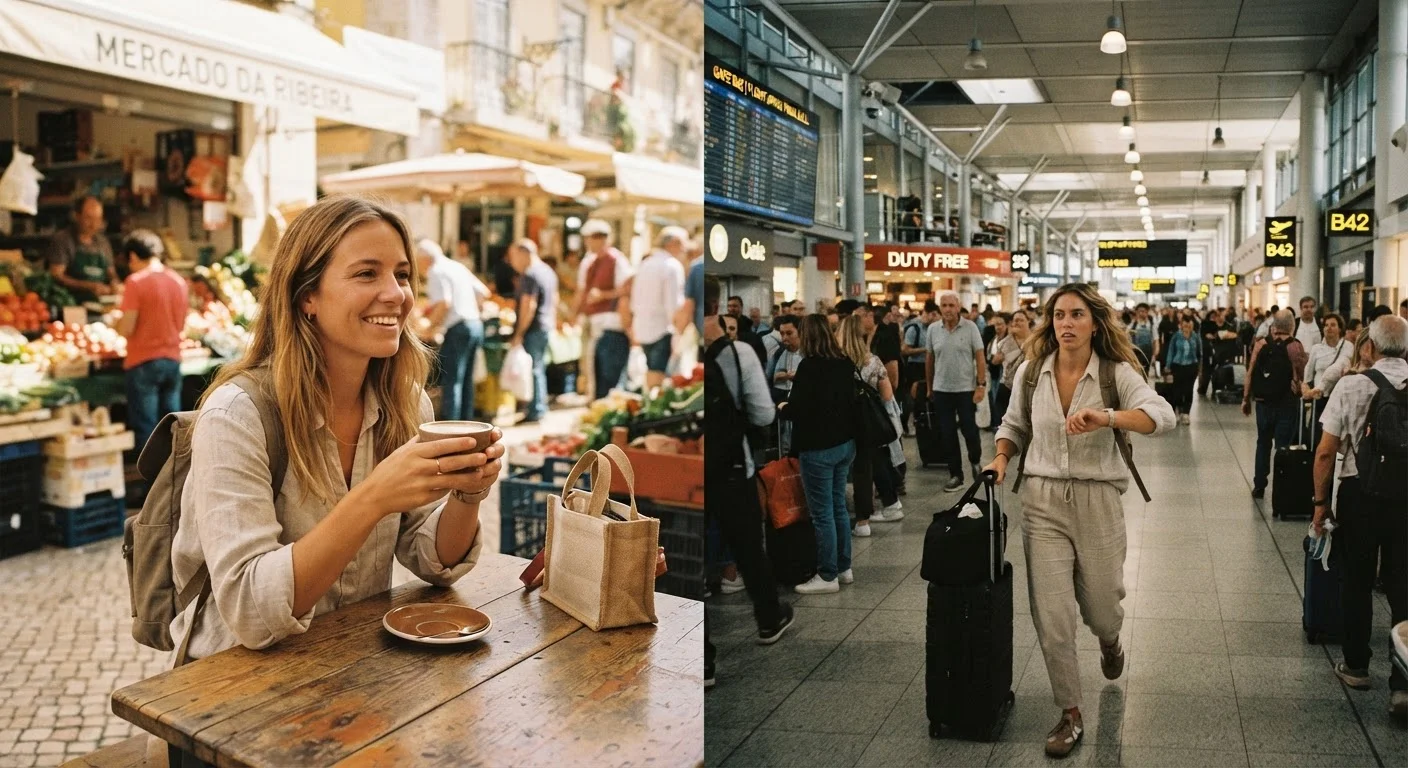
One underappreciated way pace affects spending is through food. Fast-paced travelers often eat out every meal - not by choice, but by necessity. When you're navigating a new city for 36 hours, there's rarely time to find the neighborhood grocery store, learn which streets have local eateries versus tourist traps, or cook a simple meal.
Slow travelers who stay a week or more have time to establish a rhythm: a morning market run, a few home-cooked meals, and selective dining out when it counts. That pattern alone can cut food costs by 30-40% compared with eating every meal at a restaurant.
30-40%
Potential food cost reduction with grocery access
Travelers with kitchen access or time to shop local markets consistently report lower per-day food spending compared with eating out every meal.
5+ nights
Minimum stay for weekly rate eligibility
Most guesthouses, hostels, and short-term rental platforms offer discounted weekly rates only when the booking meets a five-to-seven night minimum threshold.
15-25%
Typical weekly accommodation discount vs. nightly rate
Weekly rates on short-term rental platforms and independent guesthouses commonly run 15-25% below the equivalent nightly rate, though this varies by market.
Dining choices also carry a location component. Tourist-area restaurants near major sights charge a premium that compounds when you're always in transit and always near those sights. Street food versus sit-down dining explores this cost gap in more detail - but the point here is that slow travel gives you the time to find the cheaper option.
When Fast-Paced Travel Is the Smarter Financial Choice
Slow travel isn't automatically cheaper in every scenario. If your baseline trip is only eight days, spending five of them in one city may not make financial sense if your priority is breadth of experience. In that case, a structured fast-paced itinerary - planned around consolidated transport bookings and pre-negotiated accommodation - can deliver reasonable value.
Fast-paced travel also makes more sense when destination costs vary dramatically. Moving quickly out of an expensive city into a lower-cost region resets your daily average downward. A traveler who spends two days in a high-cost urban center and then four days in a cheaper rural or coastal area may average out better than someone who stays the full week in the expensive city chasing a weekly rate.
For solo travelers weighing both approaches, the budget case for slow travel versus destination-hopping breaks down the trade-offs across accommodation, transport, and daily spend specifically for travelers going it alone. Road trippers have a different calculation - if you're covering US destinations by car, road trip route planning affects how pace and fuel costs interact.
Pace and Budget Are Personal Variables
The financial advantage of slow travel grows with trip length and shrinks the shorter your overall journey. A traveler spending 10 days abroad will see smaller savings from staying put than one traveling for six weeks. Consider your total days, not just your daily rate, when deciding which approach fits your budget. For detailed planning frameworks, see slow travel vs. destination-hopping planning implications.
All cost estimates and strategies described here are general in nature and will vary based on destination, season, accommodation type, and individual spending habits. Verify current prices and availability directly with providers before booking.