
Why a Single Daily Budget Fails Multi-Destination Trips
Travelers who set one flat daily spending target for an entire multi-stop trip almost always end up surprised - usually unpleasantly. A day in rural Vietnam and a day in Tokyo can differ by a factor of three or four in real cost. Treating them identically either leaves money on the table in affordable destinations or sets you up to chronically overspend in expensive ones.
The fix is destination-specific daily budgets built before you leave. Start with a framework for estimating daily costs for each stop - food, local transport, accommodation, and activities - then set a per-day ceiling for each leg of the trip independently. Use the typical cost ranges reference as a calibration tool if you're unfamiliar with a destination's price level.
Core Practices for Staying on Track
The following approaches address the specific challenges that arise when cost levels, currencies, and travel rhythms shift every few days.
Assign a distinct daily budget ceiling to each destination leg before departure.
Cost of living varies dramatically between countries and even between cities within the same country. A single average figure distorts your spending signal and makes it impossible to tell whether you're on track on any given day.
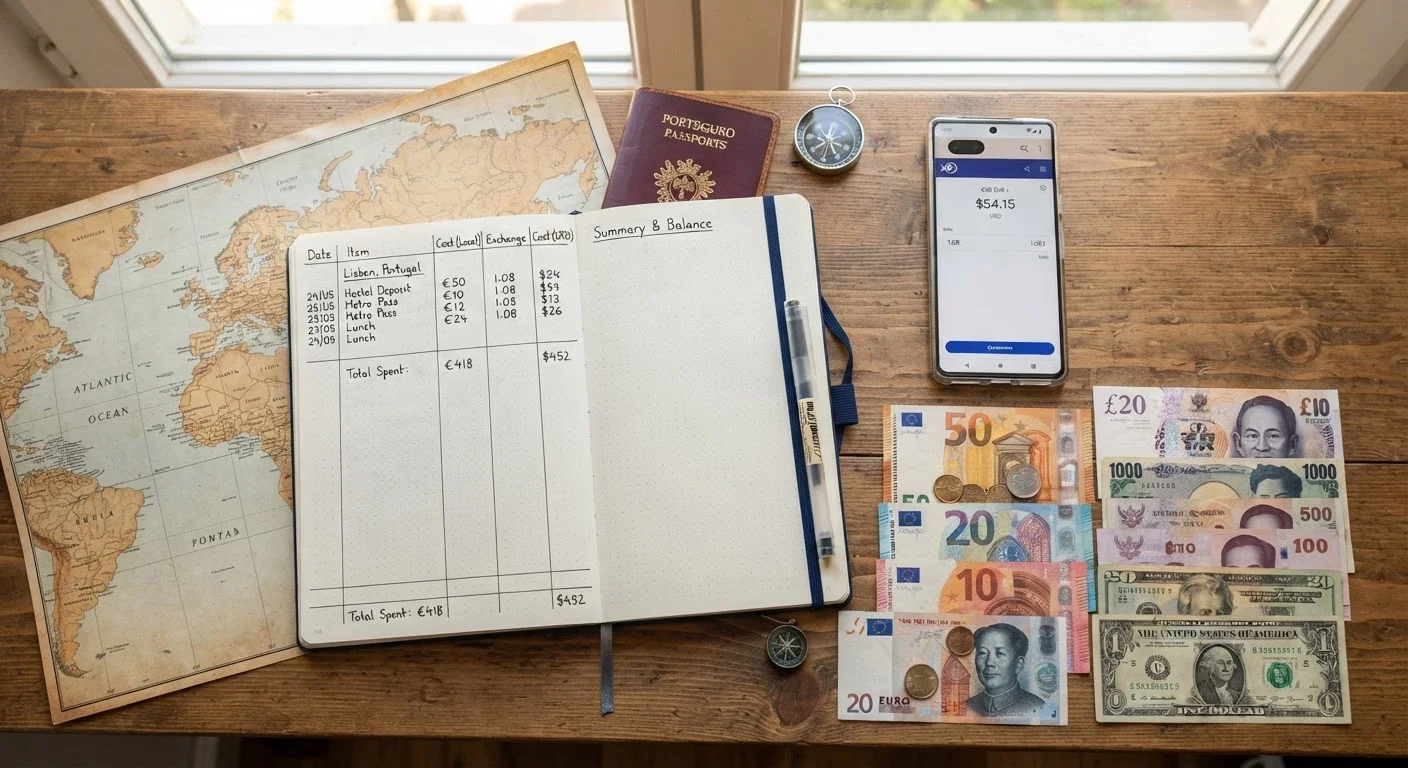
Record every expense in local currency immediately after spending, then convert to your base currency once daily.
Real-time mental conversion is inaccurate and exhausting. Logging in local currency first preserves precision; the end-of-day batch conversion gives you a consistent snapshot without the cognitive overhead.
Budget transition days between destinations as a separate, higher-cost line item.
Travel days reliably cost more due to transport, airport meals, and lost access to cheap local options. Folding them into your standard daily budget distorts your averages and hides real overruns.
Review your running total against your plan every evening, not weekly.
Budget drift on multi-destination trips compounds quickly. A daily check-in catches overruns while you still have time to adjust - eating cheaper the next day, skipping an optional activity - rather than discovering a problem after a week of overspend.
Explicitly track and carry forward daily surpluses as a buffer for expensive destinations.
Untracked surplus spending tends to drift into unmemorable purchases. Consciously noting what you saved in a low-cost destination and naming it as a reserve for a high-cost one keeps your overall trip budget intact.
Handling Transition Days and Currency Shifts
Days when you move between destinations are budget outliers. Transport costs spike, meals get bought at airports or stations, and you lose access to your usual cheap options. These days deserve their own line item - budget them separately rather than averaging them into your regular daily figure.
Budget Transition Days at 1.5× Your Standard Rate
A useful rule of thumb: estimate any day that involves a long journey or border crossing at one-and-a-half times your standard daily budget for the destination you're leaving. This accounts for transport, opportunistic spending at terminals, and the premium cost of meals en route. Adjust downward if you have a packed lunch and pre-booked transport - but start from that higher baseline rather than hoping the day stays cheap.
Currency transitions add another layer of complexity. Converting everything mentally to US dollars as you spend is error-prone and slow. Instead, record each expense in the local currency immediately, then convert to your base currency in one batch at the end of the day using a consistent exchange rate. Apps that support multiple currency wallets can automate this. For a deeper look at the trade-offs of carrying cash in several currencies at once, see managing multiple currencies.
If you're traveling with others, currency transitions also complicate shared expenses. Establish a clear method for splitting costs before you cross a border - settling group expenses across currencies walks through practical approaches.
3-4×
Cost difference between cheapest and priciest destinations
General travel cost comparisons show daily budgets in high-cost Western European cities can run three to four times higher than comparable stays in Southeast Asian countries.
15-25%
Extra daily spend typical on transit days
Travel planning practitioners commonly estimate that days involving long-distance travel run 15-25% over a traveler's standard daily budget due to transport and convenience meal costs.
Building Flexibility Into Your Budget Structure
Rigid budgets break on complex trips. The more resilient approach is a rolling surplus-deficit model: when you spend significantly under budget in a low-cost destination, that difference is explicitly available for a higher-cost destination later. Log it consciously rather than letting the surplus silently disappear into untracked spending.
Your travel pace also shapes daily costs more than most travelers expect. Staying longer in fewer places generally reduces per-day spend on transport and accommodation. How travel pace affects daily costs lays out the math behind this trade-off clearly.
For a complete end-to-end system that covers planning through real-time adjustment, the daily travel cost management framework ties all these practices together. If you're heading out on a long-haul multi-month trip, managing money on a long-term international trip covers the additional financial rhythms required at that scale.
This article provides general travel budgeting information for educational purposes. Prices, exchange rates, and cost conditions vary and cannot be guaranteed. Always verify current costs and entry requirements with official sources before traveling.