
Why Multi-Currency Cash Becomes a Real Question
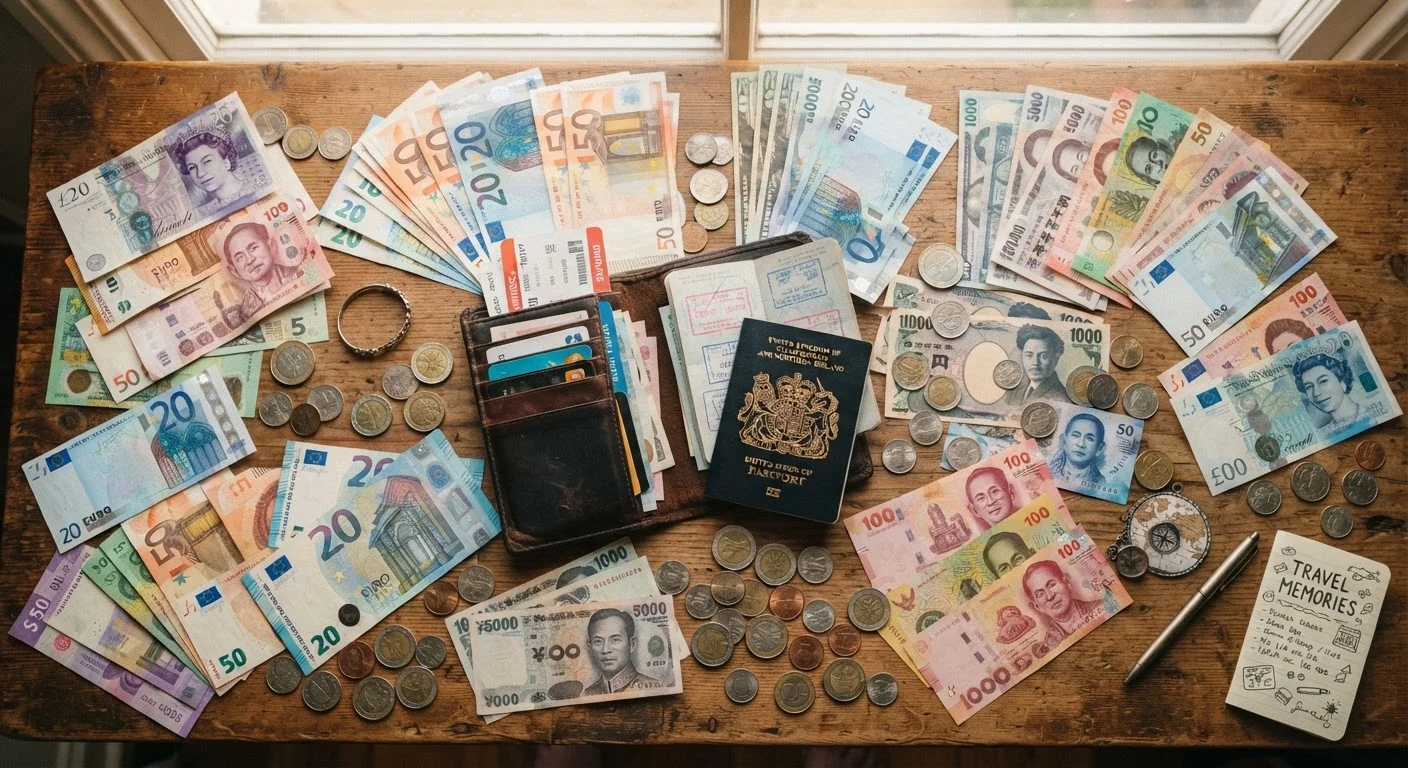
A trip spanning Thailand, Vietnam, and Japan - or Portugal, Morocco, and Senegal - puts you in contact with currencies that rarely overlap in usefulness. Unlike travel within the eurozone, where one currency covers dozens of countries, most multi-destination itineraries involve genuine currency switching. The question isn't whether to carry cash at all, but how many currencies to hold simultaneously and in what amounts.
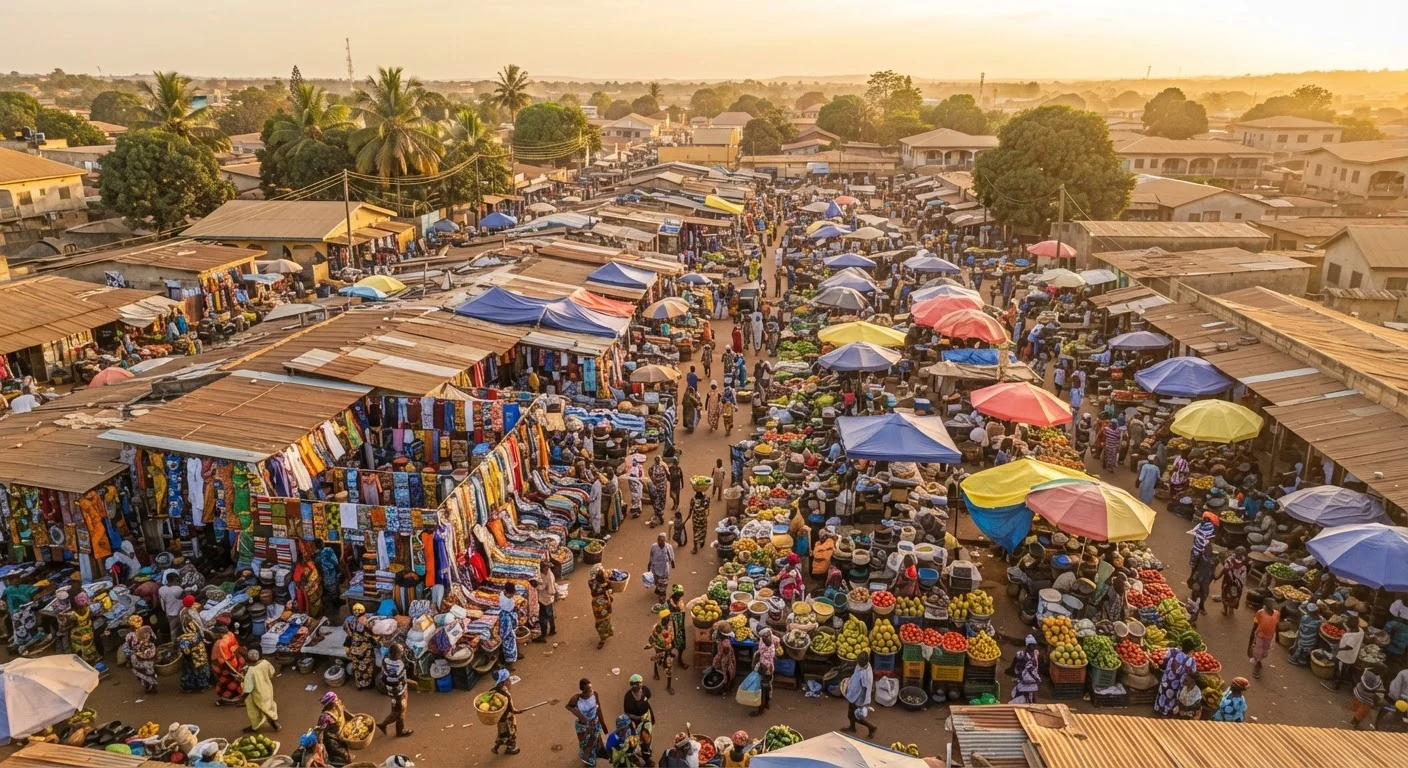
The stakes are practical. Rural guesthouses, local transport, street markets, and small restaurants across Southeast Asia, Eastern Europe, and large parts of Africa frequently operate cash-only. Arriving without local currency can mean overpaying for an ATM or accepting a poor exchange rate under time pressure. See our guide on cash vs. card decisions abroad for a fuller picture of when each method serves you better.
Understanding the genuine trade-offs before you pack your wallet helps you allocate the right amount of each currency - and avoid carrying more than you can safely manage.
The Advantages of Holding Several Currencies
Immediate local purchasing power upon arrival
Arriving with local cash eliminates the scramble for an ATM after a long flight - critical in destinations where airport machines are unreliable or carry steep fees.
Avoids worst-rate exchanges at destination airports
Airport exchange bureaus at your destination often charge spreads of 5-10% above mid-market rates; sourcing currency before departure or mid-trip at competitive venues reduces this cost.
Works where cards are routinely declined
Rural guesthouses, local markets, tuk-tuks, and smaller restaurants across much of Southeast Asia, Africa, and Eastern Europe operate cash-only - carrying local currency keeps these options open.
Functions as a built-in per-destination budget
Separating each country's cash into labeled envelopes or wallet sections provides a tactile, visible spending limit that card use doesn't replicate.
Reduces reliance on ATM availability
ATM networks in smaller cities and rural areas can be sparse or frequently depleted; pre-held local cash provides a reliable fallback.
Immediate purchasing power in each country is the clearest benefit. You clear customs, board a bus, and pay a market vendor without searching for an ATM. In destinations where ATM networks are sparse or machines frequently run out of cash, having local currency on arrival can be the difference between smooth transit and stressful delay.
Carrying pre-exchanged currency also lets you lock in rates at a relatively favorable time. Exchanging money at international airports at your destination often carries some of the worst spreads available - sometimes 5-10% above mid-market rates. If you sourced currency before departure or at a competitive exchange bureau earlier in the trip, you've sidestepped that cost entirely.
For travelers following a structured daily budget across multiple destinations, holding each country's currency in a separate wallet compartment or envelope also functions as a built-in spending limit - you can see exactly what remains for each leg.
The Disadvantages and Hidden Costs
Concentrated theft or loss risk across multiple currencies
A stolen wallet containing four currencies can disrupt an entire multi-country itinerary in one event, with no fraud protection or recovery available for cash.
Leftover cash often converts at a net loss
Small remaining balances in restricted or lightly traded currencies may be unconvertible outside the issuing country, effectively making unused cash a sunk cost.
Cognitive load of tracking multiple exchange rates
Mentally evaluating prices across three or four currencies simultaneously is tiring and increases the likelihood of small budgeting errors that compound over a long trip.
Exchange spread applies at every conversion step
Each currency exchange - whether sourced before departure, at a bureau, or from an ATM - involves a spread or fee; the more conversions you make, the more you pay in aggregate.
Security risks increase with cash volume carried
Carrying larger aggregate sums across multiple currencies often means holding more total cash than necessary, increasing exposure if bags are lost or accommodation is insecure.
Some currencies are difficult to source outside home country
Less commonly traded currencies - such as those used in parts of Central Asia or West Africa - may require advance ordering and can be unavailable at standard exchange bureaus abroad.
The risks accumulate quietly. Carrying cash in five currencies simultaneously means a single theft or loss event could wipe out purchasing power for multiple legs of your trip. Physical cash has no fraud protection, no dispute process, and no recovery mechanism. The more currencies you carry, the more attractive your wallet becomes as a target - and the harder it is to notice when a small denomination goes missing.
Reconversion is a frequently underestimated cost. When you leave Japan with 4,000 yen and depart Vietnam with 200,000 dong, you face the choice of converting those amounts back to dollars or forward to your next destination's currency. Either direction involves a spread, and small leftover amounts often don't justify the transaction fee. Some currencies - particularly those with limited international trading - can't be exchanged at all outside the issuing country.
There's also a cognitive tax to managing multiple currencies. Mentally switching between exchange rates throughout a day - evaluating whether a meal costs $8 or $14 depending on the rate you used - is genuinely tiring and creates conditions for small miscalculations that erode your budget over time. See long-term trip money management strategies for tools that reduce this burden.
Watch for Dynamic Currency Conversion
When paying by card abroad, some terminals offer to charge you in your home currency rather than the local one - a practice called dynamic currency conversion (DCC). This almost always results in a worse exchange rate than letting your card's network handle the conversion. Always choose to pay in local currency when prompted. For a full explanation, see our article on how dynamic currency conversion works and when to decline it.
Structuring a Workable Multi-Currency Strategy
The most effective approach isn't maximizing the number of currencies you carry - it's minimizing unnecessary exchange steps while ensuring you're never stranded without local cash. A few practical principles help:
- Carry enough for 48-72 hours per destination, not the full trip. Estimate your first two days of spending in each country and hold only that amount in local currency. Replenish from ATMs once you're settled, using a card with no foreign transaction fees or ATM reimbursement.
- Identify which legs are genuinely cash-dependent. Some destinations - particularly in Western Europe and East Asia's major cities - have robust card infrastructure. Others, including parts of Central America, Sub-Saharan Africa, and rural Southeast Asia, are meaningfully cash-first. Prioritize pre-trip currency acquisition for the latter.
- Track leftover balances actively. Before crossing each border, spend down local cash on transit, meals, or small purchases. Don't carry large balances forward unless the currency will be useful later in the trip.
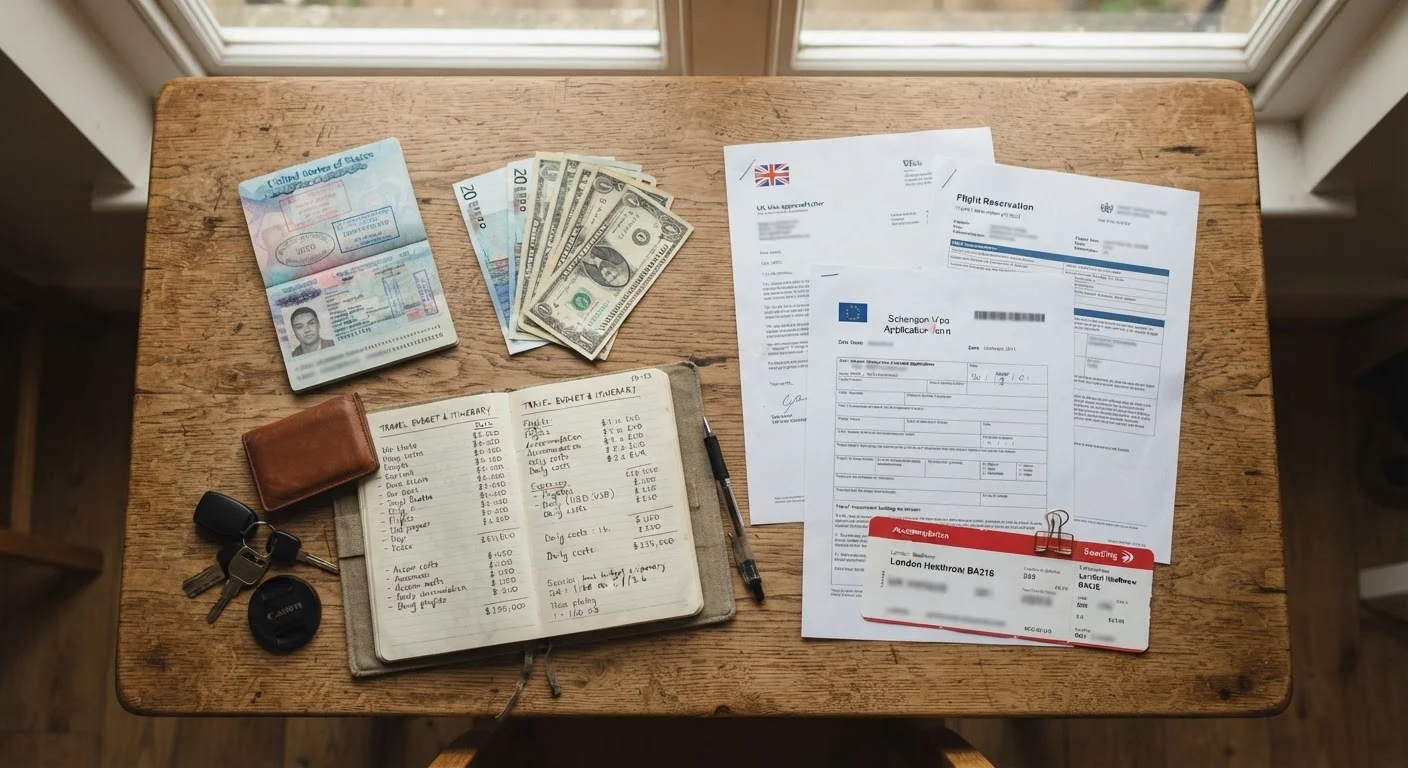
For a structured preparation process, the pre-trip currency checklist covers account setup, fee alerts, and how to estimate cash needs before you board.
5-10%
Typical spread at destination airport exchange bureaus
Exchange bureaus located inside international arrival terminals commonly charge margins well above mid-market rates, particularly for less-traded currency pairs.
48-72 hrs
Recommended cash reserve per destination leg
Travel finance advisors generally recommend holding enough local cash to cover two to three days of spending, then replenishing from fee-efficient ATMs once settled.
~30%
Share of global transactions still cash-dependent
According to World Bank payment system data, a significant portion of consumer transactions in lower-income economies remain cash-based, underscoring the need for local currency in many destinations.