
Why the Ozarks Work So Well for Budget Road Trips
Stretching across northern Arkansas and southern Missouri, the Ozark Plateau is one of the most underappreciated road trip destinations in the country. Think clear spring-fed rivers perfect for floating, cathedral-like caverns you can tour for under $20, hiking trails through old-growth forest, and small towns where a full breakfast still costs less than a city latte. Unlike the national park circuit out West, the Ozarks rarely feel crowded - and the infrastructure here is set up for people driving their own vehicles at their own pace.
The region also benefits from a dense network of state parks in both Arkansas and Missouri, many of which charge minimal or no day-use fees. That means world-class scenery - limestone bluffs, waterfalls, wildlife - without significant spend. For context on how this compares to water-based travel, see our guide on planning a cruise on a tight budget; the Ozarks are dramatically simpler and cheaper to execute.
Hit the Ozarks in Shoulder Season
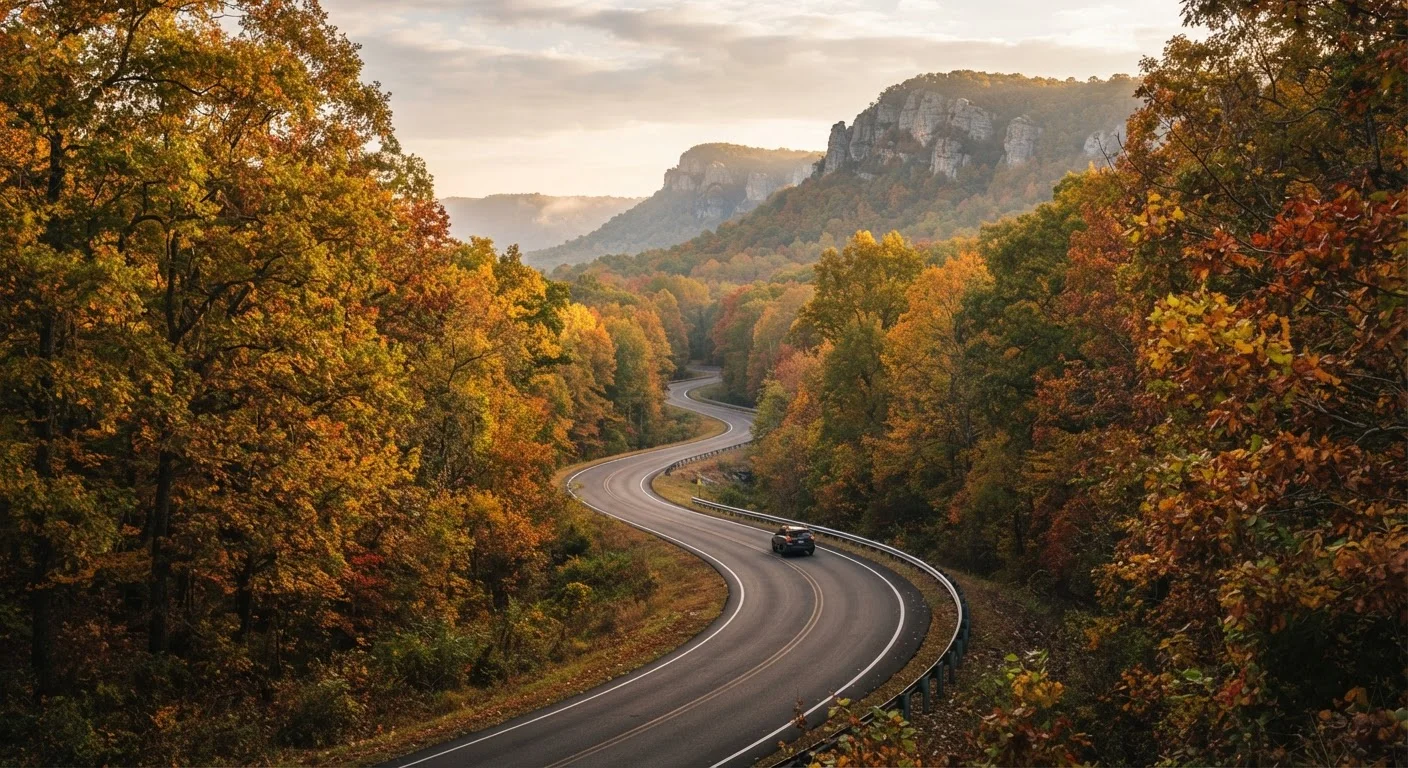
Late April through early June and mid-September through October are ideal windows. Summer river floats are popular but crowded; fall brings stunning foliage with noticeably lower campground rates. Spring wildflower blooms along the Buffalo National River corridor are genuinely spectacular and attract far fewer visitors than summer.
Tools and Resources You'll Need Before You Leave
Good Ozarks road tripping starts at home. Spend an hour or two with these resources before you book anything.
State Park Reservation Sites (Arkansas & Missouri)
Reserve campsites in advance at parks like Petit Jean, Devil's Den, Johnson's Shut-Ins, and Ha Ha Tonka.
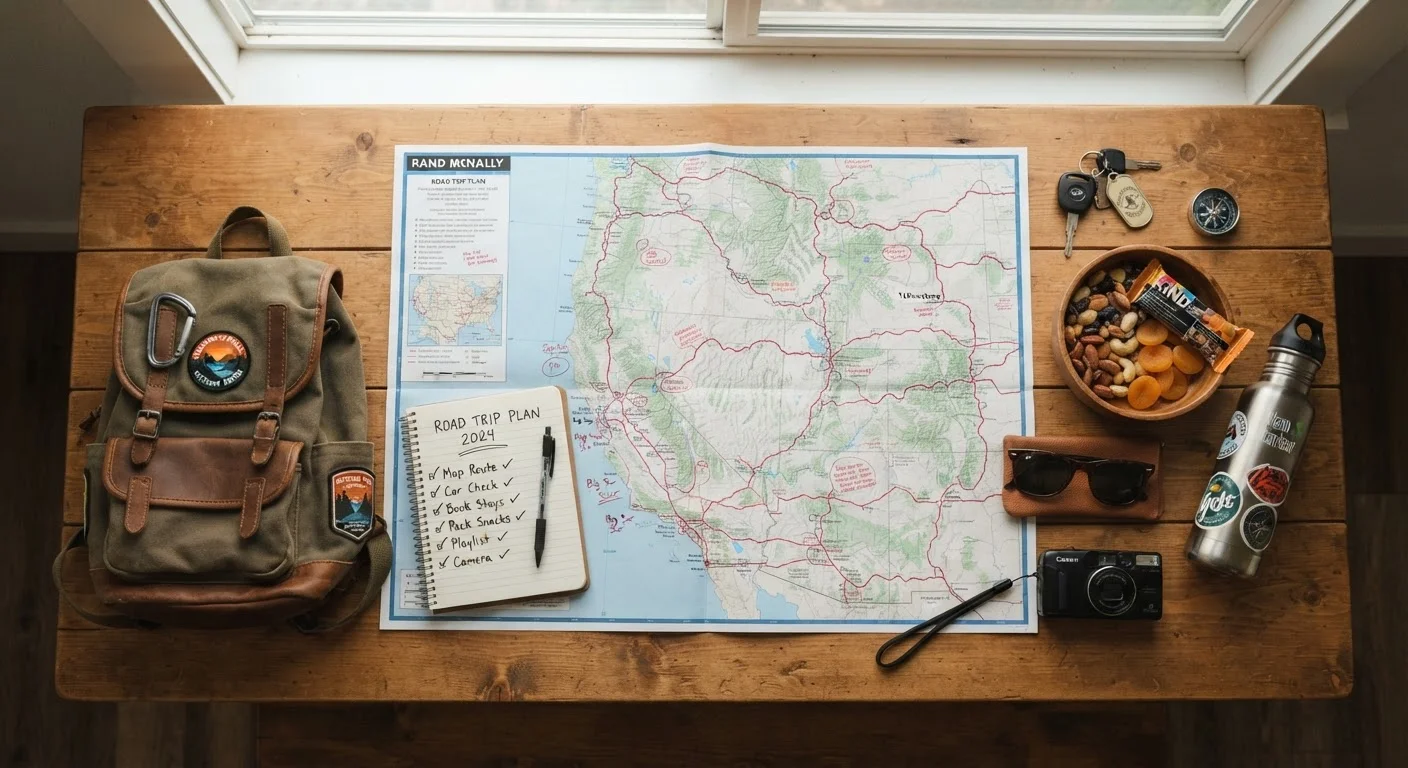
Offline Maps App (e.g., downloaded Google Maps or Maps.me region)
Cell coverage is spotty throughout much of the Ozarks; an offline map keeps navigation reliable.
National Forest Motor Vehicle Use Map
Identifies legal dispersed camping areas and forest roads in the Ozark-St. Francis National Forests.
Cooler and Basic Camp Kitchen
Packing your own lunches and breakfasts significantly cuts daily food costs on a multi-day drive.
Paper or Digital State Highway Map
State scenic byway maps highlight key pullouts, overlooks, and points of interest that GPS apps often omit.
Step-by-Step: Building Your Ozarks Route
Follow these steps in order and you'll have a workable, affordable itinerary before the weekend.
What you will need
Choose Your Entry Point and Anchor Towns
Decide whether you're entering from the Missouri side (Branson or Joplin are common) or the Arkansas side (Fayetteville or Fort Smith). Pick two or three anchor towns - places where you'll spend two nights - to avoid constant packing and unpacking. Good budget anchors include Eureka Springs, AR (quirky Victorian mountain town, walkable), Mountain View, AR (folk music capital, very affordable), and Van Buren, MO (gateway to the Ozark National Scenic Riverways).
Plot a Loop, Not a Line
Resist the urge to drive straight through. A loop route - for example, Fayetteville → Eureka Springs → Mountain View → Blanchard Springs → Harrison → back to Fayetteville - lets you cover maximum ground without doubling back over the same roads. Use a mapping tool to estimate total mileage and calculate your fuel cost at your vehicle's MPG rating. Factor in that Ozark roads are curvy and often slower than the speed limit suggests.
Identify Free and Low-Cost Attractions Along the Route
Build your itinerary around anchors like Blanchard Springs Caverns (guided tours; fee applies), the Buffalo National River (free day use), Ha Ha Tonka State Park in Missouri (no day-use fee), and the many natural springs and waterfalls accessible from roadside pullouts. Cross-reference your route with the Road Trip Routes hub for additional low-cost scenic stops.
Reserve Overnight Stays in Advance
Once your loop is set, book campgrounds and any motel nights before you leave home. State park campgrounds in both Arkansas and Missouri can be reserved through their respective online reservation portals. For motel nights, small independent motels in Ozark towns typically offer better value than chain properties. Check cancellation policies carefully - flexibility matters on a road trip.
Set a Realistic Daily Spending Target
A reasonable daily budget for an Ozarks road trip runs roughly $80-$130 per person, covering a mix of camping and motel nights, self-prepared breakfasts and lunches, one sit-down dinner, fuel, and two to three paid attraction entries per week. Track spending each evening so you can adjust if you're running ahead of pace. Small adjustments - one fewer restaurant meal, one night camping instead of motel - add up quickly over a week.
Sleeping Cheap and Eating Well Along the Way
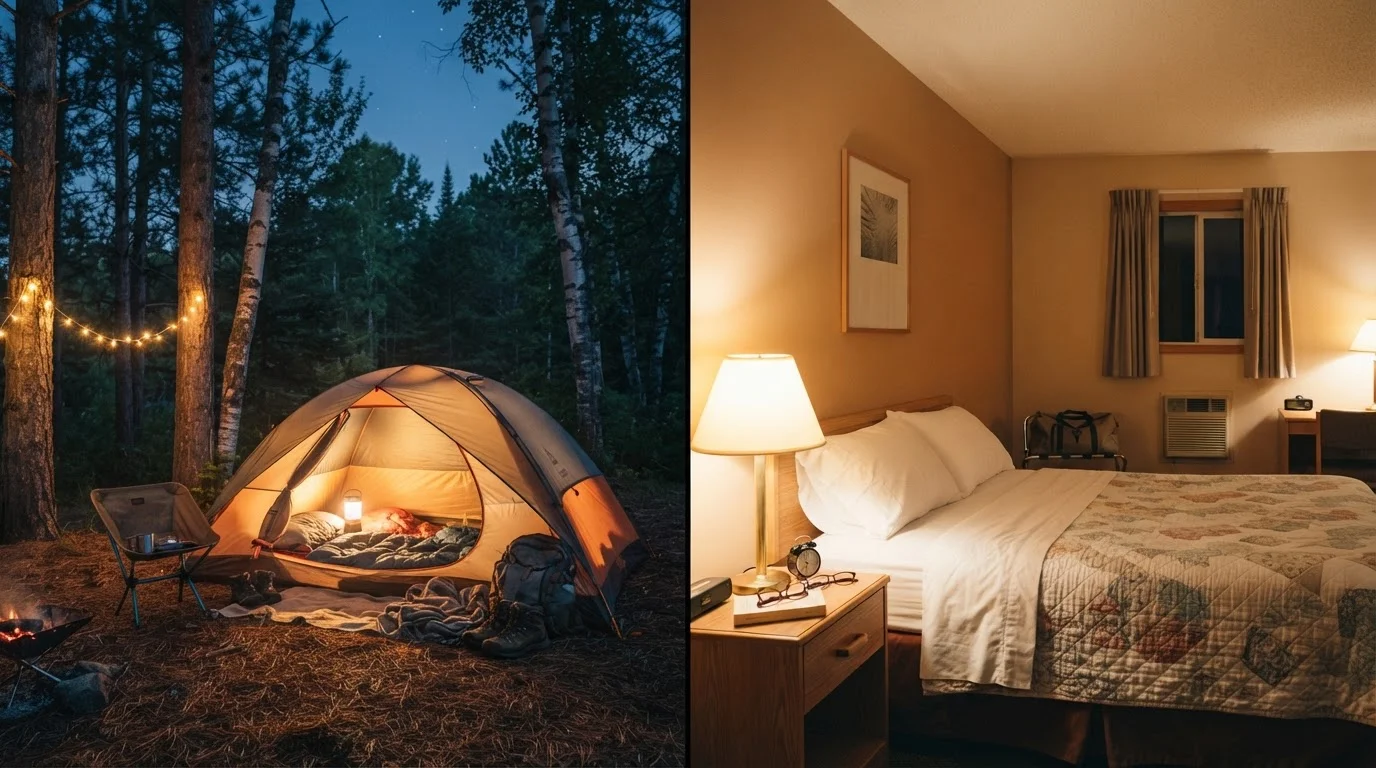
Lodging is where Ozarks road trips really shine for budget travelers. Small-town motels in communities like Mountain View, AR or Ava, MO routinely run $50-$80 per night - well below national averages. State park campgrounds in both Arkansas and Missouri can be reserved in advance and often cost $15-$30 per night with hookups. For a deeper comparison of your overnight options, our article on camping vs. budget lodging walks through cost and comfort trade-offs. You can also check free and low-cost overnight stays on US road trips for dispersed camping options on national forest land, which is abundant throughout the Ozarks.
Food is refreshingly affordable. Roadside barbecue joints, family diners, and farmers markets in towns like Eureka Springs and Branson offer filling meals at modest prices. Stock a cooler with grocery staples for lunches on the trail and reserve sit-down meals for dinner - that one adjustment alone can meaningfully reduce daily food spend.
Book Campgrounds Early for Summer Weekends
While the Ozarks are less visited than national parks out West, popular campgrounds at places like Devil's Den State Park and Johnson's Shut-Ins fill up quickly on summer weekends. Make reservations through the relevant state park reservation system at least two to three weeks in advance. Verify current booking procedures and fees directly with the park before travel, as policies can change.
Keeping the Trip Family- and Solo-Traveler Friendly
The Ozarks scale well regardless of your travel party. Families will find that entry fees at most caves and parks accommodate children at reduced rates, and tubing on the Buffalo National River or Current River is one of the most genuinely fun, low-cost activities available anywhere in the US. For families mapping out a fuller weekend strategy, our guide on weekend trips with kids offers useful logistics frameworks. Solo travelers, meanwhile, benefit from the region's safety record and easy navigability - there's rarely a need to pre-book tours, and most trails are well-marked. If you're managing overnight costs across multiple stops, stretching a lodging budget across a multi-city trip offers practical sequencing advice. The Ozarks are a worthy companion to scenic drives like the Great River Road along the Mississippi if you're planning a longer regional journey.