
The Real Cost Comparison
At face value, camping looks like the obvious budget winner - and often it is. A site at a US state or national park campground typically runs anywhere from around $15 to $40 per night, depending on the location and amenities (hookups, showers, proximity to trailheads). Dispersed camping on Bureau of Land Management (BLM) land can be free entirely.
Budget lodging - think roadside motels, regional chains, or hostels - generally ranges from around $60 to $120 per night for a private room in most US regions, though prices climb in peak seasons and popular destinations. For context on how to stretch that spend further across multiple nights, see strategies for multi-night lodging budgets.
The catch with camping? Gear. If you don't already own a tent, sleeping bag, sleeping pad, and cooking supplies, outfitting yourself from scratch can easily run $200-$500+. For an occasional weekend camper, that upfront cost can erase years of campsite savings. Budget lodging, by contrast, requires nothing but a bag of clothes.
$25
Average US state park campsite fee per night
Fees vary widely by state and amenity level; national park campgrounds can run higher in peak season.
$89
Approximate average US budget motel rate
Budget motel pricing varies significantly by region, season, and local demand.
45%
Americans who camped at least once in the past year
According to the Outdoor Foundation's annual Outdoor Participation Trends report, camping consistently ranks among the most popular US outdoor activities.
Comfort, Convenience, and the Setup Factor
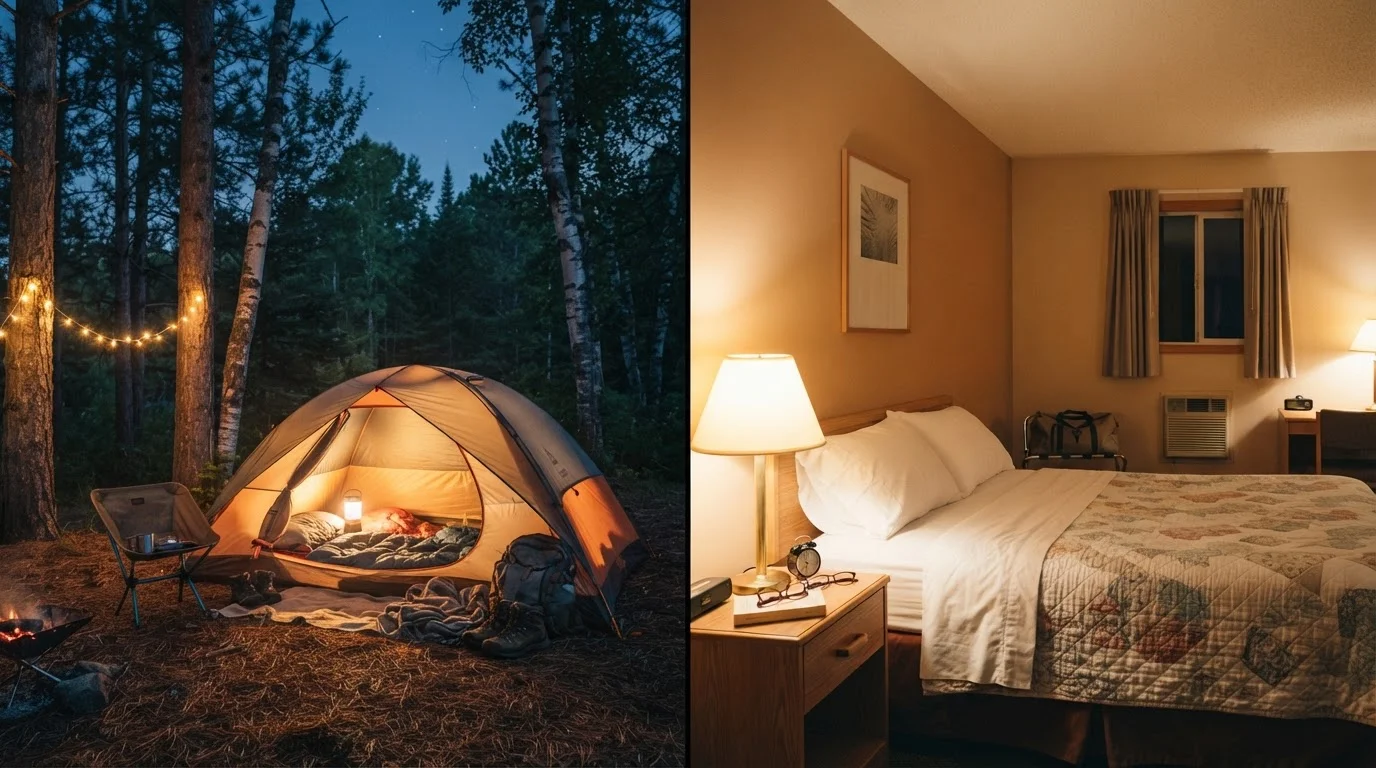
Budget lodging wins on convenience, full stop. You arrive, drop your bag, and you're done. There's a bed, a bathroom, usually Wi-Fi, and climate control. For travelers who spend their days hiking or sightseeing and want a genuine rest at night, this matters more than the savings.
Camping trades those comforts for something else: immersion. Sleeping in a forest, waking to birdsong, cooking over a camp stove - for many travelers, that is the experience, not just the accommodation. But it takes effort. Setting up camp after a long drive, especially in fading light, is a skill and a commitment. And if the weather turns, a tent becomes a completely different proposition.
For solo travelers weighing social experience alongside comfort, this hostel vs. budget hotel breakdown covers the lodging side in greater depth.
| Criterion | Camping | Budget Lodging |
|---|---|---|
| Typical nightly cost | $0-$40 (site fee) | $60-$120 (private room) |
| Gear required | Yes - tent, sleeping bag, pad | None |
| Setup time on arrival | 30-60+ minutes | Minutes |
| Indoor bathroom access | Varies (pit toilet to full bath) | Yes, always |
| Climate control | No | Yes |
| Weather dependency | High | Low |
| Best destination fit | Rural, parks, forests | Towns, cities, coastal areas |
| Advance booking needed | Often weeks ahead | Usually days ahead |
Where You're Going Changes Everything
Destination type is arguably the biggest deciding factor. Planning a weekend in a rural setting - the Ozarks, the Blue Ridge, a Great Lakes shoreline? Camping is often the more natural and more affordable fit. The Ozarks road trip guide is a great example of a destination where campsites are plentiful, affordable, and central to the experience.
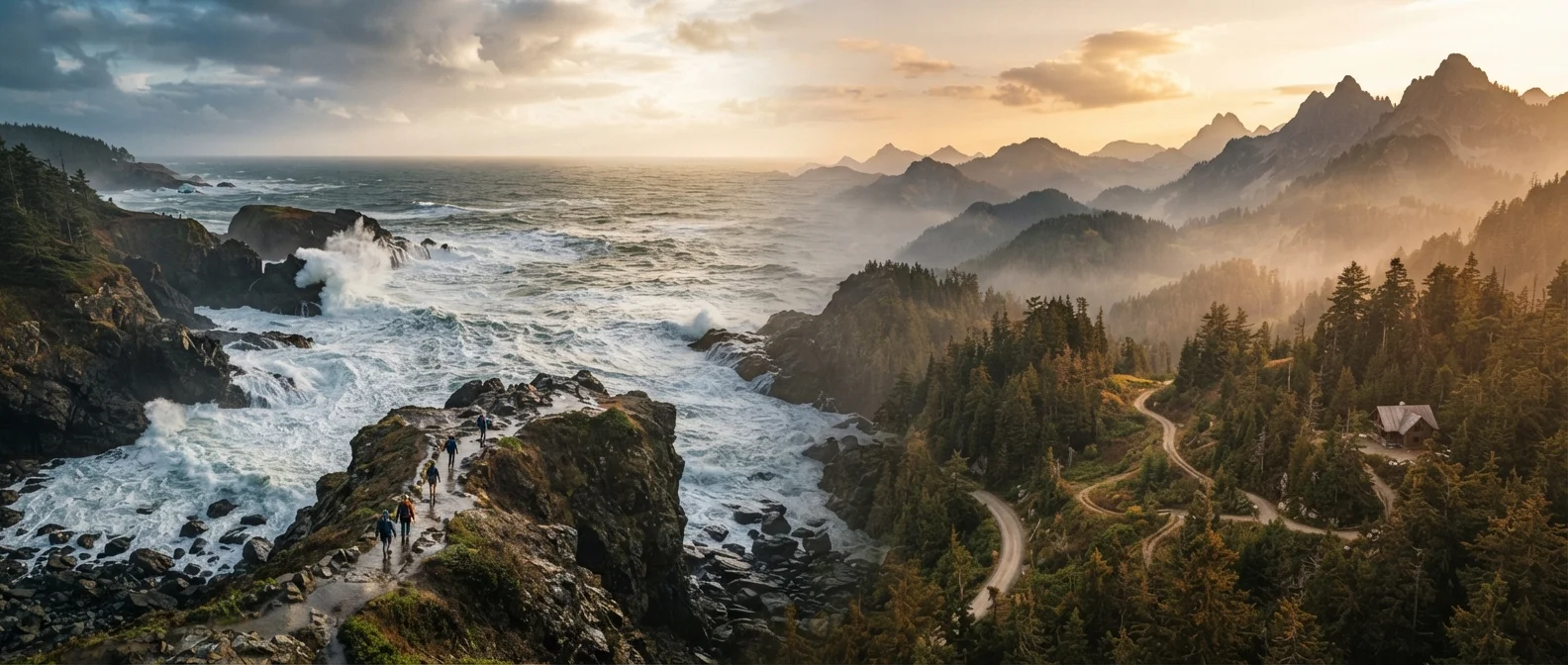
Heading to a mid-size city, a coastal town with limited public land, or a mountain resort area? Budget lodging is likely your only realistic option - and the convenience of being in-town often justifies the extra cost by eliminating the need for a car at every turn. Whether you're weighing ocean vs. pine-forest backdrops, coastal vs. mountain town trade-offs walks through how destination type shapes your overall trip budget.
Group size matters too. A family of four splitting a $90 motel room pays roughly $22.50 each - competitive with per-person camping costs once you factor in gear and supplies. Larger groups, meanwhile, can sometimes book multi-site camping areas that keep per-person costs very low. For families specifically, the vacation rentals vs. hotels cost breakdown adds another useful angle.
Don't Forget Campsite Reservation Timing
Many popular US campgrounds - including those in national parks - operate on reservation systems that open months in advance. Weekend sites at high-demand destinations like the Great Smoky Mountains or Zion can fill within minutes of the booking window opening. If you're planning a camping weekend at a well-known park, treat campsite booking with the same urgency you'd give a flight. Less-visited state forests and BLM land often have more flexibility, including first-come, first-served options.
Practical Tips Before You Decide
A few quick checkpoints to run before you commit to either option:
- Check the forecast seriously. A weekend of rain doesn't ruin a motel stay. It can make a tent miserable and potentially unsafe in exposed areas.
- Reserve early for popular campsites. Recreation.gov and state park reservation systems book out weeks - sometimes months - in advance for peak-season weekends. Don't assume camping is more flexible than lodging; in many areas it's less so.
- Calculate your real gear cost. If you're renting or buying gear for a one-off trip, run the honest numbers. Renting camping gear through local outfitters is a middle-ground option worth exploring.
- Consider what you actually want to do. If your weekend is built around hiking and stargazing, camping amplifies the experience. If it's about exploring a town, eating out, and wandering, budget lodging is almost certainly the smarter base.
For more on what a genuine budget weekend actually costs across different trip formats, this grounded breakdown of shoestring weekend costs is worth a read before you finalize your plan.