

Understanding What a Cruise Actually Costs
The headline fare displayed in cruise search results covers only one portion of what you'll actually spend. Before comparing itineraries, it helps to know how the total cost is typically constructed. Most sailings layer on mandatory port fees and taxes (which can add $100-$300 or more per person depending on the itinerary), automatic daily gratuities charged to your onboard account, and a range of optional but easy-to-overlook costs: specialty dining, beverage packages, Wi-Fi, spa treatments, and casino charges.
For a fuller picture of how these charges accumulate at sea, see how onboard spending quietly inflates a cruise budget. Understanding this cost architecture before you shop means you're comparing sailings on a realistic apples-to-apples basis rather than being surprised at final checkout - or worse, onboard.
What you will need
Choosing the Right Fare and Cabin
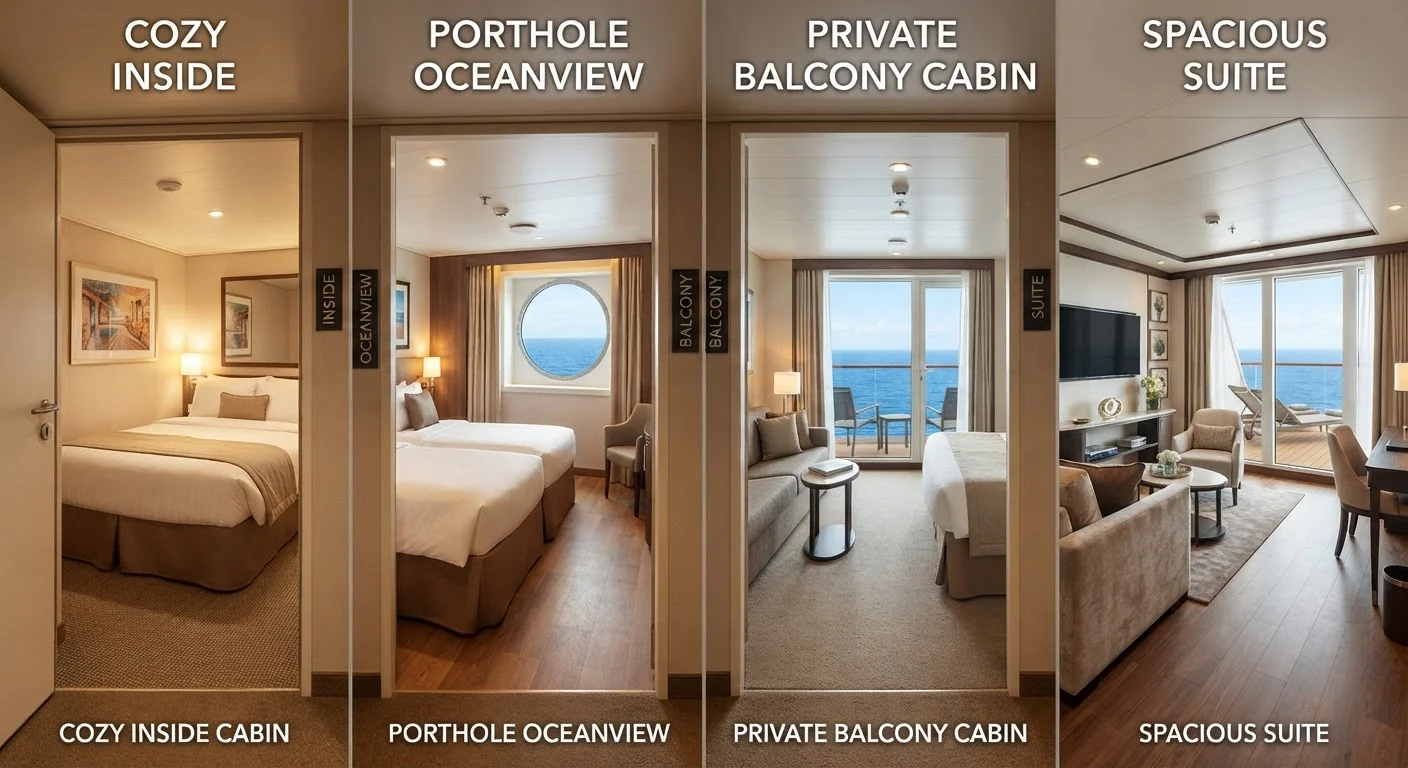
Cruise fares vary by sailing date, cabin category, and how far in advance you book. Interior cabins - those without windows - typically run 20-40% less than comparable ocean-view or balcony staterooms on the same ship. For budget-focused travelers, this is often the most impactful single decision: you spend very little time in your cabin, and the ship's common areas, pools, and dining rooms are available to all guests regardless of cabin type.
Departure timing also matters considerably. Repositioning cruises - one-way sailings as fleets move between regions at the start or end of a season - frequently carry lower per-night fares and longer itineraries. Shoulder-season departures (typically late spring and early fall for Caribbean itineraries, or late summer for Alaska) tend to offer lower base fares than peak holiday weeks. For guidance on matching an itinerary to your goals and budget, choosing a cruise itinerary walks through the major regions and their cost profiles.
Calculate Your True All-In Budget
Before searching fares, establish a realistic ceiling for total cruise spend - not just the base fare. Factor in: round-trip transportation to the embarkation port, pre- or post-cruise hotel nights if needed, port fees and taxes (request this figure from any fare quote), daily gratuities (typically $16-$20 per person per day on most mainstream lines), a daily onboard spending allowance, and excursion costs per port.
Select Your Sailing Date and Itinerary
Cross-reference your desired itinerary with seasonal fare patterns. Caribbean sailings are generally most expensive from late December through mid-April; Alaska peaks in July and August. Identify the shoulder window for your chosen region and price out two or three departure dates in that range to gauge the realistic savings available. Longer sailings often have a lower per-night cost than shorter ones - a 10-night sailing frequently costs less per day than a 7-night on the same ship.
Choose Your Cabin Category Strategically
Decide whether the cost difference between cabin categories is justified for your travel style. Interior cabins save money and suit travelers who plan to spend most of their time in public areas. Mid-ship cabins on lower decks tend to have less motion for those prone to seasickness. Avoid guaranteeing a cabin assignment if you have specific location preferences - guarantee fares are lower but cede control of deck and position to the cruise line.
Read the Fare Inclusions Carefully
Fares labeled as including drinks, Wi-Fi, or specialty dining can appear to offer more value but often embed a higher base price. Compare the à la carte cost of each included item against what you'd realistically consume, then decide whether the package math works in your favor. Some promotional inclusions are genuinely valuable; others primarily benefit the cruise line. Request a written breakdown of what's included and excluded before finalizing any booking.
Plan Your Port-Day Budget in Advance
For each port of call, research the walking distance from the pier to town centers, beaches, and free attractions. Identify one or two paid activities you genuinely want and price them through both the cruise line and independent operators. Decide before departure which ports merit spending and which you'll explore on foot or at low cost. Carry a mix of payment methods - some vendors in smaller ports don't accept cards.
Set and Monitor Your Onboard Spending Limit
Before embarkation, convert your total onboard allowance into a per-day figure. Register a credit card (rather than a debit card) to your stateroom account - a hold is placed at the start of the voyage, and using a debit card can tie up funds in your checking account for days. Check your folio balance every other day through the ship's TV system or app. If you're tracking toward overage, identify what to cut - specialty dining, drinks, or spa bookings - while you still have time to adjust.
Managing Port Days Without Overspending
Shore excursions represent one of the largest variable costs on any cruise. Cruise-line packaged excursions are convenient and offer guaranteed return-to-ship timing, but they carry significant price premiums over independently arranged alternatives. In many ports, local operators offer comparable or identical tours at a fraction of the cost - particularly for popular activities like snorkeling, city tours, and beach transfers.
That said, independent excursions carry real trade-offs: if something goes wrong and you miss the ship's departure, the cruise line is not obligated to wait. Understanding which ports are safe to explore independently and which warrant the security of a ship-organized tour is a key planning judgment call. Our in-depth look at common excursion booking mistakes covers the specific pitfalls - from booking too late to misreading cancellation terms - that catch cruisers off guard.
On port days, many destinations offer free or low-cost options within walking distance of the pier: beaches, public markets, historic districts, and waterfront promenades. Carrying some local currency for these visits typically stretches a daily budget further than relying exclusively on ship-adjacent vendors, who tend to price for cruise traffic.
Walking the Port Can Be Free and Rewarding
In many cruise ports - particularly in the Caribbean and Mediterranean - the historic district, waterfront, and local market are within a short walk of the pier. Before booking any excursion, check satellite maps to understand what's accessible on foot. Some of the most memorable port experiences cost nothing beyond a bit of planning.
Controlling Onboard Spending Day by Day
Ships operate on a cashless onboard account system: every purchase is charged to your stateroom folio and settled at the end of the voyage. This frictionless spending model is intentional - and it makes it easy to lose track of cumulative costs. Setting a firm daily onboard spending limit before departure, and checking your folio balance every day or two via the cabin TV or ship app, is the single most reliable way to stay on track.
Beverage packages deserve careful scrutiny. They can offer value for high-volume drinkers, but the math often doesn't work for moderate consumers. Calculate honestly how many drinks per day you typically have, multiply by the à la carte price, and compare - most packages require consistent daily use to break even. Specialty dining surcharges, art auctions, and casino play are other common sources of budget drift. Deciding in advance which premium experiences are worth paying for - and which you'll skip - is more effective than trying to resist in-the-moment upsells.
For a complete framework covering the full arc of cruise planning, from itinerary selection to managing disembarkation costs, see the complete guide to planning a cruise.