
What You're Actually Paying For at the Coast
There's a real premium baked into coastal real estate, and travelers absorb it every time they book a hotel, rent a bike, or order fish tacos on the boardwalk. High land values, heavy seasonal demand, and established tourism infrastructure all push prices upward in places like the Outer Banks, Cape Cod, or Southern California beach towns. Nightly accommodation rates in peak summer season at many Atlantic or Pacific coastal destinations can run well above the national average for comparable lodging - a reality that squeezes the budget before you've even hit the beach.
That's not a reason to avoid the coast entirely. Lesser-traveled Gulf Coast stretches can offer genuine value compared to marquee destinations. But broadly, coastal town pricing reflects demand - and demand for ocean views doesn't slow down in July.
| Criterion | Coastal Towns | Inland Alternatives |
|---|---|---|
| Average summer lodging cost | Higher; peak demand inflates rates | Typically lower; less seasonal pressure |
| Dining price range | Tourist-driven markups common | More local pricing; fewer tourist traps |
| Swimming & water recreation | Ocean surfing, saltwater, tidal variety | Calmer freshwater; good for families |
| Crowd levels (peak summer) | High; parking and trail congestion likely | Generally lighter; easier access |
| Scenery & atmosphere | Iconic ocean views, salt air | Scenic but different; lakes, rivers, forest |
| Tourism infrastructure | Well-developed in most areas | Variable; research destination in advance |
| Regional food culture | Strong maritime/seafood traditions | Regional variety; often agricultural focus |
The Inland Case: Lakes, Rivers, and Underrated Waterfront Towns
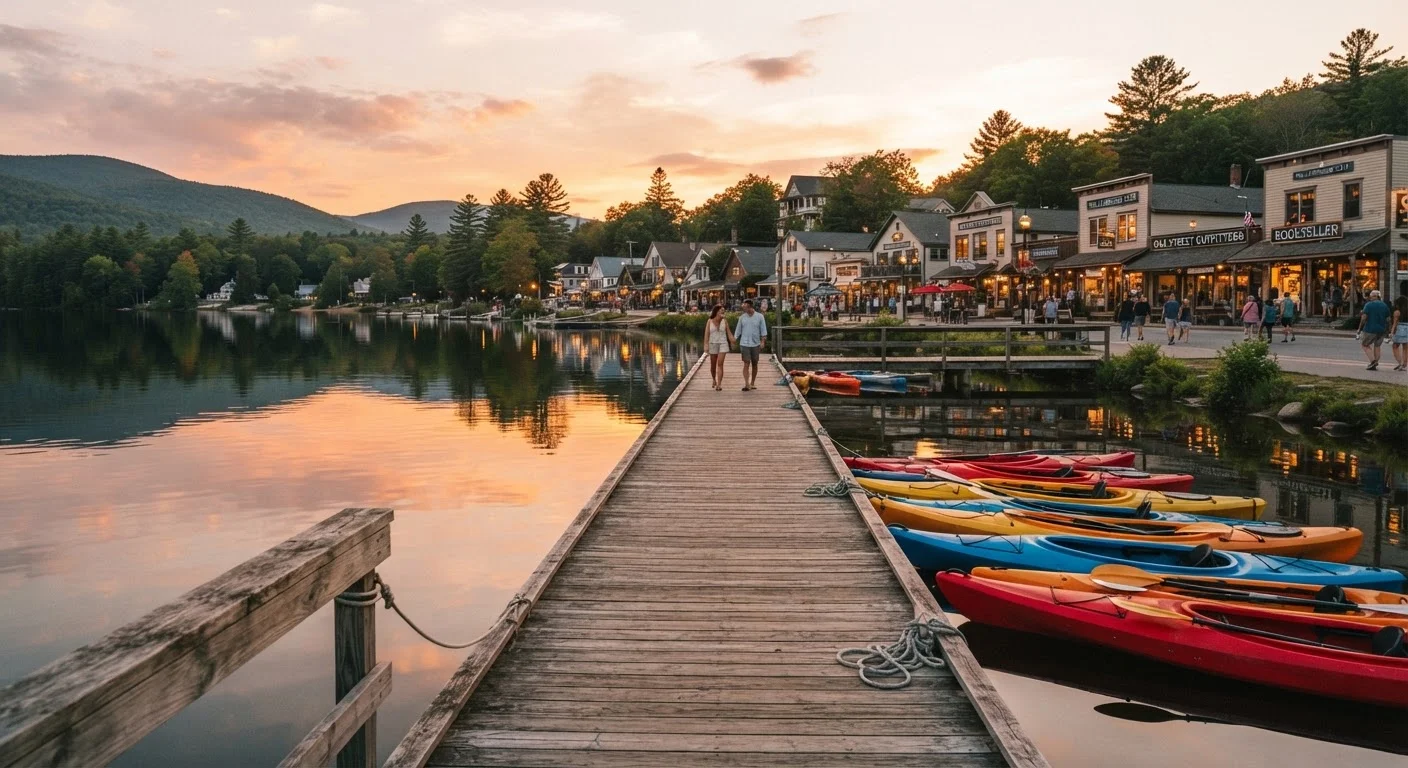
Inland lake towns - think the Ozarks in Missouri, the Finger Lakes in upstate New York, Lake Chelan in Washington, or small river communities along the Delaware or Wisconsin - often deliver a strikingly similar vacation template at meaningfully lower cost. Waterfront lodging, kayak rentals, restaurant patios overlooking the water, and summer festivals exist here in abundance. The difference is that the demand curve hasn't caught up yet.
Average vacation rental and hotel rates in many inland lake communities run noticeably lower than coastal equivalents, and dining tends to track accordingly. Travelers who feel overwhelmed by complex itineraries will also appreciate that many of these towns are compact and walkable - no rental car required once you arrive. For more on how lodging location shapes your overall spend, see this breakdown of location vs. price tradeoffs.
30-50%
Potential lodging savings at inland vs. coastal destinations
Travel industry analyses generally suggest inland lake and river towns can run significantly cheaper than comparable coastal destinations in peak summer, though figures vary widely by region and specific location.
~62%
US travelers who cite cost as a primary trip-planning concern
According to survey data from the US Travel Association, cost consistently ranks among the top factors shaping domestic travel decisions.
Recreation: Is the Ocean Actually Irreplaceable?
For many travelers, the honest answer is: sometimes, but not always. Saltwater surfing and snorkeling require the coast. Watching the sun drop into the Pacific is its own thing. But swimming, paddleboarding, fishing, hiking scenic shorelines, and sitting on a dock watching the water? Lakes and rivers handle all of that just fine - often with calmer conditions that make freshwater swimming more accessible for families and less experienced swimmers.
Inland destinations also tend to have less congestion around popular recreation spots. A lakeside hiking trail in the Blue Ridge foothills or along the shores of Lake Superior won't see the same summer crowds as the trail to a famous coastal overlook. If outdoor recreation is the core of your trip - not the specific saltwater element - inland alternatives frequently deliver more access for less friction. Weekend getaways to inland waterfront towns are increasingly well-documented precisely because more travelers are discovering this trade-off.
When Coastal Towns Still Win
Honest comparison demands acknowledging where the coast genuinely pulls ahead. Ocean beaches have an irreplaceable sensory quality - the tidal rhythm, the salt air, the biodiversity of coastal ecosystems. Coastal towns also tend to have more developed tourism infrastructure: reliable public transit in some cases, wider accommodation variety, and more established dining and arts scenes in larger destinations.
For travelers drawn to regional food culture rooted specifically in maritime tradition - New England clam chowder, Low Country boil, Pacific Northwest Dungeness crab - the coast is the source, not an imitation. And some coastal stretches, particularly those away from the most commercialized zones, represent genuinely good value. The Gulf Coast drive from Pensacola toward Corpus Christi is one example where scenic coastal travel doesn't have to mean breaking the bank. The Rust Belt renaissance also shows that the inland-vs-coast framing extends into urban travel, where former industrial cities often out-compete coastal metros on affordability without sacrificing cultural depth.
Travel costs and conditions vary widely by season, specific location, and individual circumstances. Prices referenced are general in nature and not guaranteed. Always verify current rates and local conditions before booking.