
The Real Cost Equation Behind Where You Stay
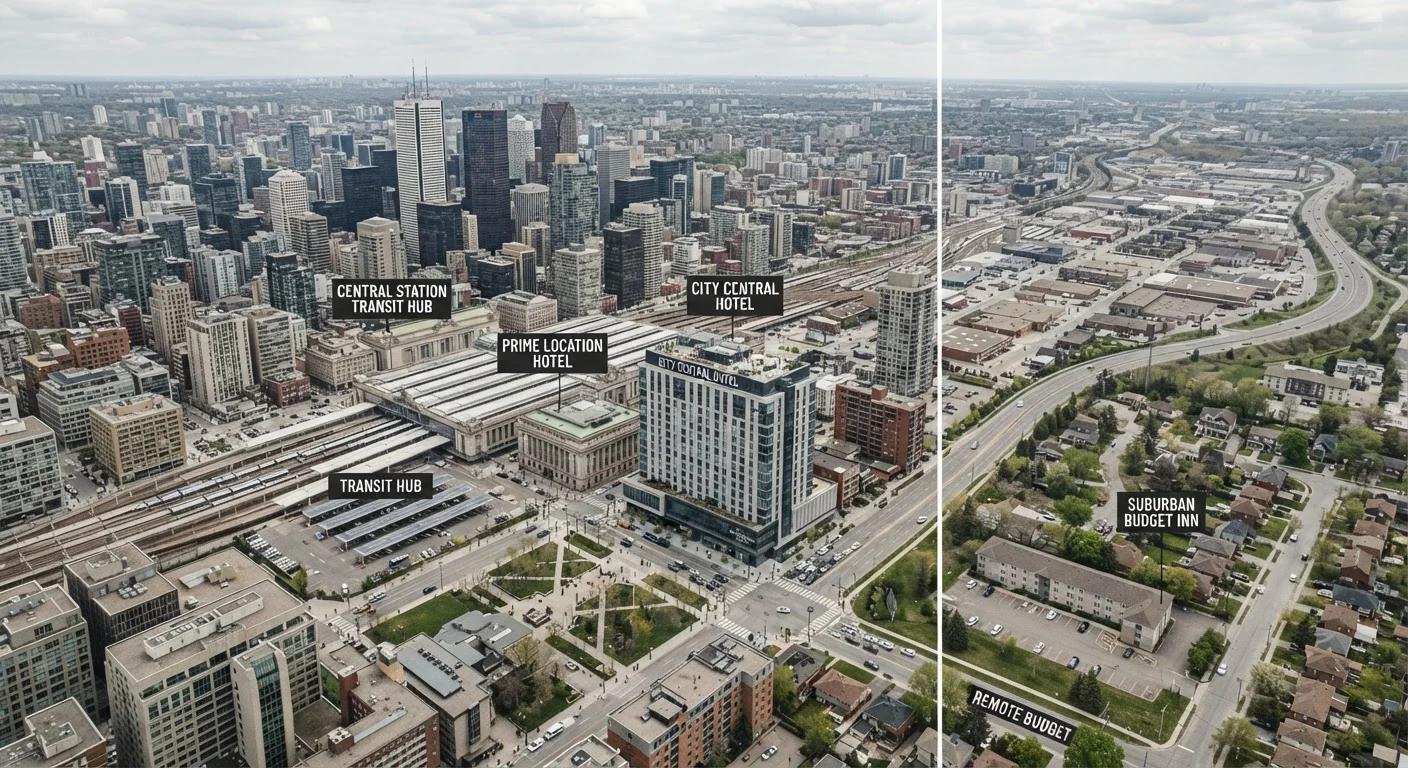
Accommodation price is only one line in your travel budget. Every night you sleep somewhere distant from your plans, you're spending money - and time - to close that gap. A room that costs $40 less per night but requires two taxi rides daily can easily cost $20 to $30 more in practice. Multiply that across a four-night stay and the "cheaper" option becomes the expensive one.
This isn't an argument against affordable lodging. It's an argument for calculating the full cost before committing. The variables that actually matter: how many days you're staying, how often you'll need to travel from your accommodation to your activities, what transit options exist, and whether those options are affordable and reliable.
For a deeper look at how nightly rates are structured and what signals indicate genuine value, see how accommodation pricing actually works.
| Central Location, Higher Rate | Outlying Area, Lower Rate | |
|---|---|---|
| Nightly accommodation cost | Higher | Lower |
| Daily transport spend | Low to none | Moderate to high |
| Best for trip length | Short stays (1-3 nights) | Longer stays (5+ nights) |
| Transit dependency risk | Low | High if transit is poor |
| Meal cost nearby | Often higher (tourist areas) | Often lower (local neighborhoods) |
| Flexibility for early/late plans | High | Reduced |
| Parking costs (drivers) | Often expensive | Often free or low cost |
When a Central Location Earns Its Premium
Short trips are where location pays off most clearly. If you have three nights in a city, staying near your primary attractions eliminates daily transit friction and cost. You walk more, pay less for transport, and often eat at places you'd stumble across rather than destination restaurants that require a ride.
Central locations also matter in cities where taxis or rideshares are the only realistic option - think destinations with limited metro coverage or unreliable bus networks. In those environments, a property closer to your agenda isn't a luxury; it's the budget-conscious choice.
Map Your Itinerary Before You Book
Before committing to any accommodation, list the three to five places you'll spend most of your time - museums, neighborhoods, day-trip departure points. Plot them on a map alongside any properties you're considering. If most of your plans cluster in one area and the cheap accommodation sits far outside it, calculate a realistic daily transport cost before deciding. That 15-minute exercise can reveal whether the savings are real or illusory.
This logic extends to safety and energy management. Arriving back to your accommodation late after a long day is far easier - and cheaper - if you're a 10-minute walk away rather than a 40-minute ride. That daily friction compounds across a trip.
When a Lower Rate Outside the Center Makes Sense
Longer stays change the math. If you're spending a week somewhere with an affordable metro, a reliable bus system, or a transit pass option, a lower-cost property in a residential neighborhood can deliver real savings without meaningful inconvenience.
The key conditions: transit must be frequent and affordable, your itinerary shouldn't require being in a specific area first thing each morning, and the neighborhood itself should offer everyday amenities - a grocery store, a coffee shop, basic safety. An outlying stay in a walkable local neighborhood is very different from a property that's technically outside the city and requires a taxi to reach anything.
Stretching a lodging budget across multiple cities often means leaning on this strategy - accepting more modest locations in exchange for meaningful per-night savings that compound across a longer journey.
~30%
Of trip budget spent on local transport
Urban transport costs - taxis, rideshares, and metro passes - commonly represent 20-30% of a traveler's daily spend in major cities, according to general travel budgeting guides.
2-4x
Taxi cost vs. metro for same route
In most major US and European cities, taxi or rideshare fares for a 5-mile urban journey can run two to four times the equivalent public transit fare.
Hidden Costs That Distort the Location vs. Price Comparison
Several costs routinely get missed when comparing accommodation options:
- Resort or destination fees: Common at US hotels, these can add $20-$50 per night to the nominal rate and aren't always displayed upfront.
- Parking: In-city hotels often charge $30-$60 per night for parking. If you're driving, an outlying property with free parking may cost less overall.
- Luggage storage: Checking out early but flying late? Central properties make it easier to spend that window productively without paying for a locker.
- Meal costs by neighborhood: Central tourist-adjacent restaurants typically charge more than local neighborhood spots. A well-located budget stay in a residential area can lower your food spend, not just your accommodation bill.
It's also worth thinking about what type of accommodation suits your itinerary. Hostels vs. budget hotels involve different location trade-offs - hostels tend to cluster in central areas, while budget hotels often sit at city edges near transport links.
All accommodation costs and fee structures mentioned are general examples for illustrative purposes. Verify current pricing directly with properties before booking, as rates and policies vary.