

How Criminals Actually Choose Targets
The mental model most travelers carry - that crime is random, or that certain destinations are simply "dangerous" - is both inaccurate and unhelpful. Research in environmental criminology consistently shows that opportunistic offenders make rapid assessments based on visible cues: who looks distracted, who's displaying value, who appears uncertain about where they're going.
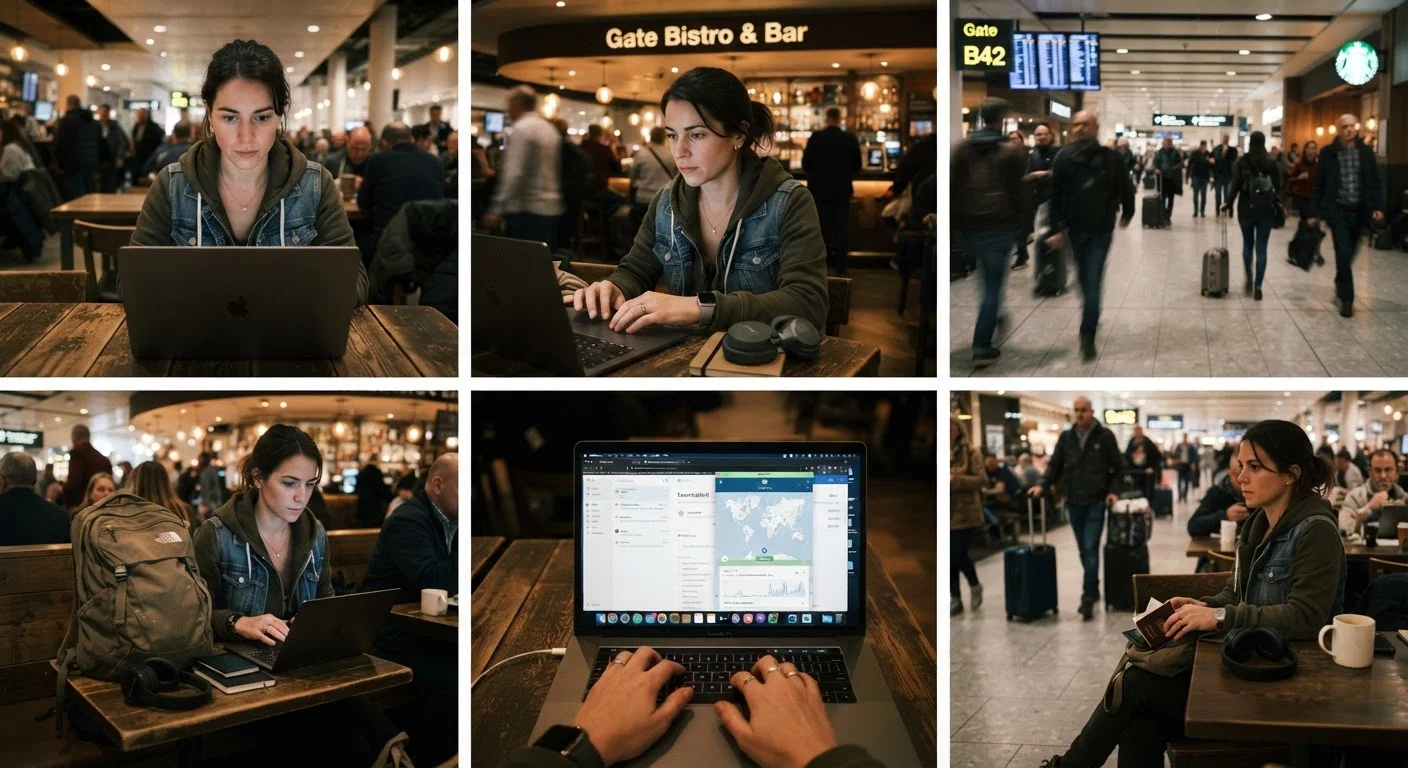
Solo travelers can inadvertently check several of those boxes at once. Arriving at an unfamiliar transit hub, phone out for navigation, bag on one shoulder, scanning for signage - that's a recognizable profile. A pair of travelers presenting the same scene is marginally less accessible because one person's attention is usually split differently.
The practical implication: changing what you signal changes your risk profile. This is within your control in ways that choosing a destination or time of year largely isn't.
“Offenders don't select victims at random. They look for opportunity - the unlocked door, the distracted pedestrian, the unattended bag. Remove the opportunity and you've addressed the risk more effectively than any alarm system.”
— Marcus Felson, Criminologist and co-developer of routine activity theory
The Three Exploitable Signals
Strip away the complexity and most travel-targeting comes down to three observable conditions:
- Distraction: Eyes on a screen, map, or menu in a high-traffic area. This is when bag-snatching and pickpocketing most commonly occur - your attention is elsewhere and you won't react in time.
- Disorientation: Visible confusion about location or direction. This is when approach-based scams are most likely - someone offering help who has an ulterior motive.
- Displayed value: Visible expensive camera equipment, jewelry, or a laptop bag that obviously contains a laptop. This signals both that you have something worth taking and, sometimes, that you're a tourist unfamiliar with local norms.
Addressing these three signals specifically - rather than trying to be generically "careful" - is what actually moves the needle. Situational awareness is the habit that cuts across all three.
Map It Before You Land
Before arriving at any new transit hub or neighborhood, spend two minutes on your route while you still have reliable connectivity. Know your exit, your direction, and your first landmark. Arriving with that already loaded means you can move with purpose instead of stopping to orient yourself in a crowd.
Practical Habits That Actually Reduce Risk
Security researchers and experienced solo travelers point to a consistent set of behaviors that reduce exposure without turning travel into an anxious exercise:
- Pre-navigate before arriving. Study a transit hub's layout, know which exit you need, and have your route mentally loaded before you land. The first ten minutes in a new place are when disorientation peaks.
- Distribute your valuables. Keep cards and cash in at least two separate locations on your body or in your bag. Losing one doesn't mean losing everything.
- Use deliberate body language. Walk with a clear sense of direction even when you're uncertain. Research on non-verbal cues suggests that posture and pace affect how often strangers initiate unsolicited contact.
- Secure your digital footprint. Phone theft is often about data access as much as hardware value. Enable screen lock, remote wipe, and be selective about what you access on public networks. Our guide to digital safety habits covers this in full.
- Control what you share. Your accommodation name, solo status, and onward route are details worth keeping close. Knowing what to share and with whom is a skill that compounds over time.
~80%
Of travel crime is opportunistic, not planned
Criminologists widely estimate that the large majority of tourist-targeted theft involves opportunistic rather than premeditated selection of victims.
3x
Higher pickpocket risk in crowded transit hubs
Transit environments - airports, train stations, busy markets - are consistently identified in travel crime research as the highest-risk settings for petty theft.
Top 3
Phone theft among most common solo travel incidents
Surveys of solo traveler incidents consistently rank smartphone theft among the most frequently reported crimes, often occurring during moments of distraction.
Calibrating Risk Without Catastrophizing
Solo travel carries genuine risk - that's worth stating plainly. But the overwhelming majority of solo travelers complete trips without incident, and the risks that do materialize are usually minor property crimes rather than serious harm. Treating every destination as equally risky, or becoming so vigilant that travel stops being enjoyable, is neither accurate nor useful.
The goal is calibrated awareness: understanding which environments and moments carry elevated risk (arrival, nighttime transit, crowded markets, unfamiliar neighborhoods after dark) and applying extra attention specifically there, rather than maintaining a constant state of alertness that erodes over time and becomes unsustainable.
For a fuller picture of what solo travel actually involves - including an honest assessment of where the risks are real and where they're overstated - see the real trade-offs of traveling solo. And if you're working with a tight budget, solo travel safety on a budget identifies which safety costs are genuinely non-negotiable and which aren't.
Risk management in travel is a skill, not a personality trait. It gets better with practice, and the fundamentals are learnable before you ever leave home.