

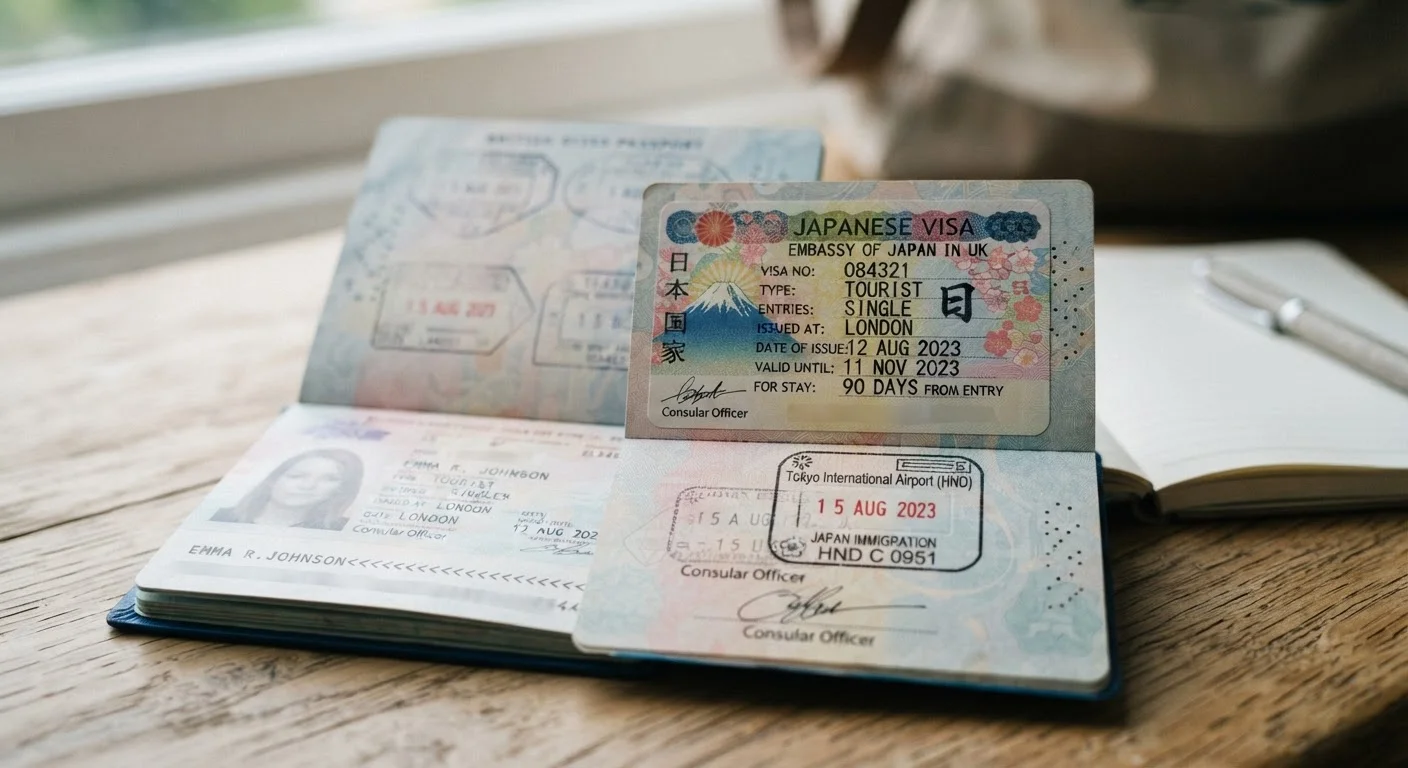
The Three Core Fields Every Visa Stamp Contains
Every visa stamp - regardless of country of issue - communicates three essential parameters: validity period, number of entries, and duration of stay. Understanding each field individually, and how they interact, is the foundation of competent international trip planning.
Validity period (often labeled "Valid From" and "Valid Until" or "Expiry Date") defines the window during which you are authorized to use the visa. If you arrive after the expiry date, the visa is void. Importantly, this window has nothing to do with how long you may stay once inside the country.
Number of entries tells you how many border crossings the visa permits. This field typically reads SINGLE, DOUBLE, or MULT (multiple). A single-entry visa is exhausted on first use; a double-entry allows two separate crossings; a multiple-entry visa permits unlimited crossings within the validity window, subject always to the per-visit duration cap.
Duration of stay - sometimes labeled "Duration of Each Stay," "Days Authorized," or a number followed by "D" - is the maximum number of days you may remain in the country per visit. This clock typically starts on your entry date, not the visa issue date. See our guide to long-stay vs. tourist visas if your plans extend beyond a standard tourist window.
90 days
Maximum Schengen Area stay per 180-day period
The 90/180-day rule applies to most non-EU passport holders across all 27 Schengen member states combined, not per country.
~200+
Countries with distinct visa issuance systems
The IATA Travel Centre documents over 200 national entry requirement frameworks, each with its own stamp format and field conventions.
Common Codes and Abbreviations Decoded
Beyond the three primary fields, visa stamps carry additional codes that affect how you should plan your trip. Here is what the most frequently encountered abbreviations mean:
- SINGLE / S / 01: One permitted entry. Exit the country and the visa is spent.
- DOUBLE / D / 02: Two permitted entries. Useful for side trips if you know you will re-enter the issuing country once.
- MULT / M / Multiple: Unlimited entries within the validity window, each capped by the per-visit duration limit.
- B1, B2, B1/B2: U.S. visa category codes. B1 covers business visits; B2 covers tourism and medical treatment. Most international leisure travelers see B2 or B1/B2 combined.
- Type / Class / Category field: Indicates the visa classification - tourist, student, work, transit, etc. Engaging in activities outside your visa class (e.g., working on a tourist visa) is a violation regardless of whether your stamp is otherwise valid.
- Number of entries remaining (handwritten or stamped at border): Each time you enter on a double-entry visa, a border officer may cancel one entry. Check this field after every crossing if you hold a double-entry.
For travelers unsure which visa type they hold, our explainer on visa on arrival, e-Visas, and embassy appointments covers how different issuance methods affect what appears in your passport.
Electronic Authorizations Are Not Visa Stamps
Electronic Travel Authorizations (ETAs, ESTAs, eTAs) are linked digitally to your passport and produce no physical stamp. If you hold one of these rather than a traditional visa, the rules around entries and duration still apply - they are simply stored in a database rather than printed in your passport. Our explainer on electronic travel authorizations covers the major schemes and their specific rules.
The Overstay Risk: Calculating Your Permitted Days Correctly
The single most consequential misreading travelers make is treating their visa's expiry date as their checkout deadline. It is not. Your permitted stay ends when your allotted days run out - even if the visa's validity window has not yet closed.
Example: A visa valid from January 1 through December 31 with a 30-day duration of stay does not mean you may stay from January 1 to December 31. It means you may enter any time in that calendar year and stay a maximum of 30 consecutive days per entry (or per visit, on a multiple-entry visa).
On arrival, the border officer stamps your passport with an entry date and often writes or stamps an "Admitted Until" or "Leave By" date. This stamped date - not the visa expiry - is your hard departure deadline. Count it carefully, noting whether the entry day counts as Day 1 (it does in most Schengen-area countries, for instance).
Overstaying has cascading consequences. Beyond immediate fines, many countries share overstay data internationally, which can affect future visa applications elsewhere. Our related article on why visas get rejected explains how prior overstays surface in refusal decisions.
Track Your Days With a Simple Calendar Tool
Mark your entry date and count forward the number of permitted days, then mark your mandatory departure date prominently. For multiple-entry visas with cumulative day caps - such as Schengen - use a dedicated day-counter tool available through many national immigration websites. Do not rely on memory alone; even one day over the limit can have lasting consequences for future travel.
What to Check When You Receive Your Visa - and Again at the Border
Before you travel, review your visa stamp against your itinerary using this sequence:
- Confirm the validity start date is on or before your planned arrival date.
- Confirm the validity end date is on or after your planned arrival date - not just your departure date.
- Check the entry type against your itinerary. If you plan a side trip to a neighboring country and return, you need at least double or multiple entry.
- Calculate your permitted stay from your planned entry date and ensure your intended departure falls within the allowed days.
- Verify the visa category matches your purpose of travel.
At the border, check that the officer's entry stamp reflects the correct date and that any "Admitted Until" annotation aligns with your calculation. Errors do occur, and it is far easier to have them corrected at the port of entry than to explain a discrepancy later.
A valid visa also does not guarantee admission - border officers may request proof of accommodation, onward travel, and financial means. See our guide on documentation beyond the visa to prepare for those checks. Also ensure your passport itself meets the destination's validity requirements - passport validity rules catch many travelers off guard.
Visa rules and entry requirements change. Always verify current requirements with the destination country's official immigration authority and the relevant embassy or consulate before traveling. This article provides general educational information and is not a substitute for official government guidance.