
What You Need to Know Before Your First Withdrawal
Using an ATM abroad seems straightforward until fees start stacking up and your account flags the transaction as fraud. Understanding how the cost layers work - and where risks concentrate - lets you sidestep both problems before they start.
Every international ATM withdrawal typically involves two distinct charges: a fee from your home bank for using an out-of-network or foreign ATM, and a surcharge from the local ATM operator. On top of that, your bank applies a foreign transaction fee (usually 1-3%) to the converted amount. These are separate line items, and they compound. See our traveler's glossary of fees for plain-language definitions of each charge and how it's calculated.
Security risk is the other dimension. Skimming devices - hardware criminals attach to card readers to clone your card data - are found at ATMs worldwide but are most common on standalone, unbranded machines in high-tourist areas. Bank-branch ATMs monitored by staff and security cameras carry meaningfully lower risk.
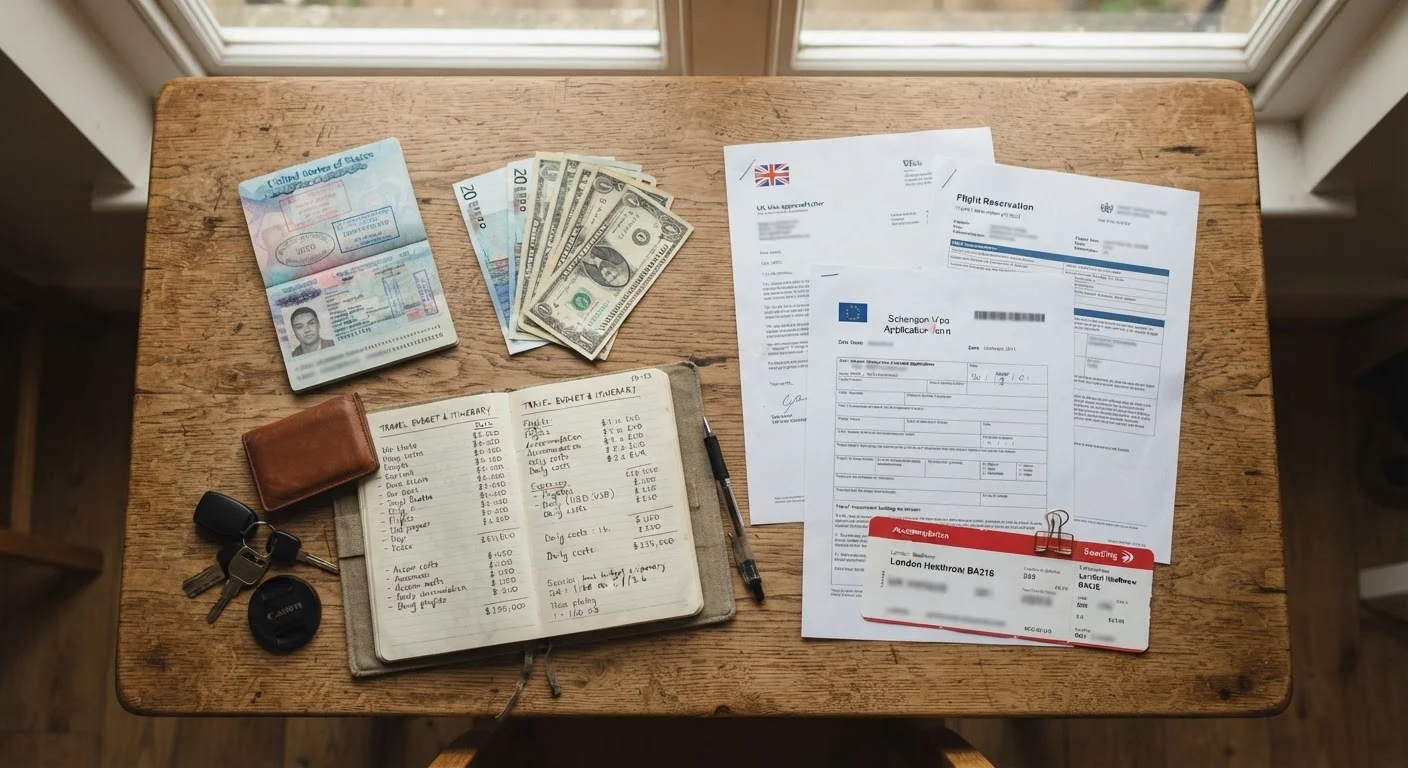
What you will need
For a broader view of when cash beats cards and vice versa, see our guide on cash vs. card abroad.
Step-by-Step: How to Withdraw Cash Safely and Cheaply
Notify your bank before you depart
Contact your bank or credit union at least 48 hours before travel to inform them of your destination countries and travel dates. Most banks allow you to set a travel notice through their mobile app. Without this, your first ATM withdrawal abroad may trigger an automatic fraud block, leaving you without access to funds.
Choose the right ATM location
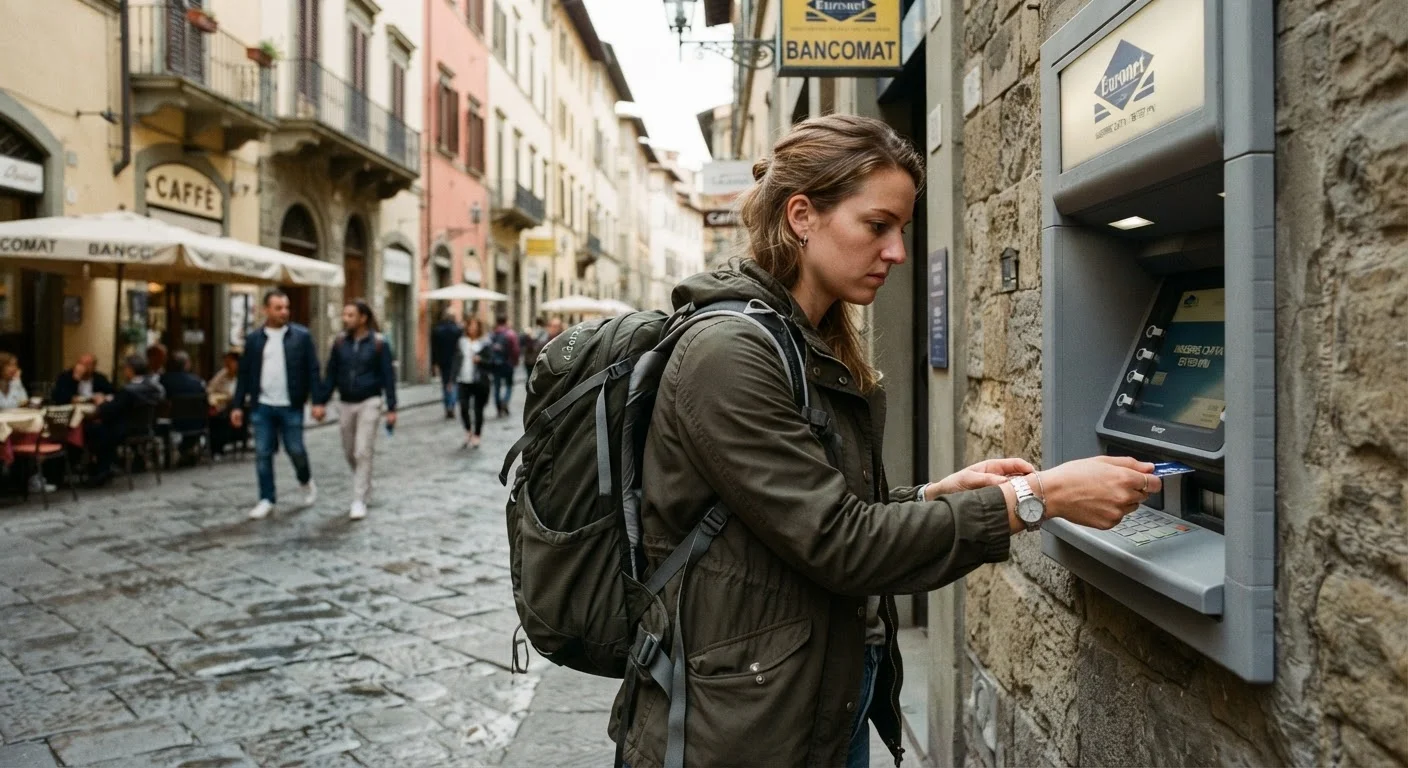
Use ATMs attached to established bank branches rather than standalone kiosks in airports, tourist markets, or convenience stores. Bank-branch machines are regularly inspected, covered by security cameras, and far less likely to carry skimming devices. During banking hours, use indoor lobby ATMs over exterior machines when available.
Always choose to be charged in local currency
When an ATM asks whether you want to be charged in your home currency or the local currency, always select local currency. The alternative - called Dynamic Currency Conversion (DCC) - lets the ATM operator apply their own exchange rate, which is typically 3-8% worse than your bank's rate. This single choice is one of the most impactful cost decisions you'll make at any foreign ATM.
Withdraw larger amounts less frequently
Because ATM fees are largely fixed per transaction, withdrawing a larger sum at once costs you less per dollar than making multiple small withdrawals. Estimate your cash needs for three to five days and withdraw accordingly, rather than returning to the ATM every day. Balance this against the risk of carrying large amounts of cash - use a money belt or hotel safe for storage.
Shield your PIN and secure your card
Cover the keypad with your free hand every time you enter your PIN, even when no one appears to be watching. Hidden cameras positioned above or beside the keypad are a common companion to card skimmers. After completing the transaction, immediately pocket your card and cash before stepping away from the machine.
Verify the posted transaction in your bank account
Within 24-48 hours of each withdrawal, confirm that the amount posted to your account matches what the ATM receipt shows. Report any unauthorized charges to your bank immediately. Under U.S. federal law (the Electronic Fund Transfer Act), your liability for unauthorized debit card transactions is limited if you report them promptly - but delayed reporting increases your potential exposure.
Dynamic Currency Conversion Costs Real Money
Dynamic Currency Conversion (DCC) is an opt-in service that lets a foreign ATM or merchant convert your transaction into U.S. dollars at their own exchange rate. The rate is almost always significantly worse than what your bank would apply. Saying yes to DCC can cost you an additional 3-8% on every transaction. Always decline and choose local currency instead.
Staying Protected After the Withdrawal
Once you have cash in hand, the work isn't over. Monitor your bank account every day or two through your bank's mobile app - most fraudulent charges appear within 48 hours of a compromised transaction. Enable push notifications for every transaction if your bank offers them.
Keep your ATM receipt until you've confirmed the transaction posts correctly. Discrepancies between the receipt amount and the posted charge occasionally occur and are easier to dispute with documentation in hand.
Consider a Fee-Reimbursing Bank Account for Travel
Some checking accounts are structured to reimburse foreign ATM fees, either entirely or up to a monthly cap. If you travel internationally more than once a year, researching whether your current account offers this - or whether switching makes sense for your situation - is worth the time. Consult your bank or a qualified financial adviser before changing accounts based on fee structures alone.
If your card is swallowed by a machine or stops working, contact your bank immediately using the number on the back of the card. Travel with a backup card on a different network (e.g., one Visa and one Mastercard) so a single point of failure doesn't strand you. First-time international travelers can find a fuller treatment of these contingencies in our travel money beginner's guide.
Finally, understand that cash needs vary by destination. Some countries are nearly cashless; others function almost entirely on physical currency. Check our guide to low-cash and cashless countries before assuming an ATM withdrawal is even necessary at your destination.