

How Airfare Pricing Actually Works
Airlines don't publish a single fixed price for a seat. They manage inventory across multiple fare classes - lettered buckets (like Y, B, M, or Q) each priced differently and released in limited quantities. As lower buckets sell out, the next tier activates at a higher price. This is why a flight can show $189 one morning and $340 by afternoon.
Algorithms also account for route competition, load factors, historical demand on that date, and how far out the search is happening. Understanding this removes the idea that there's a single magic moment to book - instead, there's a range of conditions that tend to produce lower fares more reliably.
“Airfare pricing is not a mystery - it's a system. Once travelers understand that seats are sold in inventory buckets that deplete over time, the logic behind price changes becomes much clearer and easier to act on.”
— Travel Industry Analyst, Researcher specializing in airline revenue management and consumer pricing patterns
For a solid foundation on what to expect before you ever run your first search, see what first-time flight hunters need to know.
Timing Your Search and Booking Window
Research from multiple fare-tracking services consistently points to a broad booking window that tends to yield lower prices: roughly 3-8 weeks before departure for domestic flights and 2-6 months for international routes. These aren't guarantees - they're probability ranges based on observed pricing patterns.
3-8 weeks
Domestic booking sweet spot before departure
Fare-tracking analysis consistently identifies this window as yielding below-average prices on U.S. domestic routes.
20-40%
Typical fare reduction from date flexibility
Shifting travel dates by one to two days around peak periods can produce this range of savings on competitive routes.
2-6 months
International booking lead time for lower fares
Long-haul and international routes tend to reward earlier searches compared with short-haul domestic travel.
Day of week matters less for booking than popular advice suggests, but it matters more for flying: Tuesday and Wednesday departures are generally less in demand than Friday or Sunday, and that lower demand often, though not always, translates into lower fares.
Run your initial search in a private or incognito browser window. Some search tools track repeated searches and may adjust displayed prices based on your browsing history.
While airlines deny dynamic pricing by individual user, browser cookies can influence what cached fare data gets surfaced - incognito ensures a clean data pull.
Set fare alerts for your top two or three target dates and check them weekly rather than daily. Daily checking rarely catches a fare drop before an alert would, and it creates decision fatigue.
Fare movements significant enough to act on typically persist for at least several hours; alerts give you the same information without the noise of constant manual checking.
For a complete decision-making framework that goes deeper on timing signals, see mastering flight booking strategy.
Flexible Dates and Route Strategies
Date flexibility is one of the highest-leverage tools available to budget travelers. Shifting a departure by 24-48 hours can produce fare differences of 20-40% on competitive routes, simply because demand peaks around weekends and holidays.
Route flexibility compounds the effect. Consider:
- Nearby airports: Flying into or out of a secondary airport in your metro area often produces lower fares, though always factor in ground transport cost to make a true comparison.
- Connecting vs. nonstop: A one-stop itinerary is typically cheaper. The tradeoff is time and missed-connection risk - weigh it against your schedule tolerance.
- Open-jaw routing: Flying into one city and out of another can unlock lower fares if your trip allows it, particularly for regional exploration.
Use the Price Calendar First
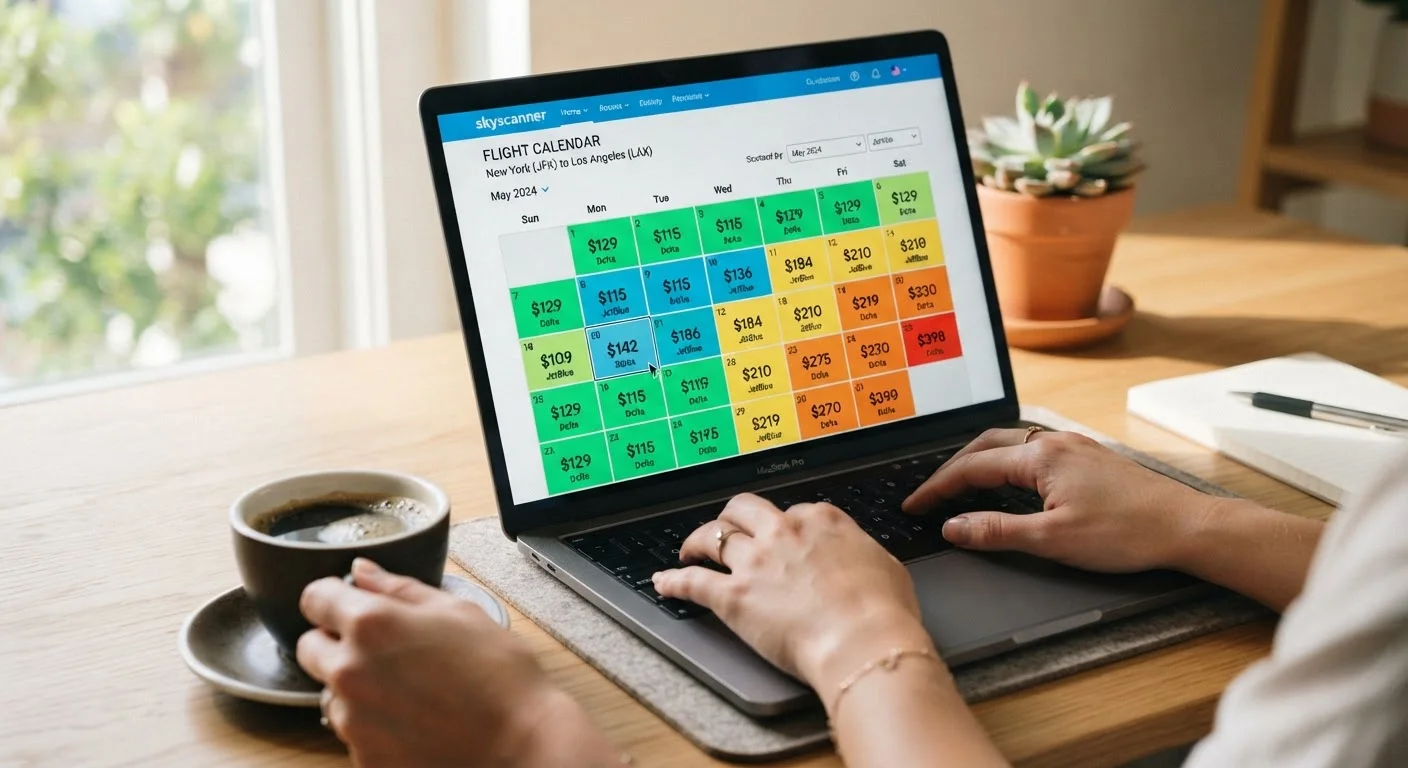
Before locking in specific travel dates, open the flexible or calendar view on any major flight search tool. This immediately shows which days in your target window are priced lowest - often revealing that shifting by even one day saves a meaningful amount. Only then should you commit to specific dates for a detailed search.
See the complete beginner's walkthrough for a step-by-step breakdown of how to apply flexible date searches in practice.
Using Search Tools Effectively
No single flight search engine surfaces every available fare. Metasearch tools aggregate from multiple sources but not all carriers list with every aggregator - some budget airlines sell only through their own sites. A reliable workflow combines at least two approaches:
- Run a flexible-date search on a major aggregator to see the price calendar and identify cheaper travel days.
- Check the airline's own site directly for the specific dates identified - carriers sometimes offer lower fares direct to avoid aggregator fees.
- Set a fare alert for your target route if you're not ready to book. Most tools will notify you when the price drops below a threshold you set.
Aggregators Don't Cover Every Carrier
Several low-cost carriers - particularly smaller regional and ultra-low-cost airlines - do not distribute their inventory through third-party aggregators. If your route has carriers in this category, check their websites directly in addition to your aggregator search. Missing these options can mean overlooking the lowest available fare on that route.
The full step-by-step process for moving from search to confirmed booking is covered in booking a cheap flight: a practical walkthrough.
Fee Traps and Hidden Costs to Watch
A fare that looks competitive in search results can look very different at checkout. Common additions that inflate the real cost include:
- Checked and carry-on baggage fees: Some carriers charge for overhead bin access on basic economy fares. Know the policy before you select.
- Seat selection fees: Declining seat selection saves money upfront but means you may be assigned a middle seat in the back.
- Payment method surcharges: Some carriers add fees for credit card payments. A debit card or specific card type may avoid the surcharge.
- Change and cancellation fees: Basic economy fares on many carriers are non-refundable and non-changeable. Weigh that risk against the savings.
Always Compare Total Cost, Not Base Fare
The fare shown in search results is almost never the final price you pay. Baggage fees, seat selection charges, and payment surcharges are added at checkout and vary significantly by carrier and fare class. Build these into your comparison before concluding that one fare is actually cheaper than another. A $30 difference in base fare can easily reverse when fees are accounted for.
When comparing fares, always calculate the total trip cost including all fees before assuming one option is genuinely cheaper.
Putting It All Together
Finding a low fare reliably isn't about luck - it's about applying a consistent process. Start with understanding the route's demand patterns, identify a booking window that fits the destination type, use date and airport flexibility to expand your options, cross-check prices across search tools, and read fee structures before confirming.
Budget travel also doesn't stop at the flight. Once you've locked in airfare, finding affordable accommodation is the next biggest variable in your total trip cost. Applying similar systematic thinking there can extend your savings significantly.
Google Flights Price Calendar
A free flexible-date search tool that displays a full monthly fare calendar for any route, making it easy to spot cheaper travel days at a glance.
Booking & Timing Tips Hub
A curated collection of articles on when and how to book flights for maximum savings, covering everything from booking windows to route strategy.
Fare Alert Setup Guide
Step-by-step instructions for setting up automated price alerts so you're notified when fares drop on your target routes without manual checking.
Airfare prices, availability, and airline policies change frequently. Verify all fares, fees, and booking conditions directly with the airline or booking platform before purchasing. This article provides general travel information and is not a guarantee of any specific price or availability.