
What Is a Positioning Flight?
A positioning flight is a short or medium-haul flight you take solely to reach a different departure airport - one that offers meaningfully cheaper fares to your final destination than the airport closest to your home. You are, in effect, repositioning yourself within the flight network to unlock better pricing.
For example, a traveler based in a mid-sized Midwest city might find that flying into a major international hub - then catching a transatlantic fare that departs from that hub - saves several hundred dollars compared to departing from their local airport on the same day. The positioning leg is the short domestic hop that makes the cheaper international fare accessible.
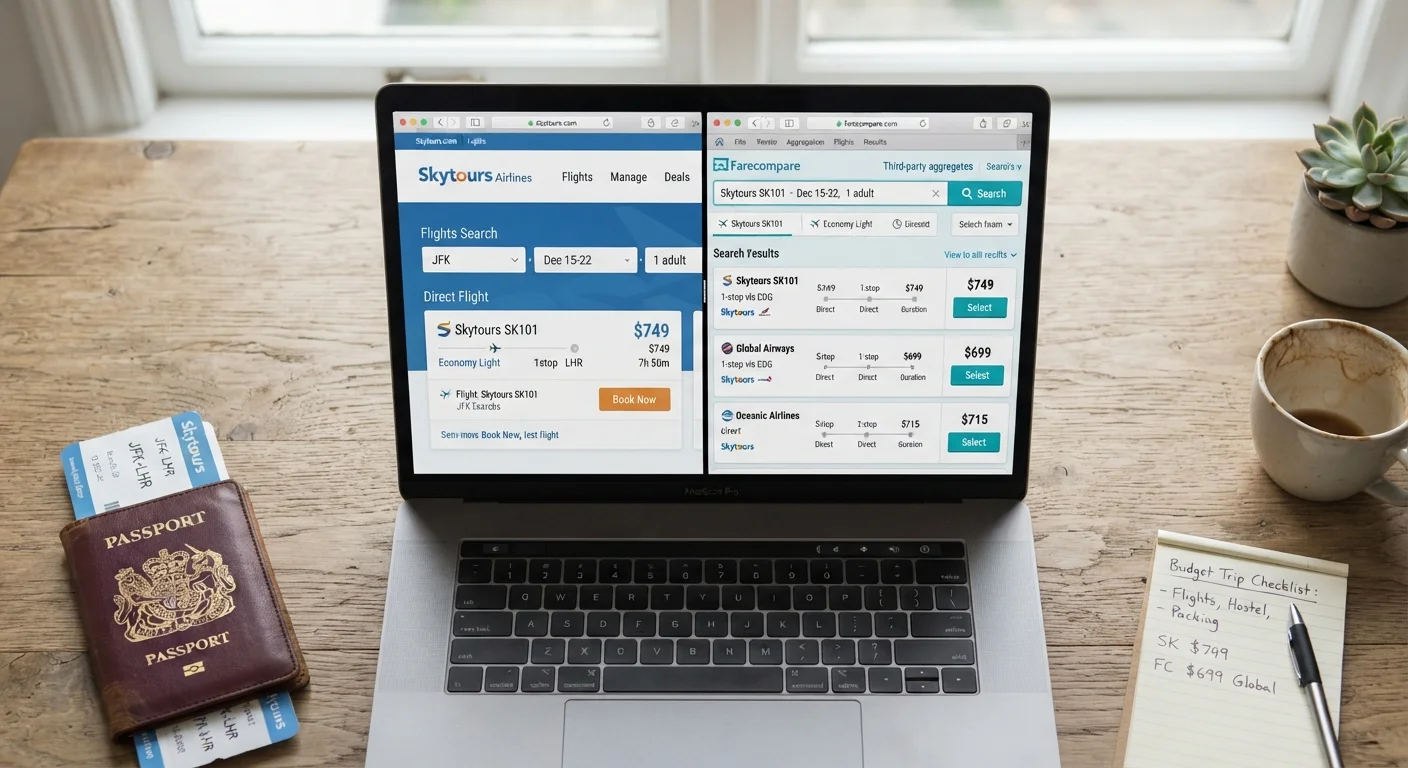
This tactic is distinct from a standard connecting itinerary. With a connection, one airline handles your entire journey and assumes responsibility for all segments. With a positioning flight, you typically book two completely separate tickets: one for the repositioning leg and one for the main journey. That separation is what creates both the savings opportunity and the risk. For a broader view of how flight search strategy fits into this, see the complete guide to finding cheap flights.
When the Math Actually Works in Your Favor
Positioning flights are a numbers exercise before anything else. The core question is simple: does the total cost of the repositioning leg - ticket, ground transport, potential overnight accommodation - subtract enough from the main fare to leave you ahead?
$150-$400
Typical fare gap between hub and regional airports
Industry fare comparisons consistently show large coastal hub airports offering lower long-haul fares than smaller regional departure points on equivalent routes.
2-4 hrs
Added total travel time on average positioning itinerary
When a buffer overnight is not required, a same-region positioning leg typically adds two to four hours of total door-to-gate travel time.
$60-$120
Median one-way budget carrier positioning ticket cost
Budget carrier domestic fares on popular hub routes frequently fall in this range when booked several weeks ahead without peak-season surcharges.
The tactic tends to pencil out under these conditions:
- Large fare gaps between airports: Major international hubs (think large coastal gateway cities) frequently offer fares to Europe, Asia, or Latin America that are $150-$400 lower than identical routes departing from smaller regional airports. When the gap is that wide, a budget repositioning ticket and a cheap transit option can still leave clear savings.
- Inexpensive budget carrier on the positioning leg: If a low-cost carrier serves your home city and the target hub, the repositioning ticket may cost very little - sometimes under $60 one-way. See how budget airline fare structures work to compare honestly against full-service options.
- Open-jaw itineraries: If you're returning to a different city than you departed from, the positioning leg can often serve double duty - getting you to the departure hub on the way out, while you simply fly home from your destination directly. No return positioning needed.
Search fares from at least three major hub airports before concluding your home city is the cheapest option. Gateway airports with heavy international competition often undercut smaller-market fares by a meaningful margin.
Airline pricing is driven heavily by route competition. Hubs served by multiple international carriers tend to see fare suppression that regional airports simply don't benefit from.
When pricing the positioning leg on a budget carrier, always add your expected bag fees and seat selection costs before comparing - the base fare alone is almost never the true cost.
Budget carriers routinely charge $35-$70 per bag each way, which can eliminate a significant portion of the savings the positioning tactic was designed to capture.
When Positioning Flights Are Not Worth the Effort
The math breaks down in several common scenarios that travelers frequently underestimate.
Never Rely on a Same-Day Separate-Ticket Connection
Booking your positioning leg and your international flight as separate tickets on the same day is a high-risk move. If the first flight is delayed, no airline is obligated to rebook you on the second. Build at minimum one overnight buffer between separately ticketed flights to protect your trip.
The fare gap is too narrow. If the difference between your local airport and the hub is $80, and the positioning ticket costs $65 plus a $30 transit ride, you've saved roughly nothing - and added hours to your trip. A threshold of at least $150 in net savings after all repositioning costs is a reasonable minimum bar to justify the complexity.
You need a same-day connection. Booking separate tickets and relying on a tight same-day connection is the highest-risk version of this strategy. Airlines have no obligation to rebook you on your separately ticketed international flight if your domestic positioning leg is delayed. Budget at minimum one full night at the hub city between the two tickets.
Your home airport has its own low-fare options. Check whether budget carriers already serve your home airport on the relevant route before assuming you need to reposition. Many smaller US cities now have expanded low-cost carrier service. The airport and flight hacks hub covers strategies for maximizing options from any departure point.
How to Build a Positioning Flight Into a Complex Itinerary
Positioning flights integrate most cleanly into multi-city or open-jaw itineraries, where the additional routing doesn't feel like a detour - it becomes part of the trip's logical structure.
A practical approach:
- Search your main destination's international fares from several hub airports, not just your own. Note the cheapest originating city.
- Price the repositioning leg to that hub independently, including all fees (baggage, seat selection) on budget carriers.
- Add any ground transport and, if needed, one night of accommodation at the hub.
- Compare the total against flying direct from your home airport. Only proceed if the net savings justify the added complexity and travel time.
- If you plan multiple destinations, see how to structure multi-destination trips to control airfare - open-jaw and hub-routing strategies overlap closely with positioning logic.
Understanding why certain routes and regions offer cheaper access in the first place also helps you identify the best hub airports to target. The economics behind airfare price gaps between regions explains the demand and competition factors driving those differences.
Use the Hub Night Strategically
If your routing requires an overnight at the hub city, book accommodation near the airport - not the city center - to minimize transfer time. Many hub-adjacent hotels offer free airport shuttles, which eliminates one ground transport cost and reduces the total expense of the buffer night.
Risk Factors to Plan Around
Positioning flights introduce operational risk that standard itineraries don't carry. Being clear-eyed about these before booking is essential.
Separate Tickets Mean Separate Risk
Unlike a standard connecting itinerary, positioning flights booked on separate tickets carry no interline protection. A delay or cancellation on your repositioning leg will not trigger automatic rebooking on your international flight. Before using this strategy, verify whether your travel insurance covers missed connections arising from separately booked tickets - many standard policies do not.
Separate ticket liability: When your two tickets are not linked, any disruption on the first leg is entirely your problem. The international carrier won't rebook you for free, and travel insurance terms vary widely on missed connections caused by separate-ticket delays. Read your policy carefully before relying on it.
Baggage logistics: You'll need to collect and recheck your luggage at the hub airport between the two separate tickets. Factor in time for this when choosing how long a layover to build in. A rushed baggage reclaim and recheck is a common source of stress and missed flights on this type of itinerary.
Overnight costs at the hub: If you build in a buffer night - which is the prudent approach - factor accommodation into your cost comparison honestly. A $120 hub hotel night is real money. However, if you treat that night as an opportunity to explore the hub city briefly, the psychological calculus shifts. The principle of weighing total location cost versus nightly rate, discussed in the context of lodging in location vs. price in accommodation decisions, applies equally here.
This article provides general travel planning information only and does not constitute financial or travel insurance advice. Verify all fares, fees, airline policies, and entry requirements with official sources before booking.