
Why Airport Food Costs So Much
Airport concessions operate under a cost structure unlike almost any other retail environment. Vendors pay premium rents to airport authorities, absorb the logistics of operating in a secure facility, and face limited competition once you're past security. Those costs flow directly to your meal ticket. A sandwich that costs $6 at a nearby deli can easily run $14 inside a terminal - not because the ingredients are better, but because the captive-audience economics allow it.
Understanding this dynamic is the first step. The second is recognizing that you have more options than the gate-area grab-and-go. For a broader look at how airports structure costs, see what airport fees actually pay for.
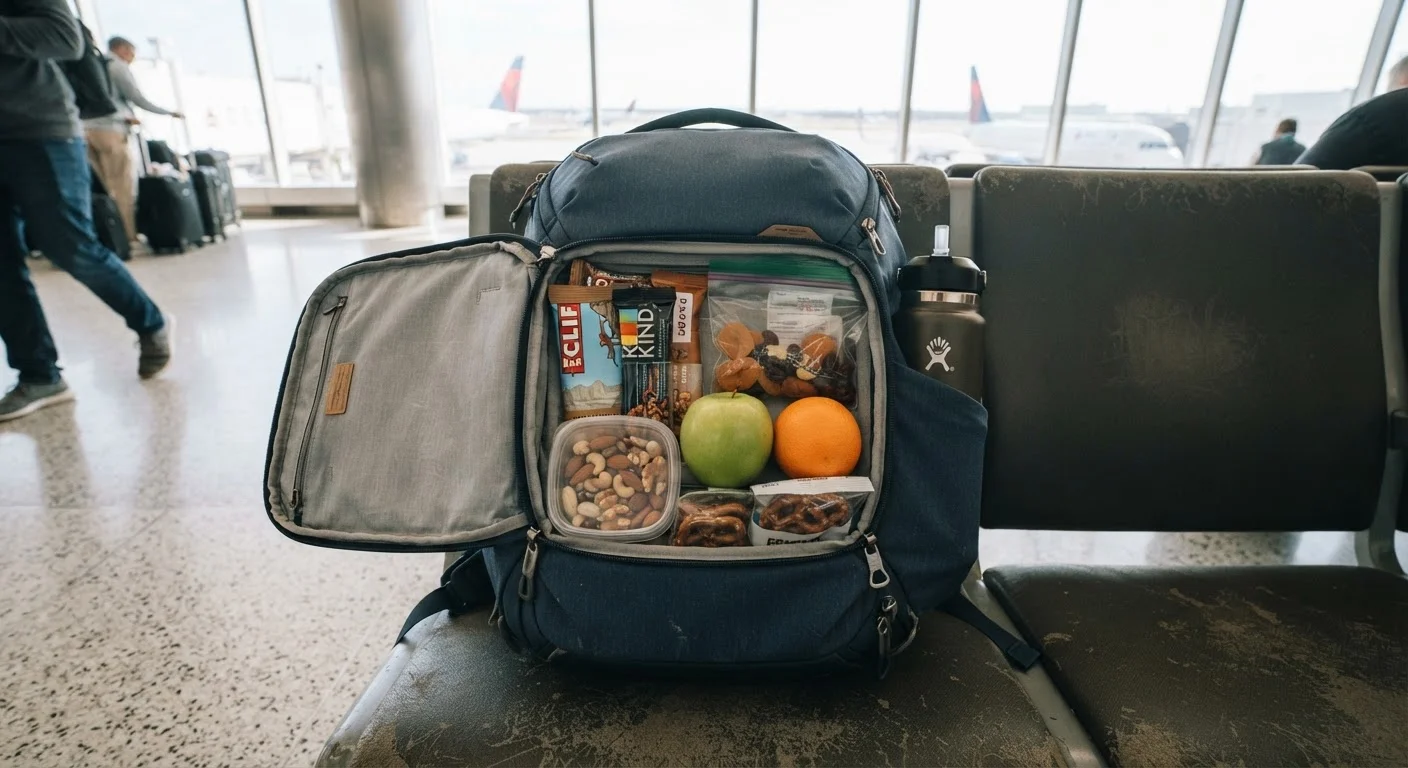
Pack a full meal or substantial snacks before leaving for the airport
Food prepared at home costs a fraction of terminal equivalents. Even a modest packed lunch displaces the most expensive meal you'd otherwise buy post-security. This is the highest-leverage single action available to any budget traveler.
Bring an empty reusable water bottle and fill it post-security
Hydration is a recurring cost on travel days. Bottled water at terminals is among the most reliably marked-up items, and the alternative - a refill station - is free. Most major U.S. airports have installed bottle-filling stations in recent years.
Shop at a grocery store or eat a full meal near the airport before arriving
Pre-security options - both inside and outside the terminal - operate under normal retail economics. Eating before you reach the checkpoint removes the need to buy anything post-security at all.
Target lower-traffic terminal zones when buying food post-security
Vendor pricing and competition vary within a single terminal. End-of-concourse vendors with less foot traffic occasionally price more competitively, and sit-down options in quieter zones can offer better value per dollar than grab-and-go spots near busy gates.
Check whether your airport enforces a street-price parity policy
Some major U.S. airports require concession vendors to price food and beverages at or near their off-airport, street-level rates. Where this policy applies, chain locations inside security should not carry a significant markup over their standard menu prices.
What You Can (and Can't) Bring Through Security
TSA rules on food are more permissive than many travelers realize. Solid foods - sandwiches, fruit, vegetables, nuts, crackers, granola bars, hard-boiled eggs - can go through the checkpoint without issue. The liquids rule (3.4 oz / 100ml limit per container) applies to food items with a gel, paste, or liquid consistency: yogurt, peanut butter, hummus, and similar spreads are restricted to travel-size quantities or should go in checked luggage. When in doubt, pack solid food and leave the spreadable items at home.
One item travelers frequently overlook: an empty reusable water bottle. Fill it at a post-security water station - available at most major U.S. airports - and you eliminate the $4-$6 bottled water purchase entirely.
TSA Solid Food Rule: The Quick Reference
Solid foods (sandwiches, whole fruit, nuts, crackers, hard-boiled eggs) can be packed in any quantity in carry-on bags. Foods with a spreadable, gel, or liquid consistency - yogurt, hummus, peanut butter, jam - fall under the liquids rule and must be in containers of 3.4 oz (100ml) or less. When you're uncertain about an item, check the TSA website or pack it in checked luggage to avoid checkpoint delays.
Practical Strategies That Actually Work
The practices below are ordered by how much control you can exercise before your travel day, which is generally where the biggest savings live. Travelers with connecting flights or long layovers will benefit most from combining several of these approaches. For families managing multiple people's meals, the same principles apply at scale - see how experienced family travelers control food costs for adjusted strategies.
Finding Lower-Cost Food Inside the Terminal
If you do need to buy food post-security, zone matters. High-traffic gate areas near major hubs command the highest prices. Walk further from the main concourse cluster - lower-traffic gates and end-of-terminal sections often have smaller vendors with modestly better pricing. Some airports also maintain a price-parity policy requiring vendors to charge the same as their street locations; check whether your departure airport has one. If it does, a chain location inside security should cost the same as outside.
Airport lounges are another underutilized option. Many offer day passes, and if a lounge includes a buffet-style food spread, the math can work in your favor on a long layover. Access options beyond premium credit cards are more varied than most travelers expect.
~30%
Typical airport food price premium over street prices
Industry analyses of airport concession pricing have consistently found average markups of 25-40% above comparable off-airport locations, driven by high rents and limited competition.
$15-$25
Average per-person spend on airport food per trip
Traveler spending surveys suggest most U.S. flyers spend between $15 and $25 on food and beverages per airport visit when they don't plan ahead.
One more underused move: eat before you reach the terminal. Restaurants and grocery stores in airport-adjacent neighborhoods almost always offer better value than anything past the security checkpoint. Budget an extra 30 minutes and eat a full meal before you check in. For broader strategies on managing daily food spend while traveling, see controlling food costs on the road.
International Departures: Food Rules Differ
If you're departing from a non-U.S. airport or transiting through customs, food import and security rules can differ significantly from TSA guidelines. Some countries restrict fresh fruit, meat, or dairy products - even in carry-on bags. Always verify the food rules for each country you're transiting through before packing meals or snacks. Your airline or the relevant government border agency website is the authoritative source.